Owner’s manual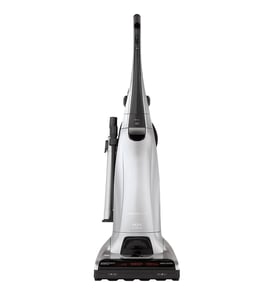







Does a Kenmore canister vacuum have a fuse?
For the Kenmore upright vacuum model 12531140610, the protection described in our documentation is a thermal protector (automatic reset after cooling) and an agitator overload protector reset, not a user-replaceable internal fuse. If your vacuum will not run, the manual points you to checking the home fuse/breaker first. See the 12531140610 use & care manual.
What this means for your vacuum
On model 12531140610, “blown fuse” in troubleshooting refers to the household circuit (wall outlet circuit breaker or fuse), not a fuse inside the vacuum.
- If the vacuum suddenly stops, the thermal protector can trip when airflow is blocked or the motor overheats.
- If the brush roll jams, the overload protector reset can shut off the agitator motor while suction may continue.
- If the unit is completely dead, start with the outlet, breaker, and cord checks.
Quick checks when the vacuum won’t run
Unplug the vacuum before inspecting anything.
- Try a different known-good outlet (lamp test).
- Reset the home circuit breaker or replace the home fuse (if applicable).
- Let the vacuum cool for about 50 minutes if overheating is suspected.
- Check for clogs in the hose, nozzle, and clean-out port.
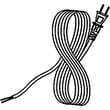
- Inspect the cord for damage; if needed, replace the Kenmore vacuum power cord KC97EDWJZV06.
Protection features at a glance
| Symptom | Likely protection feature | What to do |
|---|---|---|
| Vacuum shuts off after heavy use | Thermal protector | Unplug, clear clogs, cool ~50 minutes |
| Brush roll stops but suction continues | Agitator overload protector | Clear jam, press reset |
| Unit is totally dead | Home fuse/breaker, outlet, cord, switch | Check outlet/breaker; inspect cord |
Why it matters
Knowing whether you are dealing with a home electrical issue, an overheat condition, or a brush jam helps you fix the problem faster and prevents repeated overheating that can shorten motor life.
Last updated: January 2026
How to change the belt on a Kenmore canister vacuum?
On the Kenmore 12531140610 upright vacuum, we change the belt by removing the bottom plate, lifting out the agitator (brush roll), swapping the belt, then reinstalling the agitator and plate. The step-by-step procedure is shown in the 12531140610 use & care manual.
What you’ll need
- Phillips screwdriver
- New belt (match the correct belt for this model)
- Scissors (optional, for cutting hair or string off the brush roll)
- A clear workspace so small screws do not get lost
Belt replacement steps (model 12531140610)
- Unplug the vacuum.
- Lay the vacuum down with the bottom facing up and the nozzle flat.
- Remove the three screws holding the lower plate; lift off the lower plate.
- Carefully lift out the agitator.
- Remove the worn/broken belt.
- Loop the new belt around the motor shaft and the agitator belt groove.
- Reinstall the agitator by seating the end caps into the grooves.
- Reinstall the lower plate by aligning the front tabs with the slots, then rotate into place.
- Reinstall the three screws.
Use the correct replacement belt
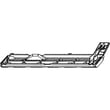
For this model, a compatible replacement option is the vacuum beater bar belt KC28SBZTZ000.
| Item | What it does | When to replace |
|---|---|---|
| Belt | Transfers motor power to the agitator | Burning rubber smell, brush not spinning, visible cracks/stretching |
| Agitator (brush roll) | Loosens dirt from carpet | If bristles are worn down or the roll is damaged |
Why it matters
A worn belt can slip, overheat (burning rubber smell), and stop the agitator from turning, which reduces carpet cleaning performance even if the suction motor still runs.
Last updated: January 2026
Is Kenmore still a good vacuum?
Yes; Kenmore is still a good vacuum brand for many homes, and the Kenmore 12531140610 upright vacuum is designed with practical features like a bagged dust system, height adjustment, and a motor protection system. Long-term performance depends most on routine maintenance and using the correct consumable parts.
What “good” means for this Kenmore model
For the 12531140610, “good” usually comes down to consistent suction, brush roll performance on carpet, and filtration. This model’s Use & Care Guide emphasizes maintenance items that directly affect cleaning results and motor protection (bag, filters, clogs, belt). See the 12531140610 use & care manual.
- Bagged design helps keep dust contained during disposal
- CHECK BAG indicator helps you catch airflow restriction early
- FLOOR/CARPET switch lets you shut off the agitator for hard floors
- Height adjust selector helps prevent pushing too hard on thick carpet
- Thermal protector and by-pass valve help protect the motor when airflow is restricted
Maintenance that keeps performance “good”
If your Kenmore starts cleaning poorly, we recommend checking these in order:
- Dust bag: replace when full or when fine dust is picked up often
- Exhaust filter: replace when dirty (it is not washable)
- Clogs: check hose, nozzle, and clean-out port
- Belt: replace if you smell burning rubber or the agitator slips
Common upkeep parts for this model
| What you maintain | Symptom when overdue | Example compatible part |
|---|---|---|
| Exhaust filtration | Dusty exhaust, reduced airflow | Kenmore vacuum exhaust filter KC38KDWCZV07 |
| Brush roll drive | Burning rubber smell, weak agitation | Vacuum beater bar belt KC28SBZTZ000 |
Why it matters
A vacuum can be a “good” machine but still perform badly if airflow is restricted. On the 12531140610, a full bag, clogged filter, or blockage can trigger protection features and reduce pickup, which can feel like the vacuum is “getting worse” even when it just needs maintenance.
Last updated: January 2026
What is the average weight of an upright vacuum?
Most full-size upright vacuums average about 15 lb, with many models commonly falling in the 13 to 17 lb range. For the Kenmore 12531140610, the exact weight is not identified in the model-specific information we have, so we use typical upright-vacuum averages for comparison.
Typical upright vacuum weight ranges
These ranges help set expectations for carrying, pushing, and stair use:
- Full-size corded uprights: 13 to 17 lb (about 15 lb average)
- Lightweight uprights: often under 13 lb
- Heavier uprights: can exceed 17 lb, especially with larger motors or wider nozzles
How weight affects real-world use
Weight is only one part of “how heavy it feels” during cleaning. These factors often matter just as much:
- Handle design and grip angle (reduces wrist strain)
- Nozzle height adjustment (helps the vacuum glide on thick carpet)
- Hose and wand reach (less lifting and repositioning)
- Bag and filter condition (restricted airflow can make pushing feel harder)
- Brush roll and belt condition (a worn belt can reduce cleaning and change handling)
Quick reference table
| Upright type | Typical weight | Best for |
|---|---|---|
| Full-size corded upright | 13 to 17 lb | Deep carpet cleaning, larger areas |
| Lightweight upright | Under 13 lb | Stairs, quick pickups, smaller homes |
| Heavier upright | 17 lb+ | High suction needs, wider cleaning paths |
Why it matters
Choosing an upright vacuum in the right weight range helps you clean longer with less fatigue, especially on stairs and around furniture. If your Kenmore 12531140610 feels harder to push than usual, maintenance items (bag, filters, belt) can make a noticeable difference; see the 12531140610 use & care manual.
Last updated: January 2026
What model is my Kenmore vacuum?
For this Kenmore upright vacuum, the Sears model number is 12531140610. The Use & Care Guide for this unit also lists a Kenmore-style model format 116.31140; the most reliable way to confirm what to use is to match the model/serial plate on the vacuum to the manual and parts listing in the 12531140610 use & care manual.
How to confirm the model on the vacuum itself
We recommend using the model/serial number plate on the vacuum as the final authority. Check these common locations:
- Inside the dust bag compartment behind the dust cover
- On the back of the main body near the handle or cord wrap
- On the bottom of the nozzle/base
- Near the motor housing or filter cover area
Why you may see more than one “model number”
Kenmore vacuums often show a Kenmore-format model (with a dot) on the product label and manual, while Sears PartsDirect uses a longer identifier for parts lookup.
| Identifier type | Example you might see | Best use |
|---|---|---|
| Sears PartsDirect model number | 12531140610 | Finding diagrams and compatible replacement parts |
| Kenmore-format model shown in the manual/label | 116.31140 | Matching the exact vacuum version on the ID plate |
Why it matters
Using the exact model from the ID plate helps ensure the right fit for wear items like belts, filters, and hoses; small design differences can affect airflow seals and attachment connections.
Common parts people replace on this model
Once you confirm the model/serial plate matches, these are typical maintenance items:
- Exhaust filter (helps maintain airflow and filtration)
- Belt (restores brush roll performance)
- Hose (fixes suction loss from cracks or leaks)
For example, this model page lists an exhaust filter option: Kenmore vacuum exhaust filter KC38KDWCZV07.
Last updated: January 2026
Why is my Kenmore vacuum brush roller not spinning?
On Kenmore upright vacuum model 12531140610, the brush roller (agitator) usually stops spinning because the handle is locked upright, the switch is set to FLOOR (agitator off), the agitator overload protector has tripped, or the belt is worn, broken, or slipping. Start with the quick checks in the 12531140610 use & care manual.
Quick checks (fastest fixes)
- Unplug the vacuum.
- Make sure the handle is reclined; this model’s agitator does not rotate when the vacuum is fully upright.
- Set the switch to CARPET (CARPET runs suction + agitator; FLOOR runs suction only).
- Clear hair, string, or debris wrapped around the brush roller.
- Press the overload protector reset after clearing a jam (wait at least 20 seconds after the shutdown before resetting).
If the brush still won’t spin: inspect the belt
A stretched or broken belt is a top cause of a non-spinning brush roller.
- Unplug the vacuum and lay it bottom-up.
- Remove the lower plate screws and lift off the plate.
- Lift out the brush roller and check the belt for cracks, glazing, looseness, or breakage.
- Replace the belt if it shows wear or slips under load.
If you need the correct replacement, use the vacuum beater bar belt KC28SBZTZ000.
Related issues that can mimic a “dead brush”
| Symptom | Most likely cause | What to do |
|---|---|---|
| Suction works, brush stops | Jam or overload protector tripped | Clear brush roller, reset overload |
| Brush never turns on carpet | Switch set to FLOOR | Switch to CARPET |
| Brush turns briefly then stops | Belt slipping or heavy resistance | Clean roller, replace belt |
| Poor pickup plus brush issues | Clog or full bag/filter restriction | Check bag, clogs, filters |
Why it matters
When the brush roller is not spinning, the vacuum can still have suction but it will not agitate carpet fibers, so dirt pickup drops and belt slippage can create a burning rubber smell.
Last updated: January 2026