 Error Codes


Is 7.4 cubic feet a large dryer?
Yes. A 7.4 cubic foot dryer is considered large capacity, so it typically handles bigger mixed loads and bulky items (like comforters) with fewer cycles. For your GE electric dryer model DBXR453ET5WW, capacity in this range is generally viewed as “large” for home laundry.
What “large capacity” means in real use
Most households notice the benefit of 7.4 cu. ft. when drying:
- King or queen comforters (depending on fill and weight)
- Large towel loads
- Family-size mixed loads (jeans, sweatshirts, towels)
- Bulky items that need room to tumble for even drying
Typical dryer capacity ranges (quick guide)
| Capacity | Common label | Best for |
|---|---|---|
| 5.0 to 6.5 cu. ft. | Standard | Smaller to average loads |
| 6.6 to 7.3 cu. ft. | Large | Bigger loads, fewer cycles |
| 7.4 cu. ft. and up | Extra large | Bulky items and heavy weekly laundry |
Why it matters
Capacity is about tumble space, not just “how much fits.” When the drum is too full, clothes cannot tumble well, which often causes longer dry times, more wrinkles, and uneven drying.
Tips to get the best results from a large-capacity dryer
- Load loosely; stop around 3/4 full for mixed loads so air can move.
- Dry bulky items on a lower heat setting with longer time to protect fabrics.
- Clean the lint screen every load and keep the venting clear to maintain airflow.
- If dry times suddenly increase, check airflow first before replacing parts.
If you are troubleshooting long dry times or heat issues on this GE dryer, our electric dryer wont heat troubleshooting video can help you narrow down common causes.
Last updated: January 2026
What is the most common problem with a GE dryer?
For the GE electric dryer model DBXR453ET5WW, the most common problems are the drum not turning (usually a worn belt or idler issue), no heat or weak heat (often airflow restriction or a thermostat/heater problem), and the dryer not starting (commonly a door switch issue).
Most common symptoms and what they usually mean
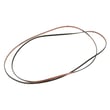
- Drum won’t turn but motor runs: worn or broken drive belt WE03X29897, or an idler pulley problem
- Dryer runs but no heat: restricted venting, failed heater assembly, or a failed thermostat
- Dryer takes too long to dry: clogged lint screen, crushed vent hose, blocked exterior vent hood
- Dryer won’t start: failed door switch WE4M415, timer/control issue, or power supply problem
- Squealing or thumping: drum slides or felt wear, idler pulley wear
Quick checks we recommend first (fast, high-impact)
- Clean the lint screen and confirm strong airflow at the outside vent.
- Check the vent path for kinks, long runs, or lint buildup (a major cause of long dry times and overheating).
- Confirm power: most electric dryers need full 240V supply; a tripped breaker can leave the dryer running but not heating.
- Listen and observe: motor hum, drum movement, and heat output help narrow the failure.
Common parts tied to these issues on DBXR453ET5WW
| Symptom | Likely part area | Example part for this model |
|---|---|---|
| Drum not turning | Belt drive | Drive belt WE03X29897 |
| Won’t start | Door safety circuit | Door switch WE4M415 |
| No heat or overheating | Heat control | dryer operating thermostat (WE4M216), dryer high-limit thermostat (WE4M137), dryer safety thermostat (WE4M160) |
| Loud squeal | Tension/support | idler pulley (WE03X31620), drum slides (WE03X37317/WE03X37318) |
Why it matters
Most “GE dryer problems” trace back to airflow and a few high-wear mechanical parts. Fixing venting and replacing the correct wear part restores drying performance, helps prevent repeat overheating, and reduces strain on the motor and heater.
For error-code style troubleshooting on GE dryers, use GE cleanspeak dryer error codes.
Last updated: January 2026
What is the lifespan of a GE dryer?
A GE electric dryer like model DBXR453ET5WW typically lasts about 10 years. With consistent lint and vent cleaning, correct load sizes, and quick repairs of wear items, many dryers reach 10 to 15 years of service.
What affects dryer lifespan the most
- Airflow maintenance: clean the lint screen every load and keep the vent path clear
- Load size: avoid overloading (it strains the motor, belt, and drum supports)
- Heat stress: restricted venting overheats components and shortens part life
- Wear parts: belts, drum slides, and idler pulleys wear gradually and are normal replacements
- Electrical supply: a weak 240V supply can cause long dry times and extra run time
Common wear parts to expect over time (DBXR453ET5WW)
If the dryer still heats but gets noisy, squeals, or the drum stops turning, these model-matched parts are often involved:
| Symptom | Likely wear area | Example model-matched part |
|---|---|---|
| Drum will not turn, burning rubber smell | Belt drive | Drive belt WE03X29897 |
| Squealing or chirping while tumbling | Idler/tension system | Idler pulley WE03X31620 |
| Thumping, scraping, or rough drum movement | Drum support surfaces | Slide drum WE03X37317 |
Maintenance that adds years (and saves energy)
- Vacuum lint from the lint screen housing periodically
- Inspect and clean the vent duct and outside hood regularly
- Keep the dryer level to reduce drum and bearing wear
- Stop using the dryer if you smell burning or hear grinding; address the cause before it damages the motor
Why it matters
A dryer’s “life” is usually limited by heat and friction. Good airflow keeps temperatures normal, and replacing simple wear parts early helps protect higher-cost components like the motor and heater assembly.
Last updated: January 2026
Why does my GE dryer keep saying clean lint filter?
On the GE electric dryer model DBXR453ET5WW, the “clean lint filter” message comes on when the dryer senses restricted airflow. Cleaning the lint screen is step one, but lint buildup in the filter housing and venting is what most often keeps the warning coming back.
What to clean first (in order)
- Remove and wash the lint screen with warm water and a soft brush; let it dry fully.
- Vacuum the lint filter housing and the chute below the screen.
- Check the vent hose behind the dryer for kinks, crushing, or heavy lint.
- Clean the wall duct and the outside vent hood; make sure the flap opens freely.
- Run a timed dry cycle and confirm you have strong airflow outside.
Quick checks if the message stays on
- Load size: Overloading reduces airflow through the drum.
- Cycle choice: Use Timed Dry to test; Auto cycles rely on moisture sensing.
- Moisture sensor residue: Wipe the sensor bars inside the drum with rubbing alcohol and a soft cloth.
- Door switch operation: If the door switch is intermittent, the dryer can behave erratically; inspect the wiring and switch action.
- Reset: Unplug the dryer (or switch off the breaker) for 2 minutes, then restore power.
Parts that can contribute to poor airflow or drying
If airflow is good but drying is still slow, internal lint buildup or a weak blower can be involved.
| Symptom | Most likely cause | What we recommend |
|---|---|---|
| Weak airflow at outside vent | Clogged venting | Clean vent path end-to-end |
| Long dry times, normal heat | Lint buildup inside cabinet | Deep clean internal ducts and blower area |
| Rattling, weak airflow | Damaged blower wheel | Inspect/replace dryer blower wheel WE16M15 |
Why it matters
Restricted airflow makes clothes take longer to dry and can overheat components like thermostats and the heater housing. Keeping the lint path clear protects performance and helps prevent repeat warnings.
Related help: how to clean and maintain your clothes dryer
Last updated: January 2026





