Installation guide
 Owner’s manual


What model is my Whirlpool dishwasher?
Your Whirlpool dishwasher’s model number is printed on the model and serial label inside the tub, near the door opening. On Whirlpool model DU1055XTVS0, the label is located near the door on the right-hand or left-hand side of the dishwasher interior; check both sides.
- Open the dishwasher door fully.
- Look along the inner tub frame near the door opening.
- Check the right-hand side first, then the left-hand side.
- Find a sticker or metal tag that lists Model and Serial.
- Write the model number exactly as shown (letters and numbers).
- Take a clear photo before the label gets worn or hard to read.
Most Whirlpool dishwasher ID labels include these fields:
| Label field | What it means | Why you need it |
|---|---|---|
| Model | The exact dishwasher model (example: DU1055XTVS0) | Ensures correct parts and diagrams |
| Serial | The unit’s unique production number | Helps match revisions and production runs |
| Electrical ratings | Voltage and amperage info | Useful for service and troubleshooting |
We use the exact model number to match the correct Whirlpool parts, diagrams, and repair instructions for your dishwasher. Even small model-number differences can change which heating element, drain pump, or control parts fit.
- Confirm the model number matches your records exactly.
- Use the model number when referencing the DU1055XTVS0 owner’s manual.
- If you are troubleshooting, start with the how to reset a Whirlpool dishwasher steps before replacing parts.
Last updated: February 2026
Are Whirlpool dishwashers a good buy?
Yes. Whirlpool dishwashers like model DU1055XTVS0 are a good buy when you want dependable everyday cleaning, straightforward controls, and widely available replacement parts. For the best long-term value, we recommend following the loading, detergent, and maintenance guidance in the DU1055XTVS0 owner's manual.
- Reliable wash performance for typical family loads
- Parts support is strong; common wear items are easy to replace
- Practical features (heated drying, multiple cycles) without premium pricing
- Service information and troubleshooting steps are well documented
- Good fit for homeowners who prefer repairable appliances over disposable ones
We focus on the same items that most affect satisfaction: cleaning, drying, noise, and repair cost.
| What you care about | What to look for | What it affects |
|---|---|---|
| Cleaning results | Proper loading and correct cycle selection | Spots, leftover soil |
| Drying results | Heated dry use, rinse aid level | Wet plastics, water droplets |
| Reliability | Door latching, consistent fill and drain | Mid-cycle stops, standing water |
| Repairability | Availability of core parts | Total cost of ownership |
- Use only automatic dishwasher detergent (not hand soap).
- Load dishes so they do not strike each other; this helps prevent chipping.
- Confirm the door closes tightly and latches before starting a cycle.
- If the unit stops mid-cycle, check the household breaker or fuse first.
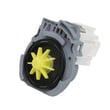
- If you see repeated draining issues, inspect the drain path and consider the dishwasher drain pump WPW10348269 if the pump is weak or noisy.
A dishwasher can be a “good buy” on day one but a poor value over time if it is hard to maintain. Whirlpool models typically stay cost-effective because routine care is simple and key parts (like pumps, seals, and heating components) remain available.
Last updated: February 2026
What is the average lifespan of a Whirlpool dishwasher?
A Whirlpool dishwasher like model DU1055XTVS0 typically lasts 10 to 12 years with normal household use. Consistent cleaning, correct detergent and rinse aid use, and fixing small problems early are what most often push a dishwasher to the high end of that range.
- Water quality (hard water speeds up mineral buildup on the heating system and internal parts)
- How often you run it (multiple loads daily shortens life faster than light use)
- Maintenance habits (filter area cleaning, clearing spray arm debris)
- Drying and heating performance (poor drying can signal heating issues that strain the system)
- Prompt repairs (addressing draining, filling, or power issues before they cascade)
For model-specific care and operating guidance, follow the DU1055XTVS0 owner’s manual.
| System | Common symptom as it ages | What to check first |
|---|---|---|
| Drain system | Water left in tub | Drain hose routing, drain pump operation |
| Heating and drying | Dishes stay wet, long dry times | Rinse aid use, heater performance |
| Door sealing | Leaks at bottom or corners | Door seal condition, door closing and latch |
| Controls/power | No power, stops mid-cycle | House breaker/fuse, door latch, control response |
If drying performance drops and you have already confirmed rinse aid use, the dishwasher heating element W10518394 is one common wear item that can affect heating and drying.
A dishwasher that is nearing end-of-life often shows small warning signs first (longer cycles, weaker drying, intermittent draining). Catching those early helps you avoid secondary damage like leaks, overheating, or repeated cycle failures.
- Use rinse aid consistently for better drying and reduced mineral buildup
- Run hot water at the sink before starting a cycle (helps fill temperature)
- Avoid overloading so spray arms can rotate freely
- Clean out food debris from the bottom area regularly
- Investigate repeated stopping, no-start, or flashing lights using how to reset a Whirlpool dishwasher
Last updated: February 2026
What's the most common problem with a Whirlpool dishwasher?
The most common Whirlpool dishwasher problem is a “won’t run” or “stops mid-cycle” complaint caused by power, door-latch, or water-supply issues; on the Whirlpool DU1055XTVS0, we also see frequent draining and cleaning complaints tied to clogs and normal wear in the drain path and wash system. See the DU1055XTVS0 owner's manual for the model’s troubleshooting checks.
- Won’t start or stops during a cycle: door not fully latched, cycle not selected correctly, or a power issue (tripped breaker or blown house fuse)
- Not draining: drain hose restriction, sink/disposer blockage, or a weak drain pump
- Not filling: water shutoff valve closed, low water pressure, or a failing inlet valve
- Poor cleaning: spray arm blockage, overloading, hard water, or wash system restriction
- Poor drying: rinse aid empty, heater issue, or cycle options not set for drying
- Confirm the door closes tightly and latches.
- Verify the cycle is selected and the dishwasher has power at the breaker.
- Make sure the water shutoff valve is fully open.
- Check for a drain blockage at the sink/disposer connection and ensure the drain hose is not kinked.
- If the motor stopped from an overload, wait a few minutes; many motors reset automatically.
| Symptom | Likely area | Example part to consider (if diagnosis confirms) |
|---|---|---|
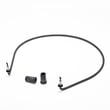
| Not draining | Drain pump or drain hose | Dishwasher drain pump WPW10348269, dishwasher drain hose 8269144A |
| Not filling or weak wash | Water inlet valve | Dishwasher water inlet valve W10648041 |
| Not drying well | Heating circuit | Dishwasher heating element W10518394 |
| Dead/no power | Electrical protection | Fuse W10258275 |
Catching the “common” causes early prevents repeat cycle failures, standing water, and poor wash results. It also helps you avoid replacing expensive parts (like a pump motor) when the real issue is a simple blockage or a shutoff valve.
If you’re seeing a flashing light or a fault behavior, use our Whirlpool dishwasher error codes reference to match the symptom to the most likely circuit or component.
Last updated: February 2026
What does E1 and F6 mean on a Whirlpool dishwasher?
On Whirlpool dishwasher model DU1055XTVS0, the F6 E1 (sometimes shown as E1 F6) code points to a water level detection problem. The control is not getting the expected signal for how much water is in the tub, so the dishwasher may stop or drain to protect itself.
- Make sure the door is fully closed and latched; an unlatched door can interrupt filling.
- Confirm the household water shutoff valve is fully open.
- Verify the dishwasher has power; reset the breaker if needed.
- Cancel the cycle and restart using the reset steps in the DU1055XTVS0 owner's manual.
- Listen during the first few minutes: you should hear water entering, then wash action.
In this model family, F6 E1 is usually triggered by a fill or sensing issue. These are the most common repair paths:
- Low or no incoming water (closed valve, kinked supply line, low pressure).
- Water inlet valve not opening correctly; replace the dishwasher water inlet valve W10648041 if it is electrically open but not flowing.
- Drain issue that prevents proper fill level (unit drains while trying to fill); check the drain path and consider the dishwasher drain pump WPW10348269 if it is running when it should not.
- Soil buildup affecting sensing; clean the sump area and consider the dishwasher turbidity sensor WPW10705575 if wash water is consistently misread.
| What you notice | What it usually points to | Part to consider |
|---|---|---|
| No water sound at start | Fill problem | Water inlet valve |
| Fills a little, then stops | Level detection or draining | Turbidity sensor, drain system |
| Standing water after cancel | Drain problem | Drain pump |
| Poor drying plus odd cycle behavior | Heating and control logic affected | Heating element |
Water level detection controls washing performance and protects the pump and heater. When the control cannot confirm the correct fill level, it may stop mid-cycle, drain unexpectedly, or leave dishes dirty.
For code details and model-family troubleshooting steps, we also use the Whirlpool dishwasher error codes reference alongside the manual.
Last updated: February 2026
How to change the bottom seal on a Whirlpool dishwasher?
On the Whirlpool DU1055XTVS0 dishwasher, changing the bottom door seal is a front door leak repair: we remove the toe-kick panels, clean the sealing surfaces, replace the seal, then verify the dishwasher is level and the door closes evenly. Use the DU1055XTVS0 installation guide for panel removal and leveling checks.
- Turn off power at the breaker (or unplug if accessible).
- Shut off the water supply under the sink.
- Put a towel under the front edge to catch drips.
- Protect the floor if you need to pull the dishwasher forward.
- Keep screws out of the pump area when panels are off.
- Open the door and remove the lower rack for working room.
- Remove the lower toe-kick/access panels at the bottom front.
- Clean the tub lip and the lower door edge; remove detergent film and debris.
- Pull the old bottom seal off (note orientation and how it seats).
- Press the new seal into place evenly end-to-end; it must sit flat with no twists.
- Reinstall the panels; confirm the lower edge of the lower panel contacts the floor.
- Restore water and power; run a short cycle and watch the bottom corners for leaks.
- Leveling legs need adjustment; the unit must be plumb front-to-back and side-to-side.
- Door alignment is off; the door panel should sit even with the cabinet front.
- Seal is rolled or pinched; remove and reseat it flat.
| Symptom | Common cause | Example part |
|---|---|---|
| Leaks at sides/top | Worn perimeter gasket | Dishwasher door seal W10542314 |
| Door doesn’t pull tight | Hinge friction wear | Dishwasher hinge friction sleeve WP8268961 |
A new bottom seal only works when the door and tub meet evenly. Leveling and alignment prevent gaps at the bottom corners where leaks start.
Last updated: February 2026