 Installation guide
 Owner’s manual




How to do a hard reset on a GE dishwasher?
For the GE GDF510PSD0SS dishwasher, the most reliable “hard reset” is a power reset: turn the dishwasher’s power off at the breaker (or unplug it, if equipped) for 1 to 5 minutes, then restore power and start a new cycle. Confirm the door is fully latched before starting.
Hard reset steps (power reset)
- Turn the dishwasher OFF at the circuit breaker (preferred) or unplug the power cord (if your installation uses a cord).
- Wait 1 to 5 minutes to let the control fully clear.
- Restore power.
- Press Start/Reset and close the door to begin a cycle.
- If you need to cancel a cycle after restoring power, use the cancel procedure in the GDF510PSD0SS owner’s manual.
If the dishwasher is “stuck” mid-cycle
On this GE model, canceling the cycle is often the fastest way to recover normal operation.
- Press and hold Start (or Start/Reset) to cancel (the unit should drain).
- Wait for draining to finish.
- Select a cycle and press Start/Reset again.
- If it will not start, re-check that the door is fully latched.
Quick comparison: reset vs cancel
| Action | What it does | When to use it |
|---|---|---|
| Power reset (breaker/unplug) | Clears the control’s state | Frozen controls, odd behavior, after a power flicker |
| Cancel/Drain (Start/Reset hold) | Stops the current cycle and drains | Wrong cycle selected, cycle won’t advance, needs restart |
Why it matters
A power reset clears temporary control glitches, while the Start/Reset cancel function safely stops a cycle and drains water. Using the right method helps prevent repeat no-start symptoms that can look like a door latch or control issue.
Last updated: January 2026
Is GE Profile considered high end?
Yes. GE Profile is generally considered GE’s higher-end appliance line because it typically includes more premium features, upgraded finishes, and more advanced controls than GE’s standard lines. Your GE dishwasher model GDF510PSD0SS is a GE model (not necessarily a Profile model).
How to tell if your dishwasher is GE Profile
We recommend checking the model badge and the model number format on the door edge or tub frame, then confirming in the GDF510PSD0SS owner’s manual.
Common identifiers:
- The word Profile appears on the exterior badge or control panel
- The model number often starts with PDT, PDP, or PDW (varies by generation)
- More cycle options and feature indicators on the user interface
- Stainless or upgraded handle and trim packages (varies by series)
What “high end” usually means in dishwashers
“High end” usually comes down to features and build, not just brand name.
| Category | Standard GE lines | GE Profile (typical) |
|---|---|---|
| Wash features | Core cycles and options | More advanced cycles and sensors |
| Controls | Basic electronic controls | More feature-rich electronic controls |
| Noise level | Moderate | Often quieter (varies by model) |
| Fit and finish | Practical | More premium styling |
Why it matters
Knowing whether you have a GE Profile model helps you set expectations for cycle options, noise level, and replacement part selection. For example, control layouts and feature sets can change which user interface or control board a dishwasher uses.
If you are troubleshooting features or display behavior, we also use GE’s code definitions as a starting point in our GE electronic dishwasher error codes reference.
Last updated: January 2026
What is the average lifespan of a GE dishwasher?
Most GE dishwashers average 10 to 12 years of service life; with good care, many run closer to 10 to 15 years. For your GE GDF510PSD0SS dishwasher, routine cleaning and correct detergent use (per the GDF510PSD0SS owner’s manual) are the biggest factors that help it reach that range.
What affects dishwasher lifespan the most
- Water quality: hard water speeds up mineral buildup on the heater and internal parts.
- Cleaning and maintenance: keeping filters and spray arms clear reduces strain on the circulation system.
- Loading habits: overloading blocks spray and can lead to repeat cycles and extra wear.
- Detergent and rinse aid use: using dishwasher-rated products helps prevent film and residue.
- Heat and drying performance: weak heating can leave moisture behind, which can contribute to odors and buildup.
Maintenance checklist to help it last longer
Use these habits to reduce common wear issues (poor cleaning, odors, slow draining):
- Clean the filter area regularly; remove trapped food and debris.
- Inspect and rinse spray arms; clear clogged holes.
- Run a dishwasher cleaner or descaling cycle a few times per year if you have hard water.
- Use a rinse aid if you see spotting or film.
- Check the door seal for debris and wipe it clean.
Common “end-of-life” symptoms vs. fixable issues
| Symptom | Often fixable? | What to check first |
|---|---|---|
| Not cleaning well | Yes | Spray arms, filters, loading, water temperature |
| Not drying | Yes | Heater circuit, rinse aid, cycle selection |
| Won’t drain | Yes | Drain path, hose routing, drain pump |
| Frequent stopping or no start | Sometimes | Door latch, control, error codes |
If you’re troubleshooting performance problems on this model, the dishwasher not cleaning dishes video is a solid starting point for the most common causes.
Why it matters
A dishwasher that is maintained tends to keep wash pressure and heating performance where they should be, which reduces repeat cycles and stress on key components like the circulation system, heater, and drain pump.
Last updated: January 2026
What is the most common problem with GE dishwashers?
The most common problems we see with GE dishwashers like model GDF510PSD0SS are poor cleaning from clogged filters or spray arms, draining issues from a restricted drain path, and “won’t start” symptoms caused by a door that is not fully latched. The quickest wins are cleaning filters and confirming the door closes and latches correctly using the GDF510PSD0SS owner’s manual.
Most common issues (and what they usually point to)
- Not cleaning well or dishes feel gritty: filters need cleaning; spray arm holes may be blocked.
- Not draining or standing water: drain hose restriction, air gap or disposal connection blockage, or a weak drain pump.
- Won’t start or beeps: door left open, cycle interrupted, or latch not engaging.
- Not drying well: rinse aid empty, heater or heating circuit issue, or cycle selection.
- Leaks: door seal or tub gasket wear, loose clamps, or over-sudsing.
Quick checks you can do first
- Clean the filters: GE recommends inspecting periodically (about every other month depending on use) and cleaning when wash performance drops.
- Confirm the door is fully closed and latched: many “won’t run” complaints are simply an unlatched door.
- Check the drain path: look for kinks in the drain hose and clear the air gap (if installed).
- Use the right detergent and rinse aid: too much detergent in soft water can cause etching and performance complaints.
Parts that commonly solve these symptoms on GDF510PSD0SS
| Symptom | Common part to inspect | Why it matters |
|---|---|---|
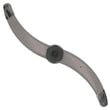
| Poor cleaning | Dishwasher spray arm, lower WD22X33499 | A cracked arm or clogged jets reduce spray pressure. |
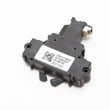
| Won’t start | GE dishwasher door latch lock WD21X10490 | If the latch switch does not close, the control will not run. |
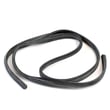
| Leaks at the door | Tub gasket WD08X23476 | A worn gasket can let water escape during wash. |
| Not draining | Dishwasher drain pump kit WD49X23779 | A weak pump may not evacuate water reliably. |
Error codes can speed up diagnosis
If your control is showing a code or unusual light pattern, use the GE electronic dishwasher error codes reference to match the symptom to the most likely circuit or component.
Why it matters
Most “big” dishwasher problems start as simple restrictions (filters, spray arms, drain path). Cleaning and basic checks protect the circulation pump, improve wash results, and prevent repeat clogs and odors.
Last updated: January 2026





