Installation guide
 Owner’s manual
 Error Codes


How to hard reset Amana washing machine?
For Amana washer model NTW4651BQ1, the most reliable “hard reset” is a control power reset: cancel the cycle, remove power briefly, then restore power and restart. This clears many temporary control glitches without changing your saved cycle preferences.
Hard reset (power reset) steps for NTW4651BQ1
- Press CANCEL to stop the current cycle.
- Unplug the washer (or switch the dedicated breaker OFF).
- Wait 1 minute.
- Restore power.
- Close the lid.
- Select a cycle and press START/PAUSE/UNLOCK LID.
For model-specific button behavior and what the status lights mean, use the NTW4651BQ1 use & care manual.
If it still will not start after the reset
These checks align with common “won’t run/fill” causes on this top-load design:
- Confirm the lid is fully closed; if the washer was spinning, unlocking can take a few minutes.
- Verify the outlet has power; reset the breaker if needed.
- Turn both hot and cold water faucets on.
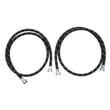
- Check inlet hoses for kinks and confirm good water flow.
- If the tub is full of water, try DRAIN/SPIN to clear it.
- If the Lid Locked light flashes and the lid will not latch, inspect the lid strike and lid lock.
When a part may be involved
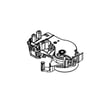
A reset will not fix a physical failure. If the lid will not lock or the Lid Locked light keeps flashing after a reset, one possible cause is a failed lid lock.
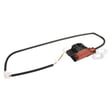
- Part to check for this model: washer lid lock assembly W10404050
| What you see | What it usually means | What to check next |
|---|---|---|
| Lid Locked flashing, won’t start | Lid not sensing “locked” | Lid strike alignment, lid lock wiring/lock |
| Won’t drain, clothes still wet | Drain issue or suds | DRAIN/SPIN, drain hose, pump area |
| Won’t fill or fills slowly | Water supply restriction | Faucets, hose kinks, inlet screens |
Why it matters
Resetting first can save time and prevent unnecessary parts replacement. If the same symptom returns quickly after a reset, that repeat pattern often points to a component or installation issue rather than a one-time control glitch.
Last updated: January 2026
What is the life expectancy of an Amana washing machine?
Most Amana top-load washers like model NTW4651BQ1 typically deliver about 10 years of service, and many reach 10–15 years when they’re installed correctly and maintained regularly. Real-world lifespan varies most with load habits, detergent use, and how well vibration and moisture are controlled (see the NTW4651BQ1 use & care manual).
What affects lifespan the most
- Overloading or tightly packing the basket (increases strain on the drive system and suspension)
- Too much detergent (can cause residue buildup and odors that lead to extra wear and service calls)
- Out-of-level installation (increases vibration and can shorten the life of dampers and other moving parts)
- Infrequent cleaning/maintenance (odor and residue buildup over time)
- Water supply issues (sediment, low pressure, or kinked hoses can affect fill performance)
Maintenance habits that help NTW4651BQ1 last longer
We recommend these practical habits, based on the care guidance for this style of top-load washer:
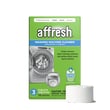
- Run a monthly cleaning cycle (about every 30 loads) using a washer cleaner tablet or liquid chlorine bleach
- Use the correct amount of HE detergent; more is not better
- Leave the lid open between loads so the tub can dry
- Load items in loose heaps around the basket wall (avoid wrapping sheets around the agitator)
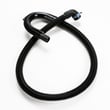
- Replace inlet hoses about every 5 years and inspect for bulges, cracks, or leaks (see the NTW4651BQ1 installation instructions)
Quick expectations by usage level
| Usage pattern | Typical outcome | What to watch |
|---|---|---|
| Light (few loads/week) | Often closer to 12–15 years | Hoses aging, long non-use periods |
| Average (4–7 loads/week) | Often around 10–12 years | Detergent buildup, leveling |
| Heavy (multiple loads/day) | Can be under 10 years | Suspension wear, drive wear |
Why it matters
A washer usually doesn’t “fail all at once”; performance drops first (noise, vibration, poor draining, lid-lock issues). Catching those early can prevent secondary damage and extend the usable life.
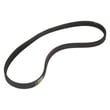
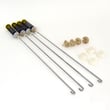
If you’re troubleshooting symptoms that could shorten lifespan (won’t drain, loud spin, or repeated off-balance loads), common wear items on this model can include the washer damper W10780045 and the washer drive belt WPW10006384.
Last updated: January 2026
How do I find the model number on my NTW4651BQ1?
Your Amana washer’s complete model number is printed on the model and serial number label on the appliance. On NTW4651BQ1, use that label to confirm the exact model number and record the serial number for parts lookup and service history.
Where to look on the washer
Check these common label locations for Amana top-load washers like NTW4651BQ1:
- Under the lid, around the tub opening (top rim area)
- On the underside of the lid
- Along the lid opening frame near the hinge area
- On the back of the cabinet (rear panel area)
Use the placement diagrams and notes in the NTW4651BQ1 installation guide to help you identify the correct label and record the information.
What to write down (and why)
The label includes two key identifiers. Copy them exactly as shown:
| Item on label | What it’s used for | Example format |
|---|---|---|
| Model number | Ensures diagrams and replacement parts match your exact washer | NTW4651BQ1 |
| Serial number | Identifies the production run; helps match revisions and service records | Letters and numbers |
Tips to avoid common mix-ups
Small differences matter when ordering parts for a washer.
- Write the model number exactly, including all letters and numbers
- Do not use only the series name (for example, “NTW4651”) because it can match multiple versions
- Take a clear photo of the label before it wears or fades
- If the label is hard to read, use a flashlight and wipe dust off gently
Why it matters
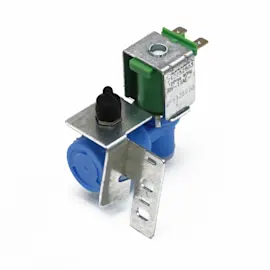
Amana washers can have multiple part variations within the same model family. Using the complete NTW4651BQ1 model number from the label helps us match the correct diagrams and parts (like a lid lock assembly, water inlet valve, or drive belt) the first time.
Last updated: March 2026