Owner’s manual


Where is the moisture sensor in a Kenmore Elite dryer?
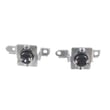
In Kenmore Elite dryer model 79681572210, the moisture sensor is typically mounted inside the front of the drum area, near the lint filter housing or blower duct, where clothes brush across the sensor bars during the cycle. For your exact access steps, use the 79681572210 manual.
On this Kenmore Elite style dryer, we usually find the moisture sensor in one of these spots:
- On the blower housing or lint duct just inside the front panel
- Near the lint screen housing, behind a small grille or cover
- At the front bulkhead area where the drum opening is
- Mounted with two screws and connected to two wire leads
Before opening panels, we recommend these basics:
- Unplug the dryer (or switch off the breaker) before removing any covers
- Remove the lint screen and check for a cover or grille you can unscrew
- Look for two metal sensor bars (or a small sensor bracket) in the airflow path
- Note wire colors and connector positions before disconnecting anything
- Clean the sensor bars with rubbing alcohol if cycles end early or clothes stay damp
The moisture sensor is a pair of conductive bars (or contacts) that detect moisture when wet laundry touches them. If the bars get coated with dryer sheet residue, the dryer can misread dryness and shut off too soon.
| Symptom | Common cause | What to do first |
|---|---|---|
| Clothes still damp on Auto cycles | Sensor bars coated | Clean bars with alcohol |
| Cycle runs too long | Poor airflow or sensor not sensing | Clean lint path, check vent |
| No change after cleaning | Sensor or wiring issue | Inspect connections, test sensor |
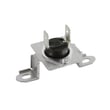
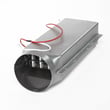
If cleaning and wiring checks do not help, the sensor assembly itself may be the issue. The correct replacement for this model is the dryer moisture sensor 6500EL3001A.
The moisture sensor helps the dryer stop at the right time on Auto/Sensor Dry cycles. When it is dirty or failing, you can get overdrying (extra heat and wear) or underdrying (damp loads and repeat cycles).
Last updated: January 2026
How to hard reset a Kenmore dryer?
To hard reset your Kenmore Elite dryer model 79681572210, disconnect power for a few minutes to clear the electronic control. If the dryer still will not start or keeps stopping, the problem is usually a safety device trip (overheat) or an airflow issue, not a reset setting; check the basics next.
- Turn the dryer OFF.
- Unplug the power cord (or switch the dryer breaker OFF).
- Wait 3 to 5 minutes.
- Restore power.
- Press Power, select a cycle, then press and hold Start/Pause for 2 to 3 seconds.
- Airflow restriction: clean the lint screen, check the vent hose for kinks, and confirm strong airflow outside.
- Overheat protection: if the dryer ran hot or shut down mid-cycle, a high-limit thermostat may have opened.
- No heat or long dry times: a failed heating circuit component can mimic a control problem.
- Drum not turning: a broken belt or seized roller can stop the cycle or prevent starting.
- Door not sensed as closed: a faulty door switch can prevent operation.
| Symptom | Most common area | Example part for this model |
|---|---|---|
| Drum will not turn, motor runs or hums | Drive system | Dryer drum belt 4400EL2001F |
| Runs but no heat or weak heat | Heating circuit | Lg dryer heating element 5301EL1001H |
| Stops, overheats, or trips protection | Temperature safety | Dryer high-limit thermostat 6931EL3003D |
A hard reset clears a temporary control glitch, but it does not correct overheating, poor venting, or a failing drive component. Fixing airflow and worn parts helps prevent repeat shutdowns and protects the heating system.
For model-specific operating and control-panel guidance, use the 79681572210 manual.
Last updated: January 2026
What does AF mean on my Kenmore Elite dryer?
On the Kenmore Elite dryer model 79681572210, AF means the dryer is sensing restricted airflow. In most cases, the dryer is not exhausting properly because the lint screen, blower area, or vent duct is clogged, crushed, or too long, which can cause long dry times and overheating.
- Clean the lint screen with water and a soft brush if fabric softener residue is present; let it dry fully.
- Check the vent hose behind the dryer for kinks, crushing, or sagging.
- Inspect and clean the wall vent and exterior vent hood; make sure the flap opens freely.
- Run a timed dry cycle with the vent hose disconnected (briefly) to see if airflow improves.
- Reduce vent length and number of elbows if the run is long.
| What you notice | Most likely cause | What to do next |
|---|---|---|
| AF shows quickly after start | Blocked vent or stuck exterior hood | Clear the duct and hood, confirm strong exhaust |
| Clothes take 2+ cycles to dry | Restricted venting or lint buildup in blower housing | Clean venting; inspect blower area |
| Dryer gets very hot | Poor airflow causing heat to stay in drum | Stop using until venting is corrected |
| AF comes and goes | Partial restriction or intermittent flap blockage | Check for birds, lint clumps, or crushed flex duct |
If the venting is clear and AF still appears, we focus on airflow and temperature sensing components.
- A damaged blower wheel can reduce airflow; inspect the dryer blower wheel 5835EL1002A.
- A failed temperature sensor can cause abnormal heating behavior; check the dryer thermistor AGM30045804.
- A safety thermostat can trip if airflow is poor; inspect the dryer high-limit thermostat 6931EL3003D.
Restricted airflow is the most common reason for AF on Kenmore Elite dryers, and it directly affects dry time, energy use, and safe operating temperatures. Fixing venting first prevents repeat shutdowns and protects key parts like the heating element and thermostats.
For model-specific guidance on indicators and operation, use the 79681572210 manual.
Last updated: January 2026
Where is the filter on my Kenmore Elite dryer?
On the Kenmore Elite dryer model 79681572210, the “filter” is the lint screen. It’s typically located right inside the dryer door opening, either in the door frame or just inside the front panel opening; you pull it straight up and out.
- Open the dryer door and look along the lower edge of the door opening first.
- If you do not see it there, check the upper edge of the door opening.
- Grab the handle and pull the lint screen straight up (no twisting).
- Remove lint with your fingers after every load.
- Reinsert the lint screen fully so it seats flat.
After every load (recommended):
- Peel lint off by hand.
- Check the slot for lint buildup.
Monthly deep clean (helps airflow):
- Wash the screen with hot water and a small amount of dish soap.
- Scrub gently with a soft brush to remove fabric softener residue.
- Rinse and let it dry completely before reinstalling.
| Cleaning type | How often | What it helps prevent |
|---|---|---|
| Quick lint removal | Every load | Long dry times, overheating |
| Soap-and-water wash | Monthly | Poor airflow from residue |
| Slot/vacuum cleanup | As needed | Lint bypassing the screen |
A clean lint screen keeps airflow strong, which helps your 79681572210 dry faster and reduces heat stress on key components like the heating system and thermostats.
For diagrams and model-specific placement details, use the 79681572210 manual.
Last updated: January 2026