 Installation guide
 Owner’s manual


What is the capacity of the MAV408DAWW?
The Maytag MAV408DAWW is a traditional top-load washer; its typical tub capacity is about 3.5 to 4.0 cubic feet, which is considered a standard-capacity range for this style of washer. For the exact load guidance and water-level settings, use the MAV408DAWW owner's manual.
What that capacity means for everyday loads
A 3.5 to 4.0 cu. ft. washer usually handles:
- A typical mixed load of everyday clothing
- Several bath towels in one load (avoid packing them tightly)
- Bulky items (like a comforter) only if the load can circulate freely
Use water level correctly (it affects real-world capacity)
This washer’s best performance depends on choosing a water level that lets items move during agitation.
- Choose the water level based on load size, not just the tub looking “full”
- Clothes should circulate freely for best cleaning
- For bulky fabrics, you can adjust the water level after agitation begins (per the manual)
| Load type | What to watch for | Best practice |
|---|---|---|
| Everyday clothing | Overfilling reduces cleaning | Leave space for turnover |
| Towels/denim | Heavy, absorbent loads | Use a higher water level |
| Bulky items | Can float or bind up | Load loosely; balance the tub |
Why it matters
Capacity is not just a number; overloading can cause poor cleaning, out-of-balance spinning, extra wear on the drive system, and longer dry times. Matching load size to water level helps protect components like the motor mount and pump while improving wash results.
Last updated: February 2026
What is the most common problem with a Maytag washer?
For the Maytag MAV408DAWW washer, the most common day-to-day complaint is a drain or spin problem caused by an unbalanced load, a lid that is not fully closed, or a kinked drain hose. These issues often stop spinning until the load is redistributed and the cycle is restarted.
What we see most often (and what to check first)
- Unbalanced load during spin: open the lid, redistribute items evenly, close the lid, then restart.
- Lid not fully closed: this washer is designed not to agitate or spin with the lid open.
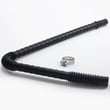
- Kinked or restricted drain hose: straighten the hose and make sure the standpipe or home drain is not restricted.
- Too many suds (suds lock): rewash without detergent, then use the correct amount of low-sudsing detergent.
- Overload: reduce the load size; heavy loads can trip the motor overload protector.
Quick symptom-to-cause guide
| Symptom | Most likely cause | What to do next |
|---|---|---|
| Won’t spin | Lid open or load off-balance | Close lid; redistribute; restart cycle |
| Stops and restarts later | Motor overload protector tripped | Let motor cool; reduce load |
| Slow or no drain | Kinked hose or home drain restriction | Straighten hose; confirm drain flow |
| Clothes still wet at end | Out-of-balance final spin | Redistribute and reset to final spin |
Why it matters
Drain and spin issues are often simple, but they affect everything: water removal, cycle time, and wear on the drive system. Fixing balance, suds, and hose routing early helps prevent repeat shutdowns and excessive vibration.
Helpful model-specific tips from the manual
- During spin, if the load becomes uneven, push in the control dial, open the lid, redistribute, close the lid, and restart; the spin resumes where it stopped.
- The washer may pause briefly during cycles; those pauses are normal.
- If the motor stops from overload, it can restart after it cools; repeated overloads usually mean the load is too heavy or the washer is being overworked.
For cycle behavior, water level selection, and troubleshooting steps specific to MAV408DAWW, use the MAV408DAWW owner's manual.
Last updated: February 2026
What's the average lifespan of a Maytag washer?
Maytag washers typically last 10 to 13 years in normal household use. For your Maytag MAV408DAWW, regular care (especially periodic interior cleaning and avoiding overloads) is what most directly determines whether it lands closer to 10 years or keeps going beyond that; see the care guidance in the owner's manual.
Typical lifespan and what affects it
A washer’s service life is mostly driven by how hard it works and how well it is maintained.
- Loads per week: more cycles equals more wear on the drive system, pump, and suspension
- Overloading: strains the motor, belt/pulley system, and tub bearings
- Water quality: sediment can restrict inlet screens and valves
- Detergent habits: too much detergent can contribute to residue and odor
- Maintenance: cleaning and hose checks prevent avoidable failures
Maintenance that extends life (MAV408DAWW)
Your manual recommends cleaning and freshening the washer interior every 60 to 120 days, with frequency based on usage and conditions.
- Run periodic cleaning to reduce odor, mold, mildew, and residue
- Keep the lid open between loads when possible to help the tub dry
- Use the correct water temperature; hot water at the tap is typically 120°F (49°C)
- If fill is slow or water flow is weak, clean the inlet hose screens
- Replace aging fill hoses before they bulge, crack, or leak
Quick “what to replace first” guide
These are common wear items that can help keep an older washer running reliably.
| Symptom | Common cause | Example part for MAV408DAWW |
|---|---|---|
| Slow fill or no fill | Clogged screens or failing inlet valve | Washer water inlet valve WP21001932 |
| Leaks at the wall connection | Worn or cracked fill hose | Inlet hose WP89503 |
| Won’t drain or drains poorly | Drain restriction or pump issue | Check drain path; inspect pump area per the owner's manual |
Why it matters
Knowing the typical 10 to 13 year lifespan helps you decide whether to invest in a repair (like a valve or hose) versus planning for replacement. On a unit that is otherwise in good shape, basic maintenance and timely replacement of wear parts often adds years of dependable service.
Last updated: February 2026


