Owner’s manual
 Error Codes


What is the average lifespan of a GE refrigerator?
Most GE refrigerators, including the GE GSH25JFXLWW side-by-side, typically last 12 to 15 years with normal household use. Consistent maintenance (cleaning condenser coils, keeping door gaskets sealing, and correcting temperature issues early) is what most often determines whether you land closer to 10 years or 15+.
Typical lifespan range (what to expect)
Here is a practical way to think about refrigerator life expectancy:
| Usage and care level | Typical lifespan | What usually ends the run |
|---|---|---|
| Light use, good maintenance | 14 to 18 years | Sealed system or control failures |
| Average use, basic maintenance | 12 to 15 years | Fan, defrost, or ice maker related issues |
| Heavy use, poor airflow/dirty coils | 8 to 12 years | Compressor stress, warm temps, icing |
What extends the life of your GSH25JFXLWW
We see these steps make the biggest difference on side-by-side refrigerators:
- Clean the condenser coil area regularly so the compressor does not run hot and long.
- Keep doors closing fully (the manual notes door-left-open issues can cause frost and long run times).
- Set temps correctly and adjust one step at a time if food temps drift.
- Avoid overpacking so air can circulate through the fresh food and freezer sections.
- Replace the water filter on schedule to keep water flow strong and reduce valve strain.
For model-specific care and control settings, use the GSH25JFXLWW owner's manual.
Signs you are nearing end-of-life (or need a repair now)
These symptoms often show up in the last few years of service life, but many are repairable:
- Compressor runs almost constantly or cycles very frequently
- Frost buildup on the evaporator cover or ice crystals on food
- Temperatures swing even after adjusting controls
- Water dispenser slows down or ice production drops
- Unusual rattling or vibration that persists after leveling
Why it matters
A refrigerator that is running longer than normal uses more electricity and puts extra wear on high-cost components (compressor, condenser fan, defrost system). Catching airflow, sealing, and temperature-sensing problems early is the simplest way to protect the sealed system.
Last updated: February 2026
Are GE side-by-side refrigerators good?
GE side-by-side refrigerators like model GSH25JFXLWW are a solid choice for everyday use because they balance storage, convenience features (ice and water dispenser), and straightforward controls. Long-term satisfaction usually comes down to proper setup, clean condenser airflow, and staying on top of routine items like the water filter.
What “good” means for this style of refrigerator
Side-by-side designs are popular because they keep both fresh food and frozen items at eye level, and they typically include a door dispenser.
Common strengths
- Easy access to freezer shelves and door bins
- Convenient ice and water dispenser on many versions
- Adjustable shelving and bins for flexible organization
- Predictable temperature control when doors seal well
Common tradeoffs
- Narrower freezer compartment can limit wide items (pizza boxes, trays)
- Ice makers can sound louder than expected during harvest cycles
- Performance drops if the condenser area is dusty or airflow is blocked
Maintenance that keeps a GE side-by-side performing well
Your user guide covers routine care, cleaning, and “normal operating sounds.” For model-specific guidance, use the owner's manual.
Key upkeep steps we recommend:
- Replace the water filter about every 6 months, or sooner if flow slows
- Keep door gaskets clean so the doors seal tightly
- Clean dust from the condenser area so the compressor can shed heat
- Avoid overpacking; cold air needs space to circulate
- Confirm the doors close fully after loading groceries
Water filter replacement at a glance
| Item | Typical interval | What you’ll notice when it’s due |
|---|---|---|
| Water filter | About every 6 months | Slower dispenser flow, taste/odor changes |
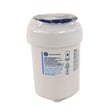
If you need the correct filter for this model, use the GE refrigerator water filter MWFP.
Why it matters
A side-by-side can run for years with stable temperatures when airflow is clean, doors seal properly, and the filtration and dispenser system are maintained. Those basics prevent warm spots, excess frost, and unnecessary compressor run time.
Last updated: February 2026
What is the most common problem with a GE refrigerator?
The most common GE refrigerator complaint is not cooling well (fresh food too warm, freezer too warm, or both). On your GE GSH25JFXLWW side-by-side, the owner's manual troubleshooting section focuses first on control settings, door sealing, and normal operating cycles before moving to parts like sensors, fans, and the defrost system.
Most common symptoms we see (and what they usually point to)
- Refrigerator or freezer too warm: temperature controls not set cold enough, frequent door openings, or the unit is in a defrost cycle
- Runs a lot: normal for modern refrigerators, but also happens with warm room temps or doors opening often
- Frost or ice crystals on food: door left open or openings are too frequent/too long
- Water not dispensing or low flow: clogged filter or frozen reservoir
- Ice maker not working: ice maker switch off, water supply off, or freezer not cold enough
- Strange noises: gurgling, sizzling, popping, or dripping sounds during defrost can be normal
Quick checks to do first (before replacing parts)
- Confirm the freezer control is not set to 0 (off) and adjust one step colder if compartments are warm.
- Make sure doors fully close and nothing is holding them open.
- After changing settings, allow about 2 hours for operation to stabilize (and up to 24 hours after first plug-in for full cool-down).
- If water spurts after a filter change, run water for about 3 minutes (roughly 1 1/2 gallons).
- If the dispenser is locked, press and hold the Lock pad for 3 seconds.
Parts that commonly solve “not cooling” or “ice/water issues” on this model
If the quick checks do not fix it, these are common next-step parts for the GSH25JFXLWW:
| Problem area | What to check | Example part on this model |
|---|---|---|
| Temperature sensing | Erratic temps, warm compartments | Refrigerator temperature sensor WR55X10025 |
| Defrost system | Frost buildup, poor airflow, warming | Refrigerator defrost heater WR51X10055 and refrigerator defrost bi-metal thermostat WR50X10065 |
| Water dispensing | Slow/no water, poor ice production | GE refrigerator water filter MWFP and refrigerator water valve WR57X33326 |
Why it matters
Cooling problems can quickly lead to food spoilage, and water or ice issues often trace back to restricted flow (filter) or a supply/control problem (valve). Starting with settings, door closure, and normal defrost-cycle behavior prevents unnecessary part replacement.
Last updated: February 2026
How wide is a 25.6 cubic foot refrigerator?
A 25.6 cu. ft. refrigerator is typically 35 to 36 inches wide. For your GE GSH25JFXLWW side-by-side, use the published dimensions in the owner's manual to confirm the exact cabinet width and the widest point (often hinges or handles) before you plan a fit.
Typical width by refrigerator style
Capacity alone does not set the width; the configuration does.
- Side-by-side (like GSH25JFXLWW): 35 to 36 in.
- French door: 35 to 36 in.
- Top freezer (large): 29 to 33 in.
- Built-in: commonly 36 in. (varies by design)
Installation clearances to plan for
GE side-by-side installation guidance calls for small but important clearances for airflow and door swing.
| Area | Minimum clearance to allow |
|---|---|
| Sides | 1/8 in. |
| Top | 1 in. |
| Back | 1 in. |
| Door opening (90°) | 3/4 in. |
How we measure width for a real-world fit
Measure both the space and the refrigerator; then compare the largest numbers.
- Measure the opening width at the front and back
- Measure the refrigerator at the widest point (hinge side can be widest)
- Include handles if they extend past the doors
- Confirm you can open doors to 90° for bin and shelf access
- Check the delivery path (doorways and tight turns)
Why it matters
A refrigerator that is “about 36 inches wide” can still fail to fit if the hinge bulge, handles, or required airflow clearances are not included. Confirming the GSH25JFXLWW dimensions prevents installation and door-swing problems.
Last updated: February 2026