 Installation guide
 Owner’s manual




How to check GE dishwasher model number?
On your GE dishwasher model GDF620HSJ2SS, the model number is printed on the rating label located just inside the dishwasher door opening, typically along the left-hand side of the tub frame. The same label also lists the serial number.
Check these common label locations first:
- Open the door and look along the left side of the inner tub frame
- Scan the door opening perimeter (the frame the door closes against)
- Look for a rating label with model and serial information together
- Wipe the area with a damp cloth if the label is hard to read
For diagrams and model-specific details, use the GDF620HSJ2SS installation guide.
Most GE dishwasher rating labels include:
- Model number (example format: GDF620HSJ2SS)
- Serial number
- Electrical ratings (volts/amps)
- Manufacturer information
| Item | What it’s used for | Example |
|---|---|---|
| Model number | Matching parts and diagrams | GDF620HSJ2SS |
| Serial number | Dating the unit, service reference | Varies |
We use the exact model number to match the correct GE parts and variations (door components, control parts, and wash system parts). Even small model-number differences can change which part fits.
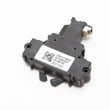
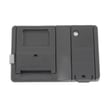
If you are ordering parts related to door closing or starting issues, the model number helps confirm compatibility with items like the GE dishwasher door latch lock WD21X10490.
Last updated: February 2026
What is the average lifespan of a GE dishwasher?
A GE dishwasher typically lasts 10 to 12 years. For your GE GDF620HSJ2SS, lifespan depends most on water quality, how often it runs, and routine care like keeping the filter area and spray arms clear; good maintenance can push service life toward the high end.
Most residential dishwashers fall into a predictable range based on use.
- Typical average: 10 to 12 years
- Common overall range: 8 to 15 years
- Heavy daily use: tends toward the lower end
- Light use + good maintenance: tends toward the higher end
| Usage pattern | What we typically see | Best way to extend life |
|---|---|---|
| 1 load/day | Around the average | Clean filter area monthly; use correct detergent |
| 2+ loads/day | Shorter lifespan | Avoid overloading; keep spray arms unclogged |
| 3 to 5 loads/week | Longer lifespan | Run hot water at sink before starting |
These habits reduce strain on the circulation pump, diverter, and heating system.
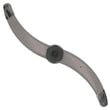
- Keep the lower and middle spray arms spinning freely and clear of debris (see dishwasher spray arm, lower WD22X33499).
- Use the right amount of detergent; too much can cause buildup and poor rinsing.
- Run the kitchen faucet hot for 30 to 60 seconds before starting so the dishwasher fills with hotter water.
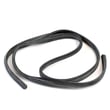
- Check the door seal for food residue and wipe it clean to prevent leaks.
- Make sure the drain hose is not kinked and the installation routing is correct (see installation guide).
These symptoms often show up in the last few years of service.
- Dishes stay gritty or cloudy even after cleaning the spray arms
- Water not heating well or poor drying performance
- Frequent draining issues or standing water
- Door won’t latch reliably
- Repeated error codes or cycle interruptions
Knowing the expected lifespan helps you decide whether to repair or replace. On a 10 to 12-year-old unit, a simple fix (like a spray arm or latch) often makes sense, while repeated pump or control issues can signal it is time to plan for replacement.
Last updated: February 2026
What is the most common problem with GE dishwashers?
The most common problems we see on GE dishwashers like model GDF620HSJ2SS are draining problems, leaks, and won’t start/stop mid-cycle issues. In many cases, the fix is basic maintenance (filter area cleanup, hose checks) or a door-latch related issue.
- Not draining: check for a blocked sump area, food debris, or a kinked drain hose.
- Leaking: inspect the door seal area and look for water tracking from the tub edge.
- Won’t start: confirm the door closes and latches firmly; a weak latch can prevent operation.
- Poor cleaning: spray arms can clog and stop rotating freely.
- No heat or poor drying: heating circuit problems can reduce drying performance.
- Cancel the cycle and let the unit drain (if it will).
- Check that the drain hose is not kinked under or behind the dishwasher (called out in the installation guide).
- Open and close the door to confirm it moves smoothly and does not rub the cabinet (misalignment can cause damage and poor operation).
- Remove and rinse debris from the bottom/sump area; clear any visible obstructions.
- Run hot water at the sink for 30 to 60 seconds before starting a cycle to improve wash performance.
| Symptom | Common part to inspect/replace | What it affects |
|---|---|---|
| Won’t start or stops | GE dishwasher door latch lock WD21X10490 | Confirms door is closed so the control will run |
| Not draining | Dishwasher drain hose WD24X10062 | Prevents restricted flow from kinks/clogs |
| Poor cleaning | Dishwasher spray arm, lower WD22X33499 | Restores spray pattern and rotation |
| Poor drying/no heat | Dishwasher heating element WD05X30818 | Heats water and supports drying |
If your control shows a code or blinking pattern, use the GE electronic dishwasher error codes reference to match the code to likely causes (drain, fill, heating, or control-related).
Drain restrictions, door-latch problems, and spray issues can make the dishwasher seem “dead” or ineffective even when it has power. Catching these early helps prevent repeat clogs, standing water, and cycle failures.
Last updated: February 2026





