Owner’s manual
 Error Codes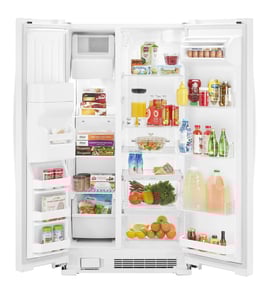



How wide is a 25.6 cubic foot refrigerator?
A 25.6 cubic foot refrigerator is typically about 36 inches wide. For the GE GSE25HSHKHSS side-by-side, the installation instructions for this platform show a 36-inch cabinet width as the standard opening size; confirm your exact fit and clearances in the GSE25HSHKHSS owner's manual.
Typical width range (what you should plan for)
Most 25 to 27 cu. ft. side-by-side refrigerators are built to fit a 36-inch-wide space.
- Typical exterior width: about 35 3/4 to 36 inches
- Typical cabinet opening width: 36 inches
- Side clearance commonly needed: 1/8 inch per side
- Top clearance commonly needed: 1 inch
- Back clearance commonly needed: 1/2 inch to 1 inch
Clearances vs. width (quick reference)
| What you’re measuring | What to expect | Why it’s different |
|---|---|---|
| Cabinet opening width | 36 in. | Standard space the refrigerator is designed to fit |
| Refrigerator exterior width | ~35 3/4 to 36 in. | Allows small side clearances for airflow and installation |
| “Space needed” width | 36 in. plus clearances | Prevents rubbing, improves air circulation, helps water line routing |
How to measure your space the right way
- Measure the opening width in 3 places (top, middle, bottom).
- Measure depth to the wall, then account for door swing and handles.
- Check for anything that steals width: trim, baseboards, water shutoff, outlet boxes.
- Plan for moving clearance; many side-by-sides need a little extra room to maneuver into place.
Why it matters
Width is only part of fit. If the opening is tight, the doors may not open fully, airflow can be restricted, and installation (especially the water line for the ice maker and dispenser) becomes harder.
Last updated: January 2026
What is the average lifespan of a GE refrigerator?
Most GE refrigerators, including the GE GSE25HSHKHSS side-by-side, typically last 12 to 16 years, and 10 to 20 years is a realistic overall range with normal household use. Regular maintenance (airflow, clean coils, and water filter care) helps you reach the high end of that range.
Typical lifespan ranges
These are practical expectations for a full-size refrigerator like the GSE25HSHKHSS:
- Average: 12 to 16 years
- Common overall range: 10 to 20 years
- Often shorter when: heavy ice and water dispenser use, poor ventilation, dirty condenser area
- Often longer when: steady temperatures, clean condenser area, doors seal well
| What you’re measuring | Typical expectation | What usually shortens it |
|---|---|---|
| Whole refrigerator service life | 12 to 16 years | Heat buildup, poor airflow, neglected cleaning |
| Sealed system (compressor, condenser, evaporator, tubing) | Often the longest-lasting major system | Overheating, restricted airflow |
| Ice and water dispensing system | More wear-prone | Mineral buildup, low water flow, filter neglect |
Maintenance that most improves lifespan
We recommend these habits because they reduce compressor run time and prevent common dispenser issues:
- Keep the refrigerator level and make sure doors close fully.
- Maintain good airflow around the cabinet (avoid tight enclosures).
- Clean dust from the condenser area periodically.
- Replace the water filter on schedule; for this model, a common replacement is the refrigerator water filter XWFE.
- Address temperature swings early; a failing sensor can cause long run times (see GE GSE25HSHKHSS owner’s manual for temperature and care guidance).
Why it matters
A refrigerator that runs hot or struggles to hold temperature typically runs longer and harder, which increases wear on the compressor and can also lead to icing, weak ice production, and inconsistent food temperatures.
Last updated: January 2026
What is the most common problem with a GE refrigerator?
The most common GE refrigerator problem is a cooling issue: the fresh food section gets warm, the freezer temperature rises, or temperatures swing. On GE model GSE25HSHKHSS, the most frequent causes are airflow restrictions, dirty condenser coils, or a defrost-system or sensor problem.
Quick checks we recommend first
- Confirm the temperature settings are correct and give the unit 24 hours to stabilize.
- Make sure vents inside both compartments are not blocked by food packages.
- Check that the doors close fully and the gaskets seal all the way around.
- Clean the condenser coils and verify the condenser fan is running (if equipped).
- Listen for the evaporator fan; if it is not running, cooling will suffer.
Common causes and what they look like
| Symptom | Likely cause | What to check next |
|---|---|---|
| Freezer OK, fridge warm | Airflow problem | Blocked vents, frost buildup on evaporator cover, weak evaporator fan |
| Frost/ice on back freezer panel | Defrost problem | Defrost heater, defrost thermostat, defrost control logic |
| Both sections warm | Sealed system or airflow | Condenser coils, fans, compressor start components |
| Slow water flow (dispenser) | Filter restriction | Replace the water filter every 6 months or sooner if flow drops |
Parts that commonly relate to cooling complaints
If basic checks do not fix the issue, these model-compatible parts are often involved in diagnosis and repair:
- GE profile refrigerator temperature sensor WR55X10025 (temperature feedback problems)
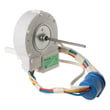
- Refrigerator evaporator fan motor WR60X10307 (poor airflow through the evaporator)
- Refrigerator defrost heater WR51X10055 (frost buildup from failed defrost heat)
- Refrigerator defrost bi-metal thermostat WR50X10065 (defrost safety and cycling)
Why it matters
Cooling problems can spoil food quickly and also force the compressor to run longer than normal. Catching airflow issues early (blocked vents, dirty coils, failing fan motor) often prevents bigger, more expensive repairs.
Helpful model-specific reference
For control locations, temperature recommendations, and maintenance guidance, use the GSE25HSHKHSS owner's manual.
Last updated: January 2026
What are signs my GE ice maker is broken?
If your GE GSE25HSHKHSS ice maker is broken, you will usually see no ice production, very slow production, misshapen or clumped cubes, leaking at the back or under the unit, or dispenser issues like a jammed chute. Many “ice maker” complaints are actually water supply, filter, or freezer temperature problems.
Common signs (and what they point to)
- No ice at all: icemaker switched off, water supply off, frozen fill tube, or a failed ice maker module
- Small, hollow, or misshapen cubes: restricted water flow (often a clogged filter) or low water pressure
- Ice clumps in the bin: freezer temperature too warm; the manual notes clumps can form and recommends adjusting the freezer colder one step at a time
- Ice dispenser not working: chute blockage, dispenser lock enabled, or ice cubes frozen to the feeler arm
- Water leaking: loose water line connection, cracked line, or a water inlet valve that is not closing fully
- Bad-tasting ice: old filter, stagnant water from low dispenser use, or odors in the freezer
Quick checks we recommend before replacing parts
- Confirm freezer temperature: most side-by-side units make ice best around 0°F in the freezer.
- Check the water filter status: a restricted filter can reduce ice size and slow production.
- Look for dispenser and chute issues: the manual warns backed-up ice can jam the chute; clear jams with a wooden spoon.
- Verify the icemaker has water: make sure the household shutoff valve is open and the supply line is not kinked.
- Use the filter bypass if needed: the manual states the dispenser and icemaker will not operate without a filter or bypass plug.
Parts that commonly solve “no ice” or “small ice” symptoms
| Symptom | Most common cause | Part to consider for GSE25HSHKHSS |
|---|---|---|
| No ice, no water fill | Water not entering unit | Refrigerator water inlet valve WR57X30890 |
| Slow ice, small cubes | Restricted filtration | GE refrigerator water filter XWFE |
| Icemaker won’t cycle or harvest | Icemaker assembly failure | GE refrigerator ice maker kit WR30X10093 |
Why it matters
An ice maker depends on three basics: cold enough freezer air, steady water flow, and a working harvest cycle. Checking the filter, chute, and water supply first prevents replacing good parts and gets ice production back faster.
For model-specific operating details (filter bypass use, dispenser tips, and troubleshooting charts), follow the steps in the GSE25HSHKHSS owner's manual.
Last updated: January 2026