Owner’s manual
 Error Codes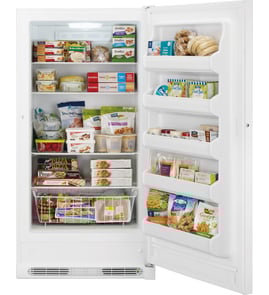


How do I know if my compressor is bad in my Kenmore freezer?
If your Kenmore freezer model 25328452801 is warm and the compressor won’t run (or it repeatedly clicks and shuts off), the compressor circuit is the first thing to check. We confirm a “bad compressor” only after verifying correct power, airflow, and that the start components are good.
Quick checks before testing parts
- Make sure the freezer is plugged into a grounded 3-prong outlet; we do not use extension cords or adapter plugs.
- Confirm the temperature control is not set to OFF (OFF stops the compressor but still leaves power to other components).
- Listen for normal operating sounds; modern freezers can run louder during cool down and you may hear refrigerant gurgling.
- Allow time after a setting change; temperature stabilizes over several hours.
- Check for heavy frost buildup that can restrict airflow and mimic a sealed-system problem.
What the symptoms usually mean
| Symptom | Most common cause | What to check next |
|---|---|---|
| Repeated clicking every few minutes | Start relay/overload opening | Relay/overload, wiring, compressor amps |
| Compressor hums briefly then stops | Hard start or locked rotor | Relay/overload, compressor windings |
| Compressor runs but freezer stays warm | Airflow/defrost issue or sealed-system issue | Evaporator fan, frost pattern, condenser cleanliness |
| No sound at all | Power/control issue | Outlet power, control setting, control board |
How we test the compressor circuit (safe, practical steps)
- Unplug the freezer before removing any access panels (safety first).
- Inspect wiring at the compressor and look for burned terminals.
- Test the start components first; a failed relay/overload can prevent a good compressor from starting.
- If start components test good, check compressor windings for continuity and shorts to ground.
Parts that commonly get replaced during diagnosis
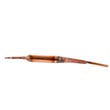
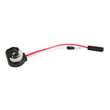
- Freezer compressor overload and relay clamp 216954300 (start/overload components that can cause clicking and no-start)
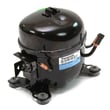
- Upright freezer compressor 5304507765 (the compressor itself, replaced only after confirming the start circuit is good)
Why it matters
Replacing a compressor is a major repair. Verifying power, control settings, and the start relay/overload first prevents unnecessary cost and helps you pinpoint whether the problem is electrical, airflow/defrost related, or truly compressor failure.
For model-specific safety, access, and operating guidance, follow the 25328452801 owner's manual.
Last updated: February 2026
How long does a Kenmore upright freezer last?
A Kenmore upright freezer like model 25328452801 typically lasts 10 to 15 years with normal household use. Consistent temperatures, good airflow, and keeping the door seal tight are the biggest factors that help you reach the high end of that range.
What affects lifespan the most
- Door seal condition: a leaking gasket forces longer run times and adds wear
- Condenser cleanliness and airflow: heat must leave the cabinet efficiently
- Room conditions: hot garages and tight enclosures shorten compressor life
- Defrost system health: heavy frost can block airflow and overwork the evaporator fan
- How often the door is opened: frequent openings add moisture and run time
Quick care checklist (high impact, low effort)
Use these habits to keep your 25328452801 running efficiently:
- Keep the freezer reasonably full, but do not block vents
- Let the freezer cool down fully before loading unfrozen food (the 25328452801 owner's manual covers the recommended cool-down period)
- Open the door less often; organize and label items to shorten searches
- Clean spills promptly and keep packaging dry to reduce frost buildup
- During long storage or moves, follow the cleaning and door-position guidance in the 25328452801 owner's manual
Common “wear-out” symptoms and what they usually point to
| Symptom | Common cause | Typical next step |
|---|---|---|
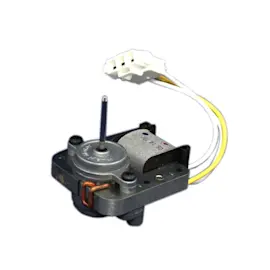
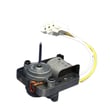
| Warm temps, fan not running | Evaporator fan motor issue | Test/replace motor 297309000 |
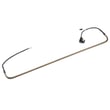
| Heavy frost, poor airflow | Defrost heater or thermostat problem | Check freezer defrost heater 5304496687 and chest freezer defrost thermostat 297216600 |
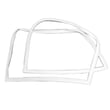
| Runs constantly, moisture around door | Door not sealing | Inspect/replace freezer door gasket 5304507201 |
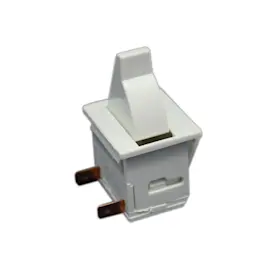
| No interior light or light stays on | Door switch issue | Test/replace crosley freezer door switch 297243800 |
Why it matters
A freezer that is running longer than normal can still “work,” but the extra run time increases energy use and accelerates wear on key components like the compressor and evaporator fan. Catching airflow, frost, and sealing problems early is the easiest way to extend service life.
Last updated: February 2026
How many cubic feet is Kenmore freezer Model 25328452801?
The exact cubic-foot capacity for Kenmore upright freezer model 25328452801 is listed on the model’s rating information and in the specifications section of the 25328452801 owner's manual. If you do not see capacity called out, you can estimate it by measuring the interior and calculating cubic feet.
Where to find the capacity (fastest options)
- Check the specifications section in the 25328452801 owner's manual
- Look for the model/serial plate inside the cabinet (upright models are commonly on the upper left interior wall)
- If you still need an estimate, measure the usable interior space (height, width, depth)
How to estimate cubic feet from measurements
Use this formula:
- Cubic feet = (interior height x interior width x interior depth) / 1728
Tips for a better estimate:
- Measure the usable space, not the outer cabinet
- Subtract areas blocked by the evaporator cover, shelves, and bins
- Use inches for the formula above
Quick reference table
| What you have | What to do | What you get |
|---|---|---|
| Manual specs | Read capacity listing | Exact capacity |
| Interior measurements | Calculate (H x W x D) / 1728 | Close estimate |
| Only exterior measurements | Do not use for capacity | Often inaccurate |
Why it matters
Capacity affects how much fresh food you can freeze at one time. A common guideline is to freeze about 3 pounds of fresh food per cubic foot at a time so the freezer can pull temperatures down properly.
Last updated: February 2026
How to clean coils on Kenmore upright freezer?
To clean the coils on your Kenmore upright freezer model 25328452801, we unplug the freezer, remove dust and pet hair from the condenser area with a coil brush and vacuum, then restore power and confirm normal cooling. For model-specific access details, use the 25328452801 owner's manual.
Before you start (safety and prep)
- Unplug the freezer before cleaning to prevent electrical shock.
- Move food to another freezer or keep the door closed as much as possible.
- Pull the freezer straight out so you can reach the back and lower front.
- Use a soft coil brush, a vacuum with a crevice tool, and a flashlight.
- Avoid bending tubing or puncturing any sealed-system lines.
How we clean the condenser coils
- Disconnect power at the outlet.
- Locate the condenser area (commonly behind a lower front grille or on the back near the bottom).
- Brush first, vacuum second:
- Brush dust off the coil fins and surrounding surfaces.
- Vacuum up loosened debris so it does not get pulled back in.
- Clean the fan and air path (if accessible): remove lint buildup around the condenser fan and vents.
- Reinstall any panel/grille, push the freezer back with clearance for airflow, then plug it in.
What “clean enough” looks like
| Check | What you want to see | What it prevents |
|---|---|---|
| Coil surface | Mostly metal visible, minimal lint | Overheating, long run times |
| Airflow | Warm air can exhaust freely | Poor cooling performance |
| Floor area | No dust mat under unit | Fan noise, restricted intake |
Why it matters
Dirty condenser coils make the compressor work harder, which can cause warmer temperatures, higher energy use, and more wear on cooling components.
If cleaning does not fix warm temps
- Confirm the door closes and seals fully; a damaged gasket can leak air.
- Listen for the evaporator fan; if it is not running, airflow inside the freezer drops.
- Check for heavy frost buildup that suggests a defrost problem.
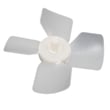
Helpful parts for common airflow issues include the motor 297309000 (evaporator fan motor) and the blade 5308000010 (evaporator fan blade).
Last updated: February 2026
Is there a reset button on a Kenmore upright freezer?
Yes. On many Kenmore upright freezers, the main user-accessible “reset” is the ALARM RESET button, which silences the Hi Temp alarm and buzzer after a warm-temperature event. For model 25328452801, operating details and control-panel behavior are covered in the 25328452801 owner's manual.
What the ALARM RESET button does (and does not do)
The ALARM RESET button is designed to acknowledge an alarm condition, not to “reboot” the freezer like a computer.
- Silences the buzzer when the Hi TEMP indicator is on.
- Helps you confirm the alarm was triggered by a power interruption or door left open.
- Does not repair a cooling problem; it only resets the alarm sound.
- If an “E” shows on the display (on electronic controls), service is needed.
Quick reset steps we recommend
- Make sure the door is fully closed and sealing.
- Press ALARM RESET to silence the buzzer.
- Give the freezer time to pull temperature back down after loading food or a power outage.
- If the alarm returns every hour, focus on airflow, frost buildup, and door sealing.
If the alarm keeps coming back: common causes to check
- Door not sealing (warped gasket, obstruction, or heavy frost)
- Warm food load or frequent door openings
- Frost buildup restricting airflow (defrost needed)
- Evaporator fan not running (fan motor or fan blade issue)
- Control or sensor problem
| Symptom | What it usually points to | What to do next |
|---|---|---|
| Hi TEMP light on after outage | Normal warm-up | Press ALARM RESET; wait for recovery |
| Alarm returns every hour | Ongoing warm condition | Check door seal, frost, airflow |
| “E” on display | Control/system fault | Arrange service diagnosis |
Why it matters
The Hi Temp alarm protects food quality by warning when the freezer rises above safe storage temperatures. Resetting the alarm is helpful, but repeated alarms mean the freezer is still warming and needs a cooling or defrost-related fix.
For model-specific control details and troubleshooting guidance, use the 25328452801 owner's manual.
Last updated: February 2026
Where is the model number on a Kenmore upright freezer?
On Kenmore upright freezers like model 25328452801, the model and serial number plate is located on the upper left wall inside the freezer. Open the door and check that upper-left interior area first; it is the standard upright-freezer location shown in the 25328452801 owner's manual.
Where to look (in order)
- Open the door and inspect the upper left interior wall.
- Look for a model and serial number plate (often silver, white, or clear).
- Wipe away frost or residue so the numbers are readable.
- Use a flashlight and view from an angle to reduce glare.
- Write the model and serial numbers exactly as printed.
What you should see on the plate
| Plate detail | Why we use it |
|---|---|
| Model number | Matches the correct parts diagrams and replacement parts |
| Serial number | Helps identify production series for part variations |
| Electrical ratings | Useful for troubleshooting power and control issues |
Why it matters
We use the exact model number to ensure parts fit your Kenmore upright freezer correctly. For example, the correct electronic control, door switch, or defrost heater can vary by model and serial range.
Last updated: February 2026
Why is my upright freezer leaking water on the floor?
Water on the floor around your Kenmore 25328452801 upright freezer is typically caused by defrost water not draining correctly (a missing drain plug, an open drain during defrosting, or a blocked drain path) or by excess moisture from a door that is not sealing well.
Most common causes (and what to check first)
- Drain left open after defrosting: If the inside drain plug is not fully reinstalled, warm air enters and creates extra frost and meltwater.
- Drain tube or drain area blocked by ice/debris: Meltwater backs up and can spill out instead of flowing to the drain tube.
- Drain pan overflow during manual defrost: The manual notes to monitor the pan so it does not overflow.
- Door not sealing or door misalignment: A poor seal pulls humid air in, creating condensation and water.
- Freezer not level: The manual explains leveling affects door alignment and sealing, which can lead to moisture problems.
Step-by-step: stop the leak
- Unplug the freezer before any defrost or internal inspection.
- If you recently defrosted it:
- Confirm the inside drain plug is installed correctly.
- If you used a pan under the drain tube, verify it did not overflow.
- Clear ice at the drain area:
- Remove food from the bottom area.
- Melt ice with warm water (small amounts at a time) and wipe up standing water.
- Check door closing and sealing:
- Make sure shelves/baskets are not preventing the door from closing.
- Relevel the cabinet so the door closes easily when left halfway open (per the manual).
Quick diagnosis table
| What you see | Most likely cause | Best next step |
|---|---|---|
| Leak happens right after defrosting | Drain plug left out or pan overflow | Reinstall plug; monitor pan during defrost |
| Water appears during humid weather or heavy use | Door not sealing well | Check gasket contact; relevel freezer |
| Frost buildup plus occasional puddles | Warm air entering, drain area icing | Confirm plug installed; clear ice at drain |
Why it matters
If defrost water cannot drain or humid air keeps entering, you can get recurring ice buildup, temperature swings, and ongoing puddles that can damage flooring.
For model-specific defrost drain steps and leveling guidance, follow the 25328452801 owner's manual.
Last updated: February 2026