 Installation guide
 Owner’s manual





Are all dishwashers 600mm deep?
No. Many full-size built-in dishwashers are close to 600 mm (about 24 inches) deep, but depth is not universal and can vary by brand, handle style, and installation clearance. For GE model GDT625PSJ6SS, the cabinet opening depth requirement is at least 24 inches.
What “600 mm deep” usually means
Dishwasher depth can be described in a few different ways, and they are not always the same:
- Cabinet opening depth: the minimum space needed in the enclosure
- Appliance depth: the body depth of the dishwasher itself
- Depth with door/handle: can add noticeable extra depth beyond the cabinet face
- Toe-kick clearance: affects how flush the unit sits at the bottom
For installation planning on GDT625PSJ6SS, we recommend using the installation guide measurements and clearances.
GE GDT625PSJ6SS depth guidance (what we know)
The installation instructions specify the rough opening must be at least 24 inches deep (about 610 mm). That is the key number to use when checking if the dishwasher will fit your cabinet.
Quick conversion table
| Measurement type | Inches | Millimeters (approx.) |
|---|---|---|
| Common “standard” opening depth | 24" | 610 mm |
| Common “standard” opening width | 24" | 610 mm |
Why depth varies between dishwashers
Even among “standard” 24-inch dishwashers, depth changes because of:
- Handle design (bar handle vs. pocket handle)
- Door thickness and insulation
- How far the unit is leveled forward/back in the opening
- Cabinet face and countertop overhang
- Toe-kick and flooring height differences
Why it matters
If you plan around “600 mm deep” without checking the installation requirements, the dishwasher can end up sitting proud of the cabinets, rubbing the tub trim/door, or pinching the drain hose. Using the model-specific opening depth requirement helps prevent fit and performance problems.
Last updated: February 2026
What is the average lifespan of a GE dishwasher?
A GE dishwasher typically lasts about 10 years with normal household use. For your GE GDT625PSJ6SS, consistent cleaning, correct loading, and fixing small issues early (like poor draining or weak wash action) helps you reach that lifespan.
What affects dishwasher lifespan most
- Hard water buildup and mineral deposits
- Clogged filters or restricted spray arms
- Overloading or blocking the spray pattern
- Running with heating or draining problems
- Door leaks that let moisture reach electrical parts
Maintenance that extends life (and improves performance)
We recommend these habits for the GDT625PSJ6SS:
- Clean and de-odorize the interior periodically as outlined in the owner's manual.
- Keep the spray arms clear of debris; a damaged or clogged arm can reduce cleaning.
- Address draining issues quickly so dirty water does not recirculate.
- Use the right detergent amount for your water hardness.
- Wipe the control panel with a lightly damp cloth, then dry thoroughly.
Common “wear” symptoms and likely part areas
| Symptom | What it often points to | Example part for this model |
|---|---|---|
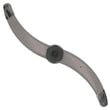
| Dishes not getting clean | Restricted spray, weak circulation | Dishwasher spray arm, lower WD22X33499 |
| Water left in tub | Drain restriction or failing pump | Drain pump assembly WD19X25187 |
| Not drying well | Heating circuit issue | Dishwasher heating element WD05X30818 |
| Won’t start or stops mid-cycle | Door not latching consistently | GE dishwasher door latch lock WD21X10490 |
Why it matters
A dishwasher near the end of its typical lifespan can still run, but small problems (poor cleaning, slow draining, weak heating) tend to cascade into bigger repairs. Routine care and timely part replacement usually costs less than waiting for a full breakdown.
Last updated: February 2026
What is the most common problem with a GE dishwasher?
The most common issue we see with a GE dishwasher like model GDT625PSJ6SS is a no-start or won’t-run complaint. In many cases, the cause is simple (power interruption or control lock), but a worn door latch or control problem can also prevent the cycle from starting.
Quick checks first (no tools)
- Confirm the dishwasher has power (reset the breaker or replace a blown fuse if needed).
- Check for a wall switch that controls dishwasher power (common near the disposer switch) and make sure it is ON.
- Make sure the door is fully closed and latching firmly.
- If the control panel is locked, unlock it using the steps in the GDT625PSJ6SS owner's manual.
- If the lights go out while you are setting options, re-touch a pad and continue (many models time out if you wait too long between button presses).
When “won’t start” points to a part
If the quick checks do not fix it, these parts are common suspects on this model:
- Door latch: if the dishwasher will not sense a closed door, it will not run (see GE dishwasher door latch lock WD21X10490).
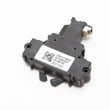
- User interface: if buttons do not respond or selections will not register (see dishwasher user interface WD21X31902C).
- Machine control: if the dishwasher has power but will not begin a cycle (see machine control WD21X32158).
Other common GE dishwasher problems (and what they usually involve)
Even when starting is the top complaint, these are also frequent:
- Not draining: drain hose routing, clogs, or a failing pump (see dishwasher drain hose WD24X10062 and drain pump assembly WD19X25187).
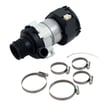
- Not cleaning well: clogged spray arm holes, low water flow, or circulation issues (see dishwasher spray arm, lower WD22X33499 and dishwasher circulation pump WD26X23258).
- Not drying: heater circuit or heating element issues (see dishwasher heating element WD05X30818).
Symptom-to-part cheat sheet
| Symptom | Most likely area | Example part on this model |
|---|---|---|
| Won’t start / won’t run | Door sensing or controls | WD21X10490, WD21X31902C |
| Won’t drain | Drain path / drain pump | WD24X10062, WD19X25187 |
| Poor cleaning | Spray / circulation | WD22X33499, WD26X23258 |
| Poor drying | Heating | WD05X30818 |
Why it matters
A dishwasher that won’t start is often a fast fix (power, lock, door closure). Checking those first prevents unnecessary part replacement and helps you focus on the most likely failure point if a repair is needed.
Last updated: February 2026
What is the difference between a regular GE and GDT625PSJ6SS?
The GE GDT625PSJ6SS is a specific GE dishwasher model (in the GDT625 series), while “regular GE” usually means a different GE dishwasher model with different features, controls, and internal components. The most accurate way to compare is by matching model numbers and checking the feature list in the GDT625PSJ6SS owner's manual.
What “regular GE” means in practice
GE makes many dishwasher lines and series. Two GE dishwashers can look similar but differ in:
- Control style (top control vs front control)
- Rack layout and capacity options (place settings vary by model)
- Wash system design (spray arm layout, diverter routing, pump output)
- Drying system (heater-assisted drying vs other options)
- Electronics (user interface and machine control versions)
Quick comparison: model-specific vs generic
| Item | “Regular GE dishwasher” (generic) | GE GDT625PSJ6SS (your model) |
|---|---|---|
| Identification | Not specific without a model number | Exact model: GDT625PSJ6SS |
| Documentation | Varies by model | Covered under GE GDT535-635 series documentation |
| Parts compatibility | Not interchangeable by brand alone | Must match GDT625PSJ6SS parts list |
| Best way to compare | Compare model-to-model | Compare GDT625PSJ6SS to the other model number |
Parts that commonly differ between models
Even within the same brand, these parts often change by series and revision:
- Wash components like the dishwasher spray arm, lower WD22X33499 and mid-level spray arm assemblies
- Door hardware such as the GE dishwasher door latch lock WD21X10490
- Drying and heating components like the dishwasher heating element WD05X30818
- Water movement parts like the circulation pump and diverter
Why it matters
If you are troubleshooting (not cleaning, not draining, not drying, won’t start) or ordering replacement parts, the exact model number is what ensures correct fit and function. Brand-only matching (“GE”) often leads to the wrong control, latch, or spray arm.
Last updated: February 2026





