Error Codes


How do I tell what model my Kenmore dryer is?
Your Kenmore dryer’s model number is printed on the appliance ID label; for Kenmore dryers it’s usually inside the door opening on the cabinet frame. Once you find it, match the full number exactly (for example, 11086874800) to get the right parts and diagrams.
Where to look for the model number label
Check these common spots on Kenmore dryers:
- Inside the dryer door opening on the front frame (most common)
- On the back panel of the dryer cabinet
- Along the door opening edge near the latch area
- Under the top panel lip (you may need a flashlight)
- Near the lint screen housing area (varies by design)
What the model number looks like (and why it matters)
Kenmore model numbers are typically all digits and should be copied exactly as shown on the label.
Quick guide
| What you see on the label | What it means for parts lookup | What to do |
|---|---|---|
| A long number like 11086874800 | The exact model identifier | Use the full number when searching parts |
| A shorter prefix like 110. | The model series prefix | Keep looking for the full model number |
| A serial number | Production identifier, not used for most parts | Record it, but prioritize the model number |
Tips to avoid ordering the wrong part
- Write down the model number and serial number before you start shopping
- Match every digit; one wrong digit can point to a different dryer design
- If the label is worn, take a clear photo and zoom in
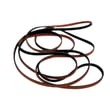
- Use the model number to confirm fit before ordering common wear items like a belt 341241
Why it matters
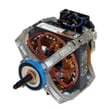
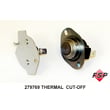
Kenmore dryers share similar styling across many years, but internal parts (drive belt, motor, thermal cut-off, door strike, blower wheel) can differ by model. Using the exact model number keeps your repair accurate and prevents returns.
Last updated: February 2026
How do I troubleshoot my 11086874800?
To troubleshoot your Kenmore dryer 11086874800, we start by matching the symptom (will not start, no heat, not drying, noisy) to the most likely airflow, power, door-switch, or drive-belt cause. A quick vent and lint-path check solves many “dryer not drying” complaints.
Step 1: Identify the symptom
- Will not start: power supply, door switch, timer/control, thermal fuse
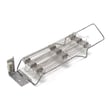
- Runs but no heat: airflow restriction, thermostat/fuse, heater circuit
- Takes too long to dry: crushed/blocked vent, clogged lint path, blower issue
- Noisy or not tumbling: belt, idler pulley, drum supports
Step 2: Do the fast checks first (no tools)
- Clean the lint screen and confirm the exhaust hood flap opens strongly.
- Run a timed dry cycle and feel for strong airflow at the outside vent.
- Check the door closes firmly; a misaligned strike can prevent starting.
- Reduce load size; heavy loads can mimic a weak drive system.
Step 3: Common part-related fixes for this model
These parts are frequently involved when symptoms persist after airflow and power checks:
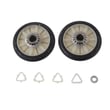
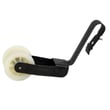
- No tumble or thumping: belt 341241, dryer idler pulley WP691366
- No heat or stops from overheating: fuse WP3392519, thermostat WP3390291
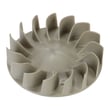
- Weak airflow or rumbling: dryer blower wheel WP694089
| Symptom | Quick test | Likely next step |
|---|---|---|
| Will not start | Verify 240V at outlet, door fully shut | Inspect door strike and start circuit |
| Runs, no heat | Check vent for blockage | Test fuse/thermostat, then heater circuit |
| Long dry times | Airflow at vent is weak | Clean venting, inspect blower wheel |
| Squealing | Noise changes as drum turns | Replace idler pulley and inspect belt |
Why it matters
Dryer troubleshooting is fastest when we rule out airflow first; restricted venting causes overheating, blown fuses, longer dry times, and repeat failures even after replacing parts.
For error-code style diagnostics on Kenmore dryers, use our Kenmore 110 series electronic control model dryer error codes guide.
Last updated: March 2026
What is the average lifespan of 11086874800?
A Kenmore dryer like model 11086874800 typically lasts 13 years with normal household use. Keeping airflow strong and replacing wear items (belt, idler pulley, thermal fuse) on time is what most often determines whether it reaches that lifespan.
Typical lifespan and what affects it
- Vent restriction is the biggest life-shortener; it overheats the heater and safety devices.
- Overloading strains the drum support system and drive components.
- Heat setting habits (high heat every load) accelerate wear on heating and cutoff parts.
- Preventive cleaning (lint screen, blower housing, vent) reduces run time and heat stress.
Parts that commonly limit dryer life
If the dryer tumbles poorly, squeals, or stops mid-cycle, these are frequent wear or safety parts for this model:
| Symptom | Most likely wear area | What to do next |
|---|---|---|
| Drum will not turn | Belt or idler pulley | Inspect belt routing and pulley spin |
| Runs but no heat | Fuse or thermostat | Check airflow first, then test parts |
| Loud squeal or thump | Idler pulley or drum support | Replace worn rotating parts |
Why it matters
A dryer can run for years while slowly overheating from poor venting; that shortens the life of the motor, heater circuit, and safety cutoffs. Fixing airflow and replacing a low-cost wear part often prevents a bigger repair.
Last updated: March 2026