 Owner’s manual
 Error Codes


How long does a Kenmore dryer last?
A Kenmore dryer typically lasts 10 to 13 years. A Kenmore 11060012001 electric commercial dryer often reaches or exceeds that range when airflow is kept clear (lint screen, lint chute, and venting) and wear items like rollers and belts are replaced before they fail; see the maintenance guidance in the 11060012001 owner's manual.
Typical lifespan and what changes it
Most dryers land in the same general window, but commercial-style use patterns can push life up or down.
- Longest life: clean venting, moderate loads, steady heat, timely part replacement
- Shortest life: restricted exhaust, frequent overloads, high heat with poor airflow
- Biggest factor: lint buildup and overheating stress on thermostats and thermal cutoffs
- Second biggest factor: drum support wear (rollers, idler, belt)
Maintenance that adds years (and prevents downtime)
Your manual calls out periodic lint inspection and notes that lint accumulation can reduce performance; it also notes the dryer is lubricated for normal life, with additional lubrication only in heavy-use situations.
- Clean the lint screen every load
- Inspect and clean the exhaust duct regularly (short, straight vent runs dry best)
- Periodically inspect for lint around the motor and blower (commercial units can accumulate more)
- Avoid overloading; heavy loads strain the belt, idler, and drum supports
- Address new squealing, thumping, or slow-start symptoms early
Common “life-extending” parts for this model
These are the parts we see most often when a dryer is otherwise in good shape but starts to wear mechanically.
| Symptom | Likely wear area | Example part for 11060012001 |
|---|---|---|
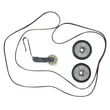
| Drum not turning, burning rubber smell | Belt/idler system | Dryer drum belt 341241 |
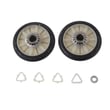
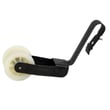
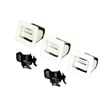
| Squealing, rumbling, thumping | Drum support components | Dryer repair kit 4392065 |
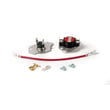
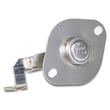
| Runs but overheats or shuts off | High-limit/thermal safety | Dryer thermal cut-off fuse kit 279816 |
Why it matters
A dryer that is drying slower than normal is usually not “just old”; it is commonly an airflow or wear-item issue. Fixing airflow and replacing a few high-wear parts can restore normal dry times and reduce heat stress on electrical components.
Last updated: February 2026
What are common problems with Kenmore dryers?
Common problems on the Kenmore 11060012001 electric commercial dryer include not running, not heating, slow drying, the drum not turning, and unusual noise. Most of these trace back to airflow restrictions (lint buildup), power or door-switch issues, or worn drive components; our owner's manual troubleshooting chart covers the key checks.
Most common symptoms and likely causes
- Dryer will not run: door switch not closing, power supply or line fuses, loose/broken wiring connections, timer or start switch issues
- Clothes not drying or slow drying: blocked lint screen or exhaust vent, heating circuit problem, load size/type issues
- Drum will not rotate: broken or slipped belt, pulley or roller wear
- Will not heat: heating element circuit issue, high-limit/operating thermostat issue, power supply problem
- Loud squealing/thumping: worn rollers/idler parts, belt wear, lint or debris in blower housing
Quick checks we recommend first (safe, high-impact)
- Clean the lint screen and confirm strong airflow at the outside vent.
- Check the door closes firmly; this model will not operate with the door open.
- Verify power and fuses; the manual specifically calls out checking line fuses and tight fuse fit.
- Listen for noise changes (squeal, rumble, scraping) to narrow down belt, rollers, or blower issues.
Parts that commonly fix these problems
| Symptom | Common fix | Example part for this model |
|---|---|---|
| Drum not turning | Replace worn/broken belt | Dryer drum belt 341241 |
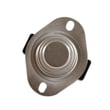
| No heat or overheating shutdown | Check safety cut-off and thermostats | Dryer thermal cut-off fuse kit 279816 and dryer high-limit thermostat WP3977767 |
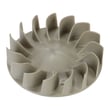
| Loud noise, poor airflow | Inspect blower wheel for damage or lint | Dryer blower wheel WP694089 |
Why it matters
On a commercial dryer like the Kenmore 11060012001, restricted exhaust airflow does more than slow drying; it can overheat the heater housing and trip safety devices. Keeping the lint screen and exhaust system clear helps prevent repeat failures and reduces downtime.
Last updated: February 2026
How do I find the model number on my 11060012001?
On the Kenmore 11060012001 electric commercial dryer, the model number is on the identification tag in the door well behind the dryer door. Open the door and look around the door opening area for the tag that lists both the model and serial numbers.
Where to look (fast checklist)
- Open the dryer door fully
- Check the door well (the frame area the door closes against)
- Look just behind the door opening for a paper or metal tag
- Confirm it shows Model No. and Serial No.
- Write both down before ordering parts or scheduling service
What you should record
The manual recommends having these details ready:
- Model number
- Serial number
- Date of purchase
| Item | Why we need it | Where you’ll find it |
|---|---|---|
| Model number | Ensures correct part fit | Tag in the door well behind the door |
| Serial number | Identifies production run | Same tag as model number |
| Date of purchase | Helpful for service history | Receipt or records |
Why it matters
Kenmore dryers often have similar-looking cabinets and controls across multiple models. Using the exact model number from the door-well tag helps us match the right diagrams and parts (like a belt, heating element, or thermal cut-off kit) for your specific dryer.
For a diagram-style reference and other identification details, use the 11060012001 owner’s manual.
Last updated: March 2026








