Owner’s manual
 Error Codes


What are the disadvantages of a bottom freezer?
Bottom-freezer refrigerators like the Whirlpool GX5FHTXVY09 make fresh food easy to reach, but the tradeoff is that frozen items sit lower and are often harder to access and organize. The biggest disadvantages are bending/squatting for freezer access, heavier lifting from a deep drawer, and more “lost” items under baskets.
Common drawbacks you will notice
- You often bend or squat to reach frozen food, which can be tough on your back and knees.
- The freezer is usually a deep drawer, so items can get buried under bags and boxes.
- Large, heavy items (roasts, turkeys, bulk frozen foods) are harder to lift up and out.
- Kids can reach the freezer easily, which can lead to more door-open time and messes.
- Many bottom-mount designs cost more upfront than basic top-freezer models.
Organization and access: bottom freezer vs top freezer
| Feature | Bottom freezer | Top freezer |
|---|---|---|
| Everyday fresh-food access | Easier | Harder |
| Frozen-food access | More bending | More eye-level |
| Finding small items | Often harder (buried) | Often easier (shelves) |
| Handling bulky items | Harder (lift from drawer) | Easier (lift from shelf) |
What to do if the freezer is hard to use
- Group foods by type (meats, vegetables, breakfast, snacks) and keep each group together.
- Use bins or freezer-safe trays to prevent “pile-ups” in the drawer.
- Put heavy items toward the top/front so you are not lifting from the bottom.
- Keep a simple inventory list on the door to reduce digging and door-open time.
- Follow the storage and temperature guidance in the GX5FHTXVY09 owner's manual.
Why it matters
Bottom-freezer layouts are great for day-to-day refrigerated items, but freezer ergonomics and organization affect food quality and energy use. Less digging means fewer temperature swings, less frost, and fewer spoiled items.
Last updated: February 2026
How do I find the cubic feet of my Whirlpool refrigerator?
For your Whirlpool GX5FHTXVY09 bottom-mount refrigerator, the most accurate way to find cubic feet is to look up the model’s published capacity in the GX5FHTXVY09 owner's manual. If you need a quick estimate, you can calculate interior volume by measuring inside dimensions and converting cubic inches to cubic feet.
Fast ways to get the capacity
- Check the manual/specs: Capacity is typically listed as “capacity” or “total volume” in cubic feet in the GX5FHTXVY09 owner's manual.
- Use the model/serial tag: Confirm the model number on the sticker inside the fresh food section, then match it to the correct documentation.
- Measure for an estimate: Measure the usable interior space (not the outside cabinet).
How to calculate cubic feet (estimate)
- Empty enough space to measure accurately.
- Measure interior:
- Width (inches)
- Height (inches)
- Depth (inches)
- Multiply:
width x height x depth = cubic inches - Convert:
cubic inches ÷ 1,728 = cubic feet
What to measure (and what not to)
- Measure usable space inside shelves and bins.
- Do not include door bins if you want a conservative estimate.
- Measure the freezer and refrigerator sections separately, then add them.
Typical capacity ranges (for context)
| Refrigerator style | Typical total capacity |
|---|---|
| Bottom-mount (like GX5FHTXVY09) | About 18 to 25 cu. ft. |
| Side-by-side | About 20 to 28 cu. ft. |
| French door | About 22 to 32 cu. ft. |
Why it matters
Knowing cubic feet helps us match storage needs and compare models correctly; it also helps when planning kitchen fit, airflow clearance, and organizing shelves and freezer baskets.
Last updated: February 2026
What's the average lifespan of a whirlpool refrigerator?
Most Whirlpool refrigerators, including the Whirlpool GX5FHTXVY09 bottom-mount style, typically last 10 to 18 years with normal household use and basic maintenance; 10 to 15 years is a common average range.
What affects lifespan the most
- Condenser coil cleanliness (dust buildup makes the compressor work harder)
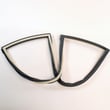
- Door seal condition (air leaks cause longer run times and frost issues)
- Airflow and loading (blocked vents reduce cooling efficiency)
- Room temperature and ventilation (tight cabinets and hot garages shorten life)
- Water and ice system upkeep (clogs and leaks add stress and service calls)
Maintenance checklist that helps you reach the high end of the range
- Vacuum and brush dust from the condenser area regularly.
- Keep door gaskets clean and check for gaps; close doors firmly every time.
- Set stable temps (most homes do best around 37°F fresh food and 0°F freezer).
- Leave space for airflow around the cabinet and avoid blocking interior vents.
- Address puddles, frost, or warm temps quickly to prevent compressor overwork.
Quick guide: what “normal aging” looks like
| What you notice | Common cause | What to do first |
|---|---|---|
| Longer run times | Dirty coils, warm room, door leaks | Clean coils; check gasket seal |
| Frost buildup in freezer | Door not sealing, airflow issue | Inspect gasket; clear vents |
| Warm fresh food section | Airflow/damper issue, fan issue | Check vents; listen for fan |
| Noisy operation | Fan blade hitting ice, worn fan | Inspect fan area; defrost if iced |
Why it matters
A refrigerator that runs longer than it should uses more electricity and puts extra wear on sealed-system components like the compressor. Simple upkeep often adds years of service life and helps food stay at safe temperatures.
For model-specific care and cleaning intervals, follow the GX5FHTXVY09 owner's manual.
Last updated: February 2026
Which is better top mount or bottom mount freezer?
For most households, a bottom-mount freezer (like Whirlpool model GX5FHTXVY09) is better for everyday convenience because fresh food sits at eye level; a top-mount freezer is often better if you want the simplest layout and typically lower purchase cost.
Quick comparison
| Feature | Top-mount freezer | Bottom-mount freezer |
|---|---|---|
| Fresh-food access | You bend more | Easier, eye-level access |
| Freezer access | Easier, chest height | You bend more |
| Organization | Simple shelves | Often better baskets/drawers |
| Typical efficiency | Often slightly better | Often slightly lower |
| Repair access | Similar overall | Similar overall |
How we recommend choosing
- Choose bottom-mount if you use the refrigerator section most and want less bending.
- Choose top-mount if you want a straightforward design and often the best value.
- If you store lots of frozen food, pick the style that makes your freezer easiest to organize.
- If you have mobility concerns, prioritize the compartment you access most.
- If your kitchen is tight, measure door swing and drawer clearance using the GX5FHTXVY09 owner's manual.
Why energy use can differ
Top-mount models are often a bit more energy-efficient because the compressor and condenser area are at the bottom and heat rises; design and insulation also play a big role. In real kitchens, door-opening habits, room temperature, and gasket condition can matter as much as the freezer location.
Why it matters
The “better” choice is the one that fits how you cook and shop. If you reach for fresh foods many times a day, bottom-mount comfort usually wins; if you want simple, budget-friendly storage, top-mount is hard to beat.
Last updated: February 2026
What is the most common problem with whirlpool refrigerators?
The most common Whirlpool refrigerator problem is a cooling complaint (warm fridge, warm freezer, or temperature swings). On the Whirlpool GX5FHTXVY09 bottom-mount refrigerator, the most frequent root causes are airflow restrictions, dirty condenser coils, frost buildup from a defrost issue, or a failing fan that cannot move cold air.
Quick checks we recommend first
- Confirm the controls are set correctly and the doors close fully.
- Clean the condenser coils and make sure the condenser area has good airflow.
- Listen for the evaporator fan; it should run when the compressor is running.
- Check for heavy frost on the freezer back wall (often points to a defrost problem).
- Look for water under the crisper or freezer, which can indicate a clogged defrost drain.
Common symptoms and the most likely causes
| Symptom | Most likely cause | What to do next |
|---|---|---|
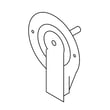
| Fresh food warm, freezer OK | Airflow problem between compartments | Check vents and the damper operation; inspect the refrigerator damper control assembly WPW10196393. |
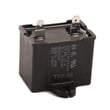
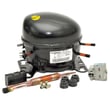
| Both sections warm | Heat not being removed efficiently | Clean coils; if the compressor is running but cooling is poor, check start components and sealed system. |
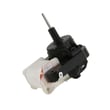
| Noisy or weak airflow | Evaporator fan issue | Inspect the refrigerator evaporator fan motor WPW10128551 and fan area for ice buildup. |
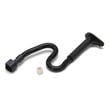
| Puddles or ice on freezer floor | Defrost drain restriction | Clear the drain path; inspect the refrigerator drain tube W10619951. |
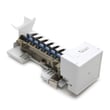
| Ice maker not making ice | Water supply or ice maker failure | Verify water flow and freezer temp; consider the refrigerator ice maker assembly W10884390. |
Why it matters
Cooling problems usually start small (restricted airflow, dirty coils, a slow fan) and then turn into food-safety issues and higher energy use. Catching the cause early also helps you avoid replacing major components like the compressor.
Where to confirm model-specific settings and diagnostics
Use the GX5FHTXVY09 owner's manual for the correct temperature settings, airflow guidance, and any model-specific troubleshooting steps.
Last updated: February 2026