Installation guide
 Owner’s manual
 Error Codes


What is the capacity of the MHW6000XW0?
The Maytag MHW6000XW0 washer has a 4.3 cu. ft. capacity, which is the tub size used to estimate how much laundry the washer can handle per load. For cycle details and loading guidance specific to this model, use the owner's manual.
What 4.3 cu. ft. means for everyday loads
A 4.3 cu. ft. front-load washer is designed for medium-to-large loads and works best when you avoid packing items tightly.
- Load items loosely so water and detergent can circulate
- Mix small and large items to help balance the spin
- Wash bulky items (comforters, jackets) one at a time when possible
- Use HE detergent; too much can cause oversudsing and poor rinsing
- Leave the door open after washing to help the bellow dry and reduce odors
Quick capacity guide (typical examples)
These examples help translate capacity into real loads; exact results vary by fabric and how absorbent items are.
| Load type | Typical fit in 4.3 cu. ft. | Best practice |
|---|---|---|
| Everyday mixed laundry | Medium-to-large load | Do not compress items |
| Towels | Large towel load | Add a few smaller items to balance |
| Bulky bedding | Often fits 1 comforter | Use “Bulky” type cycle if available |
Why it matters
Capacity affects cleaning, rinsing, and spin performance. Overloading a front-load washer can lead to poor soil removal, longer cycle times, vibration, and extra wear on suspension parts such as the washer shock absorber W11415987.
Last updated: February 2026
What is the most common problem with a Maytag washer?
The most common Maytag washer problem is draining issues, usually caused by a clogged drain path (coins, lint, small socks) or a failing drain pump. On the Maytag MHW6000XW0, start by checking the drain hose setup and then inspect the pump area for blockages; the owner's manual outlines safe access and checks.
What you will notice when draining is the issue
- Water left in the drum at the end of the cycle
- A cycle that stops mid-wash or won’t advance to spin
- A humming sound with little or no water movement
- Slow draining into the standpipe or laundry tub
- Wet clothes because the washer never reaches full spin
Quick checks we recommend first (no parts yet)
- Power safety: Use a grounded 3-prong outlet; do not use an extension cord.
- Drain hose routing: Make sure the hose is secured and not kinked or crushed.
- Standpipe or tub drain: Confirm the household drain is not backing up.
- Leveling and vibration: An out-of-level washer can trigger control behavior that feels like a “won’t finish” problem; adjust the feet if needed.
When a part is likely needed
If the drain path is clear and the washer still won’t drain reliably, the drain pump is a common fix for this symptom set.
| Symptom | Most likely cause | Common next step |
|---|---|---|
| Hums but won’t drain | Pump jammed or failing | Check for debris; replace pump if damaged |
| Drains slowly | Partial blockage or weak pump | Clear hose and pump inlet |
| Intermittent drain | Loose connection or failing pump | Inspect wiring and pump operation |
For this model, the replacement part is the washer drain pump WPW10321032.
Why it matters
A washer that cannot drain cannot spin properly, so clothes stay wet and the machine can stop to protect the motor control system. Fixing drain problems early also helps prevent leaks and odor buildup.
Last updated: February 2026
What's the average lifespan of a Maytag washer?
A Maytag washer typically lasts about 10 to 14 years with normal household use and basic maintenance. For your Maytag MHW6000XW0 front-load washer, good installation, correct detergent use, and routine cleaning are the biggest factors that help it reach the high end of that range; see the owner's manual for model-specific care steps.
What affects lifespan the most
- Installation and leveling: An unlevel washer vibrates more and wears shocks, bearings, and mounts faster.
- Water quality and temperature: Hard water and very hot cycles can increase scale and stress components.
- Load size and cycle choice: Frequent overloading and heavy-duty cycles shorten life.
- Detergent habits: Too much detergent (especially in front-loaders) can cause residue, odors, and extra strain.
- Moisture control: Leaving the door closed after use encourages mildew and bellow deterioration.
Maintenance that helps a front-load washer last longer
- Keep the door slightly open between loads to dry the tub and washer bellow.
- Run a monthly cleaning cycle (or a hot wash with a washer cleaner) to reduce buildup.
- Check inlet hoses for bulges, cracks, or leaks; replace hoses every 5 years.
- Level the washer so all feet are firmly on the floor; tighten jam nuts after leveling.
- Empty pockets and use a mesh bag for small items to reduce drain pump clogs.
Common “wear-out” parts and what they usually mean
| Symptom | Likely wear area | Example part on this model page |
|---|---|---|
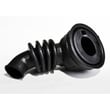
| Leaks at the door, mildew smell | Door boot/bellow or clamp | Washer bellow W11106747 |
| Excess shaking or banging | Suspension/dampening | Washer shock absorber W11415987 |
| Won’t drain, water left in tub | Drain pump or blockage | Washer drain pump WPW10321032 |
| Door won’t lock or won’t start | Door lock system | Washer door lock WPW10306374 |
Why it matters
Knowing the typical 10 to 14 year lifespan helps you decide whether to maintain and repair your MHW6000XW0 (often cost-effective for leaks, draining, or vibration issues) or plan for replacement when multiple major components start failing.
Last updated: February 2026
Can I wash a king size comforter in a Maytag washer?
Yes, you can usually wash a king-size comforter in a Maytag washer like model MHW6000XW0 as long as the comforter fits loosely in the drum and can tumble freely. For best results, use an HE detergent, choose a bulky/bedding-type cycle (or a gentle cycle), and plan on an extra spin or dry time.
How to tell if it will fit (and wash correctly)
A comforter is a good fit when it can move, not just sit packed in place. Use these checks:
- You can close the door without forcing the load into the drum
- The comforter fills no more than about 2/3 of the drum (loose, not compressed)
- You can push the comforter down and it springs back (not tightly wedged)
- The washer can tumble the load during wash, not just rotate a heavy mass
Recommended settings for bulky bedding
For a front-load washer like the Maytag MHW6000XW0, these settings help prevent poor rinsing and imbalance:
- Use HE detergent only; use less than you think you need
- Select Warm or Cold water unless the care label requires Hot
- Turn on Extra Rinse if available
- Use High Spin only if the comforter stays balanced; otherwise use Medium
- Wash the comforter by itself (no pillows or extra items)
Quick guide: what to do if problems show up
| What you notice | What it usually means | What to do |
|---|---|---|
| Washer bangs or stops to rebalance | Load is too heavy or uneven | Pause, redistribute, restart; reduce spin speed |
| Soap residue or stiff spots | Too much detergent or poor rinsing | Use less HE detergent; add extra rinse |
| Comforter still soaked after cycle | Drain/spin limited by imbalance | Run a drain/spin; redistribute first |
| Musty odor after washing | Comforter stayed damp too long | Dry immediately; run a washer-clean cycle later |
Why it matters
When a comforter is packed too tightly, it cannot tumble, so it will not rinse well and the washer can go out of balance during spin. Keeping the load loose protects the suspension and helps the comforter come out cleaner.
For cycle options, detergent guidance, and load recommendations specific to your washer, follow the owner's manual.
Last updated: February 2026