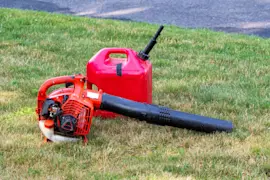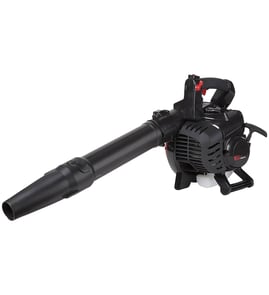




What is the life expectancy of a gas leaf blower?
A gas leaf blower like the Weed Eater FL1500 typically lasts about 10 years with normal homeowner use and basic maintenance (clean air filtration, fresh fuel mix, and prompt repair of wear items). Heavy use and poor fuel storage shorten lifespan quickly.
Most gas leaf blowers fall into these real-world ranges:
- 7 to 10 years: average homeowner use with routine upkeep
- 10+ years: consistent maintenance and proper fuel storage
- 3 to 6 years: heavy use, dirty air filter, or frequent stale-fuel issues
| Usage pattern | What you can expect | Biggest lifespan driver |
|---|---|---|
| Occasional seasonal use | Longer life | Fuel storage and carburetor cleanliness |
| Weekly yard use | Average life | Air filtration and cooling airflow |
| Commercial or near-daily use | Shorter life | Heat, vibration, and faster wear |
These steps do the most to keep your FL1500 running year after year:
- Keep the air filter clean; replace it when it will not clean up well (see ayp line trimmer air filter 530047932).
- Use fresh, correctly mixed fuel; do not store mixed fuel for long periods.
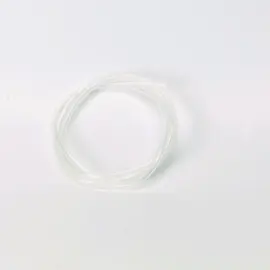
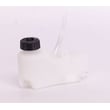
- Inspect fuel lines and the tank cap for leaks or cracking (see lawn & garden equipment engine fuel return line 530069599 and line trimmer fuel tank cap 530014347).
- Keep cooling air passages clear so the engine does not overheat.
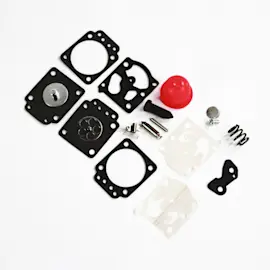
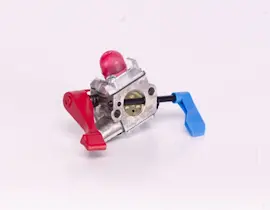
- Fix hard-starting early; a neglected fuel system often turns into a carburetor rebuild (see lawn & garden equipment carburetor rebuild kit z000-001-k004-a).
A gas blower usually fails early from fuel-system varnish, air restriction, or overheating, not because the engine is “worn out.” Simple upkeep and replacing small parts on time costs less than repeated no-start troubleshooting.
Last updated: February 2026
What is the best gas leaf blower for the money?
For the best value in a gas leaf blower, we recommend choosing based on how you’ll use it: a lightweight handheld for routine driveway and patio cleanup, or a backpack blower for longer sessions and heavier leaf loads. If you already own a Weed Eater FL1500, keeping it running with the right maintenance parts often delivers the best “for the money” result.
A gas blower is the best buy when it matches your workload without being overpowered, overweight, or hard to start.
- Handheld: best for small to medium yards and quick cleanups
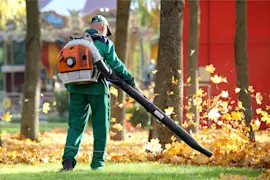
- Backpack: best for large yards, wet leaves, and long run times
- Comfort: anti-vibration, balanced grip, and easy throttle control matter as much as power
- Starting reliability: a blower that starts easily saves time and frustration
- Serviceability: common wear parts should be easy to replace
| Your typical job | Best value style | What to prioritize | Common “money-waster” |
|---|---|---|---|
| Light leaf cleanup, weekly | Handheld gas | Low weight, easy starts | Buying pro power you never use |
| Medium yard, mixed debris | Strong handheld or light backpack | Balance of power and comfort | Too-heavy handheld causing fatigue |
| Heavy fall cleanup, long sessions | Backpack gas | Comfort harness, high airflow | Cheap unit with poor ergonomics |
We see the biggest value gains when you restore starting and fuel delivery performance before replacing the whole blower.
- Replace a dirty or damaged air filter with the ayp line trimmer air filter 530047932
- Fix fuel smell, leaks, or poor venting with the line trimmer fuel tank cap 530014347
- Address fuel routing issues with the lawn & garden equipment engine fuel return line 530069599
- If the starter system is slipping or not rewinding smoothly, inspect the start spring 545008011 and recoil components
“Best for the money” is usually the blower that fits your yard size and starts reliably every time. For many owners, a small investment in fuel and air system parts restores performance and avoids the cost of replacing the entire machine.
Last updated: February 2026
Is a higher mph or CFM better for a leaf blower?
Higher CFM is better when you want to move more leaves at once (fast cleanup of piles), while higher MPH is better when you need more “push” to break stubborn debris loose or to do precise blowing on hard surfaces. For your Weed Eater FL1500, the best choice depends on the job, not just the biggest number.
- Choose higher CFM for big piles, wet leaves, and clearing wide areas quickly.
- Choose higher MPH for packed leaves, gravel driveways, and blowing debris out of cracks.
- Balance matters: strong MPH without enough CFM can feel “sharp” but narrow; high CFM with low MPH can feel “wide” but less forceful.
- Nozzle design affects both: a concentrator tube can increase effective speed at the tip, while a wider outlet favors volume.
- Real-world performance also depends on engine tune, air filter condition, and fuel delivery.
| Task | Spec that matters most | Why |
|---|---|---|
| Clearing large piles on grass | CFM | Moves more material per pass |
| Wet leaves and heavy debris | CFM + MPH | Needs volume plus push |
| Blowing off sidewalks/driveways | MPH | Breaks friction and moves debris forward |
| Cleaning corners, mulch beds, cracks | MPH | More control and “reach” |
If your FL1500 feels weak, it is often not a “CFM vs. MPH” problem. Airflow drops quickly when the engine cannot breathe or fuel correctly. Before replacing the blower, we focus on basic maintenance items that restore power.
- Clean or replace the air filter (a clogged filter reduces airflow and RPM); see ayp line trimmer air filter 530047932.
- Inspect the fuel cap venting and seal; a bad cap can restrict fuel flow; see line trimmer fuel tank cap 530014347.
- Check fuel lines for cracking, softness, or leaks; see engine fuel return line 530069599.
- If starting is difficult or recoil feels wrong, inspect the starter components; see start spring 545008011.
Last updated: February 2026