Owner’s manual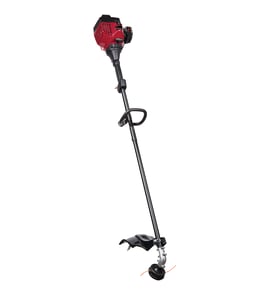



How to replace line on Craftsman gas trimmer?
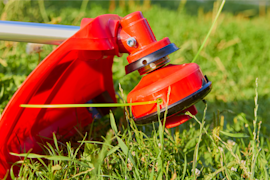
To replace the cutting line on your Craftsman 536773501 high wheel brush trimmer, we remove the trimmer head cover, load the correct diameter line evenly, then reassemble and test bump-feed. For the exact line size and head style used on your unit, follow the steps in the owner's manual.
Before you start
- Shut the engine off and let the muffler cool completely
- Disconnect the spark plug wire to prevent accidental starting
- Wear gloves and eye protection
- Clean grass and debris off the trimmer head so the tabs and arrows are visible
How to reload the trimmer line (typical bump-feed head)
- Open the head: Press the two side tabs (or remove the cap/knob, depending on head style) and lift off the cover.
- Remove old line: Pull out any remaining line pieces and clear the spool channels.
- Cut new line: Cut two equal lengths of line (most heads use 8 to 12 ft per side, but use your manual’s spec).
- Load the spool:
- Insert each line end into its own anchor hole or channel.
- Wind in the direction of the arrow on the spool.
- Keep tension so the line lays neatly and does not cross over.
- Set the line ends: Feed each line end through the eyelets in the head housing.
- Reassemble: Snap the cover back on and pull both line ends to confirm they move freely.
- Test: Start the trimmer and tap the head lightly to verify bump-feed advances line.
Which replacement line should I buy?
For Craftsman 536773501, we list a compatible replacement cutting line on this page: Craftsman line trimmer cutting line, red 79999. You still want to match the diameter listed in your manual because the wrong thickness can cause poor feeding or jams.
| If you notice | Most likely cause | What to do |
|---|---|---|
| Line will not feed | Line crossed on spool or wound backward | Rewind neatly in arrow direction |
| Line feeds too fast | Spool wound loosely | Rewind with steady tension |
| Line breaks often | Line too thin, brittle, or hitting hard edging | Use correct diameter; avoid constant contact with concrete |
Why it matters
Correctly loaded line reduces head vibration, improves cut quality in heavy weeds, and prevents premature wear on the spool and eyelets.
Last updated: February 2026
What size is the fuel line on a Craftsman trimmer?
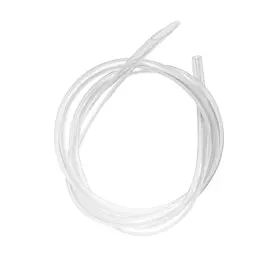
For the Craftsman high wheel brush trimmer model 536773501, fuel line size is selected by matching the inside diameter to the carburetor and tank fittings and the outside diameter to the tank grommet and routing path. Use the old line as your template and confirm routing in the 536773501 owner's manual.
How we size fuel line on this type of trimmer
Fuel line is not one universal size across Craftsman trimmers; the correct size is the one that seals on your fittings without clamps and still routes cleanly through the tank opening.
- Match inside diameter (ID) to the carburetor nipple and tank pickup fitting for an airtight seal
- Match outside diameter (OD) so it passes through the tank grommet (if used) without pinching
- Replace hardened or swollen hose; ethanol exposure commonly makes lines brittle
- Cut hose ends square and push fully onto barbed fittings
- Replace the in-tank fuel filter and grommet if they are stiff, cracked, or leaking
Quick measurement guide
| What to measure | How to measure | What “right” looks like |
|---|---|---|
| ID | Calipers or drill-bit gauge on the hose opening | Slides on snug; no fuel seepage, no air leak |
| OD | Calipers across the hose | Fits through grommet/hole without forcing |
| Length | Compare to old line and routing | No kinks; enough slack for engine movement |
Symptoms the fuel line size is wrong
- Primer bulb does not fill (if equipped)
- Hard starting, only runs on choke, or surges at idle
- Fuel leaks at the tank outlet or carb connection
- Engine dies when you tilt the trimmer
Why it matters
A small air leak in the fuel line makes a small engine run lean, which causes poor performance and overheating. Correct sizing keeps fuel delivery steady and helps the trimmer prime and start normally.
If you are also stocking up on consumables, we carry Craftsman line trimmer cutting line, red 79999 for this model, and you can search additional parts by model number on Sears PartsDirect.
Last updated: February 2026
What is the average lifespan of 536773501?
A Craftsman high wheel brush trimmer like model 536773501 typically lasts 8 to 12 years with normal homeowner use and routine maintenance (fresh fuel, clean air filter, and correct cutting line). For model-specific maintenance intervals, use the owner's manual.
What affects lifespan most
- Fuel quality and storage: old fuel and ethanol-related varnish shorten carburetor life
- Airflow maintenance: a dirty air filter increases engine wear
- Cutting load: heavy brush and constant wide-open throttle reduce service life
- Vibration and impacts: bent crankshaft risk from striking rocks, stumps, or curbs
- Line choice and feed: incorrect diameter or poor-quality line overworks the head
Maintenance schedule we recommend
| Task | Frequency | Why it matters |
|---|---|---|
| Replace/refresh fuel | Every 30 days (or drain for storage) | Prevents hard starting and clogging |
| Clean/replace air filter | Every 10 to 25 hours | Protects engine from dust |
| Check fasteners and guards | Every use | Prevents vibration damage |
| Inspect cutting line | Every use | Keeps cutting efficient and reduces strain |
Parts that commonly drive “end of life” decisions
These are the items that most often determine whether a trimmer is worth repairing versus replacing.
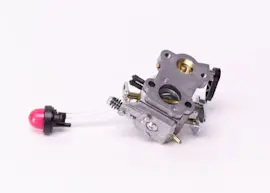
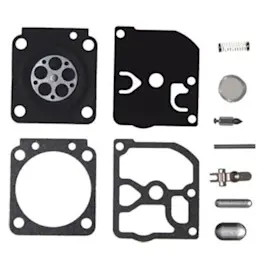
- Carburetor and fuel system components (starting and running issues)
- Recoil starter parts (no-crank or rope problems)
- Ignition components (no-spark)
- Drive and cutting head wear items (poor cutting performance)
If you are mainly fighting poor cutting performance, installing the correct line is the fastest win; the model’s listed replacement is Craftsman line trimmer cutting line, red 79999.
Why it matters
Knowing the typical lifespan helps you decide whether to invest in tune-up parts and maintenance or plan for replacement. On gas trimmers, most “failures” are fuel-related and are preventable with proper storage and routine checks.
Last updated: March 2026