Installation guide
 Owner’s manual
 Error Codes


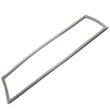
Where is the model number on a Kenmore side by side refrigerator?
On Kenmore model 25356512400, the model number is printed on the appliance identification label inside the refrigerator compartment. We typically see this label on a side wall near the top front, or around the crisper area; use the placement diagram in the owner's manual to confirm the exact spot.
Where to look first (fast checklist)
- Open the fresh food (refrigerator) door and check the upper side walls
- Look along the ceiling area just inside the door opening
- Check the side wall near the crisper drawers
- Inspect the frame around the door opening (hinge side and latch side)
- Wipe the label gently; condensation and food residue can hide the print
What you should see on the label
The label usually includes both a model number and a serial number. The model number is the one you will use to match parts like a water filter, door gasket, or ice maker components.
| Item on label | What it’s used for | Example format |
|---|---|---|
| Model number | Finding correct parts and diagrams | 25356512400 |
| Serial number | Identifying production details | Letters and numbers |
Why it matters
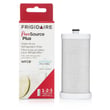
Using the exact model number prevents ordering the wrong part when you are replacing common items such as the genuine Kenmore refrigerator water filter WFCB or troubleshooting dispenser and ice maker issues.
Last updated: February 2026
How to move a Kenmore refrigerator?
To move your Kenmore 25356512400 side-by-side refrigerator safely, we recommend emptying it, disconnecting power and water, and rolling it straight out (not twisting) to protect the floor, doors, and water line. Use the door-removal steps in the owner's manual if you must fit through a narrow doorway.
Before you move it (prep checklist)
- Remove food, bins, and loose shelves; tape doors shut if needed.
- Turn the ice maker off (raise the wire signal arm, if equipped).
- Unplug the power cord.
- Shut off the household water supply valve.
- Disconnect the water line at the freezer door lower-hinge connection (press the outer ring on the fitting, then pull the tube out).
- Protect the floor with a hard runner or appliance mat; avoid dragging.
How to roll it out without damaging anything
- Pull straight out from the front; avoid rocking side-to-side because it can stress the rollers and door alignment.
- Keep the refrigerator upright; do not lay it on its side.
- Move slowly over thresholds; have a second person guide the back and watch the water line.
- If you need more clearance, remove the toe grille first.
If it will not fit through a doorway
The manual includes door removal instructions (refrigerator door and freezer door). Mark hinge locations with a pencil before removing hinges so the doors realign more easily during reassembly.
| Situation | Best approach | Why |
|---|---|---|
| Tight doorway | Remove doors per manual | Prevents hinge and cabinet damage |
| Long move across floor | Use an appliance dolly and straps | Reduces tip-over risk |
| Moving back into place | Level it after positioning | Helps doors close and seal properly |
After you move it (set up again)
- Reconnect the water line, turn the water on, and tighten any leaking connections.
- Plug the refrigerator back in.
- Turn the ice maker back on (lower the wire signal arm).
- If the refrigerator was off for a while during moving, replace the water filter before regular use; the correct filter for this model is the genuine Kenmore refrigerator water filter WFCB.
Why it matters
Moving a side-by-side refrigerator can knock doors out of alignment, kink the water line, or cause leaks at the quick-connect fitting. Careful straight rolling and proper water reconnection prevents dispenser and ice maker problems.
Last updated: February 2026
What is the cubic foot of my Kenmore refrigerator model 25356512400?
The Kenmore side-by-side refrigerator model 25356512400 is typically in the mid-20 cubic foot range; many units in this series are around 26 cu. ft. total capacity. For the exact capacity for your specific configuration, we recommend confirming it in the owner's manual.
How to confirm the exact cubic feet for model 25356512400
We use the manual and model label details to match the correct capacity listing.
- Check the model and serial tag inside the fresh food compartment (usually on a side wall).
- Look in the specifications section of the owner's manual for “capacity” or “total volume.”
- If the manual lists separate volumes, add fresh food + freezer to get total cubic feet.
- If you are comparing to another refrigerator, compare total capacity, not “usable shelf space.”
Typical capacity ranges (for context)
Most full-size side-by-side refrigerators like the Kenmore 25356512400 fall into these common ranges:
| Refrigerator style | Typical total capacity |
|---|---|
| Side-by-side (full size) | 22 to 28 cu. ft. |
| Compact / apartment | 7 to 14 cu. ft. |
| Top freezer (full size) | 14 to 22 cu. ft. |
Why it matters
Knowing the cubic feet helps when you are planning kitchen fit, estimating food storage, and choosing compatible accessories (for example, water filtration and ice maker usage patterns). If you are maintaining water quality, replacing the filter on schedule also helps protect the water system.
Related part that supports water and ice performance
- If your refrigerator uses the Kenmore cartridge referenced in the manual, the matching replacement is the genuine Kenmore refrigerator water filter WFCB.
Last updated: February 2026
How to replace an ice maker in a side by side refrigerator?
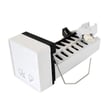
To replace the ice maker in your Kenmore 25356512400 side-by-side refrigerator, we shut off power and the water supply, remove the ice bin and mounting hardware, swap the ice maker, then restore water and power and turn the ice maker back on using the wire signal arm. See the owner's manual for your model’s exact access points and fastener locations.
Before you start (safety and prep)
- Unplug the refrigerator (or switch off the breaker).
- Turn OFF the household water shutoff valve.
- Empty the ice container and remove it from the freezer.
- Protect the floor with towels; a small amount of water can spill.
- Keep the ice maker wire signal arm in the OFF (up) position until water is reconnected.
Replacement steps (typical side-by-side process)
- Stop ice production: Lift the wire signal arm to OFF (up).
- Remove the ice container: Lift up and out.
- Access the ice maker: Remove the front cover (if equipped) and any mounting screws.
- Disconnect wiring: Unplug the ice maker harness/connector.
- Remove the ice maker assembly: Slide it off the mounting tabs or bracket.
- Install the new ice maker: Hang it on the tabs/bracket, reinstall screws, and reconnect the harness.
- Turn water and power back on: Restore power, open the shutoff valve, and check for leaks.
- Turn the ice maker ON: Lower the wire signal arm to ON (down).
What to expect after replacement
Because the water line and valve may have been disturbed, the first batch of cubes can be discolored or taste odd; discard early batches until cubes look and taste normal.
| After install | Normal | What to do |
|---|---|---|
| No ice yet | Yes (startup delay) | Wait several hours; confirm arm is ON (down) |
| Odd-tasting first cubes | Yes | Discard first batches |
| Leaks at rear connection | No | Tighten fittings carefully; do not overtighten |
Parts that commonly relate to ice maker issues
If the ice maker still will not fill or dispense after replacement, these model-compatible parts are often involved:
- Refrigerator water inlet valve assembly 242252702 (controls water flow to the ice maker)
- Ice container 241860803 (bin can jam if ice clumps)
- Ice maker mold 241798231 (ice maker component that can crack or deform)
Why it matters
A correct ice maker replacement prevents leaks, protects the dispenser mechanism from jams, and helps your Kenmore 25356512400 maintain steady ice production without odd flavors from stagnant water or old ice.
Last updated: February 2026
What are the most common problems with Kenmore refrigerators?
The most common problems we see on Kenmore refrigerators like model 25356512400 are cooling issues (warm fridge or freezer), ice maker or dispenser failures, water leaks, frost buildup from defrost problems, and door sealing issues. Many are caused by airflow restrictions, dirty coils, or worn parts and can be diagnosed at home using the owner's manual.
Common symptoms and what they usually point to
- Not cooling or weak cooling: blocked air vents, dirty condenser coils, evaporator fan issue, or a defrost problem
- Ice maker not making ice: water supply issue, clogged filter, inlet valve problem, or ice clumps jamming the bin
- Water dispenser slow or no water: clogged water filter, low house water pressure, or inlet valve issue
- Water leaking: clogged/iced defrost drain, loose water line, or a valve seep
- Frost buildup: defrost thermostat/heater/control issue, or door not sealing
- Noisy operation: fan blade rubbing ice, fan motor wear, or items vibrating against the cabinet
Quick checks we recommend first (safe DIY)
- Confirm controls are set correctly and vents inside both compartments are not blocked.
- Clean condenser coils and make sure the unit has good airflow around it.
- If ice is clumping in the bin, remove the bin and shake to loosen cubes (avoid sharp tools).
- Replace the water filter on schedule; most households do best at every 6 to 9 months.
- Inspect door gaskets for gaps, tears, or areas that do not grip a paper strip.
Parts that commonly solve these problems
| Problem area | Common fix | Example part for 25356512400 |
|---|---|---|
| Poor water flow, bad taste/odor | Replace filter | Genuine Kenmore refrigerator water filter WFCB |
| No ice or no water to ice maker | Test/replace inlet valve | Refrigerator water inlet valve assembly 242252702 |
| Frost buildup/defrost failures | Check defrost thermostat | Refrigerator defrost bi-metal thermostat 5303918214 |
| Door not sealing, sweating, frost | Replace gasket | Refrigerator gasket 241786014 |
Why it matters
Cooling, ice, and leak complaints often share the same root causes: restricted airflow, a clogged filter, or a small sealing problem that forces longer run times. Fixing those early helps protect the compressor and keeps temperatures stable for food safety.
Last updated: February 2026