 Installation guide
 Owner’s manual
 Error Codes


Can you still get parts for a Kenmore dishwasher?
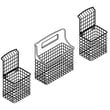
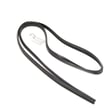
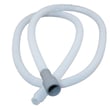
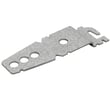
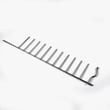
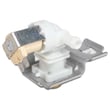
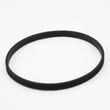
Yes. We still carry replacement parts for Kenmore dishwashers, including the Kenmore 66515889000, as long as the part is still being manufactured and stocked. The key is matching the exact model number to the correct OEM-style part, such as a door seal, drain hose, or pump motor.
How to find the right part for Kenmore 66515889000
Use the model number 66515889000 to look up the exact part listing and diagram callouts, then match by part name and part ID.
- Confirm the full model number from the rating label (inside the door area on most dishwashers)
- Identify the symptom (leak, no drain, poor cleaning, door won’t latch)
- Match the part by description and part ID, not by appearance alone
- Check for related hardware you may need (clamps, seals, gaskets)
- Follow the steps and safety notes in the 66515889000 installation guide
Common Kenmore dishwasher parts we see replaced
These are frequent fixes on this model family, and they are available for 66515889000 when in stock:
| Symptom | Likely part to check | Example part for this model |
|---|---|---|
| Water leaking at the door | Door gasket | Dishwasher door seal W10542314 |
| Dishwasher won’t drain | Drain path and hose | Dishwasher drain hose 8269144A |
| Poor wash or grinding noise | Wash system components | Pump motor W10782773 |
Why it matters
Kenmore dishwashers are built to be serviceable, and using the correct model-matched part helps prevent repeat failures, leaks, and fit issues. It also keeps installation and operation aligned with the manufacturer’s requirements in the 66515889000 owner’s manual.
Last updated: February 2026
How do I tell what model Kenmore dishwasher I have?
Your Kenmore dishwasher model number is usually printed on a rating label inside the door area. Open the door and look along the inner door frame (left or right side), the top edge of the door, or the tub rim; match that number exactly when ordering parts or using the 66515889000 owner’s manual.
Where to look first (fastest checks)
- Inner door frame around the opening (most common)
- Top edge of the door (visible with the door open)
- Tub wall near the front opening
- Side of the door itself (near the hinges)
- Lower edge of the tub opening
If you still cannot find the label
- Check the toe-kick area behind the lower access panel
- Look on the side of the cabinet opening (if the unit was recently pulled out)
- Use the 66515889000 installation guide to safely access the lower front area if needed
- If the label is worn, use a bright flashlight and take a close-up photo to read faint print
What the model number looks like (and why it matters)
For Kenmore dishwashers, the model number is typically a long number string (often starting with 665). Using the exact model number ensures the correct fit for items like a door seal, drain hose, or dishrack parts.
| What you find | What to do with it | Why it helps |
|---|---|---|
| Model number (example: 66515889000) | Use it to match diagrams and parts | Ensures correct fit and compatibility |
| Serial number | Keep it for service history | Helps identify production details |
| Partial/blurred label | Photograph and zoom in | Prevents ordering the wrong part |
Why it matters
Kenmore model numbers can look similar, but small differences change the wash system, racks, and seals. Matching the full model number avoids returns and helps us point you to the right troubleshooting steps and parts.
Last updated: February 2026
Is it worth repairing a Kenmore dishwasher?
Yes; repairing a Kenmore dishwasher like model 66515889000 is worth it when the failure is a common wear item (seal, hose, rack parts) or a single, clearly diagnosed issue. We base the decision on total repair cost, overall condition, and whether the problem is recurring.
How we decide: repair vs. replace
Use these practical checkpoints (they apply to Kenmore dishwashers in this class):
- Total repair cost vs. replacement cost: Repair is the better value when the total is well under half the cost of a comparable new dishwasher.
- What failed: Seals, hoses, and rack components are usually economical; motors and electronic controls are higher-cost.
- Symptoms: One-time leak or no-drain is often a straightforward fix; repeated leaks or repeated shutdowns point to multiple issues.
- Parts availability: If the needed parts are readily available, repair stays predictable.
- Diagnosis quality: Follow the troubleshooting steps in the 66515889000 owner’s manual before buying parts.
Repairs that are usually worth it on this model
These fixes commonly restore normal operation at a reasonable cost:
- Door leaking from a worn gasket: replace the dishwasher door seal W10542314
- Drain leaks or poor draining from a cracked or kinked hose: replace the dishwasher drain hose 8269144A
- Door not latching or closing smoothly: inspect latch and hinge friction components
- Poor cleaning from food debris buildup: inspect the chopper area and filters
Repairs that can tip toward replacement
These can still be repaired, but we weigh cost and condition more heavily:
| Repair area | What it usually involves | Value check |
|---|---|---|
| Circulation pump or motor | Longer labor time, higher part cost | Repair when the dishwasher is otherwise in good shape |
| Electronic control or power supply | Higher-cost electronics | Repair when the rest of the unit is solid and the issue is confirmed |
| Multiple recurring leaks | Several seals, hoses, or tub-related issues | Replacement often makes more sense |
Why it matters
Catching a small leak or drain problem early prevents secondary damage (cabinet swelling, corrosion, odor) and keeps the repair limited to a single part instead of a chain of failures.
Last updated: February 2026
Why is water standing in the bottom of my Kenmore dishwasher?
Water standing in the bottom of your Kenmore 66515889000 dishwasher usually means the unit is not fully draining, or you are seeing the small amount of water the design keeps near the bottom during operation. First confirm the cycle finished, then check for a drain restriction or a drain pump problem using the steps in the 66515889000 owner's manual.
Quick checks that fix most standing-water complaints
- Make sure the wash cycle is complete (water can remain mid-cycle).
- Cancel and drain (if your control panel has that option), then listen for the drain sound.
- Check the sink drain and garbage disposer (a clogged sink drain can back up into the dishwasher).
- Inspect the drain hose under the sink for kinks, crushing, or a blockage.
- Verify the drain hose routing has a high loop or air gap (prevents backflow).
What “some water in the bottom” can mean
During installation verification, it is normal to see water in the bottom of the tub shortly after starting a short cycle. The install procedure has you run the shortest cycle, wait about 2 minutes, then open the door and confirm there is water in the bottom of the tub. Use the 66515889000 installation guide to compare what you are seeing.
| What you see | Most likely cause | What to do next |
|---|---|---|
| A shallow puddle after you just started a cycle | Normal fill level during washing | Let the cycle finish, then recheck |
| Water remains after the cycle ends | Drain restriction or drain pump issue | Check hose, disposer, and pump area |
| Humming but no draining | Pump jam or failing pump | Clear obstruction; consider pump replacement |
Parts that commonly relate to poor draining
If you find a restriction or leak at the drain path, these model-matched parts are commonly involved:
- Dishwasher drain hose 8269144A (kinked, clogged, or leaking hose)
- Hose clamps and connections (loose or corroded clamps can cause leaks and poor flow)
Why it matters
Standing water can cause odors, redeposit soil on dishes, and lead to slow draining over time. Restoring proper drain flow helps the ULTRA WASH filtration and soil removal system work as intended.
Last updated: February 2026







