Installation guide
 Owner’s manual


Is a 7.4 cu ft dryer big?
Yes. A 7.4 cu. ft. drum is considered a large-capacity size for a dryer like the GE GFD45GSSM0WW; it gives you more room for bulky loads (comforters, towels) and helps items tumble more freely for better drying.
What “big” means in practical use
A larger drum mainly improves airflow and tumbling space; it does not automatically mean faster cycles if the venting is restricted.
- Fits bulky items more comfortably (bedding, heavy towels)
- Helps reduce wrinkling by giving clothes more room to move
- Lets you dry larger mixed loads (within the dryer’s rated load limits)
- Can still take a long time if the lint screen or vent is clogged
- Works best when you avoid packing the drum tightly
Capacity quick guide
| Dryer capacity | Common description | Best for |
|---|---|---|
| 6.0 to 6.9 cu. ft. | Standard | Smaller households, lighter loads |
| 7.0 to 7.4 cu. ft. | Large | Most families, towels and bedding |
| 7.5 cu. ft. and up | Extra-large | Frequent bulky loads, larger households |
What to check so a “big” dryer dries like it should
Good venting matters as much as drum size. For this GE dryer, follow the venting and rough-in guidance in the GFD45GSSM0WW installation guide.
- Clean the lint screen before every load
- Confirm the dryer is vented outdoors (especially important for gas dryers)
- Use rigid or semi-rigid metal ducting where recommended; avoid crushed flex duct
- Keep the vent run as short and straight as possible
- If loads feel damp, inspect the blower housing and internal ducting for lint buildup
Why it matters
A 7.4 cu. ft. dryer is “big” because it supports larger loads, but real-world drying performance depends heavily on airflow, vent routing, and routine lint maintenance.
Last updated: January 2026
What is the most common problem with a GE dryer?
On the GE GFD45GSSM0WW dryer, the most common complaint we see is “runs but won’t heat”. In many cases the root cause is a heating circuit issue (power supply, airflow restriction, or a failed temperature-sensing component), not the motor or timer. See the GFD45GSSM0WW owner’s manual for model-specific troubleshooting steps.
What to check first (fast, high-impact)
- Power supply: A dryer can tumble with only one leg of power; check and reset both breakers (or replace both fuses) if tripped/blown.
- Airflow and lint: Clean the lint screen every load; restricted venting is a top cause of poor heat and long dry times.
- Gas supply (gas models): Confirm the gas shutoff valves are fully open; if LP, verify the tank is not empty.
- Cycle selection: Some options (like extended tumble) change what you see on the display and can be mistaken for a heating problem.
- Annual maintenance: Have the exhaust duct and interior lint professionally cleaned about once a year.
Common “no heat” causes and what they look like
| Symptom | Likely area | What we recommend |
|---|---|---|
| Drum turns, no heat at all | House power or gas supply | Reset both breakers; verify gas shutoffs are open |
| Heat is weak, drying takes too long | Venting restriction or lint buildup | Clean lint screen; inspect and clean exhaust duct |
| Heat cuts in and out | Temperature sensing/control | Test sensors; consider replacing a thermistor if failed |
Parts that often relate to heating complaints
If airflow and power are good, a failed sensor can prevent proper heating. For this model, a common heat-control component is the dryer heating element control thermistor WE4M398.
Why it matters
A dryer that tumbles but does not heat is often still “working” mechanically, so it is easy to miss the real issue. Fixing power, venting, and temperature sensing restores safe drying performance and helps prevent repeat failures.
Last updated: January 2026
What is the lifespan of a GE gas dryer?
A GE gas dryer like model GFD45GSSM0WW typically lasts about 10 years with normal household use. Lifespan depends most on venting, routine cleaning, and avoiding overheating conditions that strain the motor, drum support parts, and heat system.
What affects lifespan the most
- Venting and airflow: A restricted vent makes the dryer run hotter and longer.
- Lint buildup: Lint in the lint screen housing or blower area increases heat and wear.
- Load size: Chronic overloading stresses the drum belt, idler pulley, and bearings.
- Installation conditions: This dryer is designed to be exhausted outdoors; correct setup helps prevent heat and moisture issues.
- Wear parts: Belts, glides, and seals are normal maintenance items over time.
Quick maintenance checklist (best ROI)
- Clean the lint screen every load.
- Inspect and clean the vent path regularly; replace crushed or foil-style ducting with rigid or UL-listed metal duct.
- Keep the dryer area above 50°F for proper control operation.
- Avoid overloading; dry similar fabrics together to reduce cycle time.
- If you hear squealing or thumping, address it early to prevent secondary damage.
Common wear items and what they usually mean
| Symptom | Likely wear area | Example part for this model |
|---|---|---|
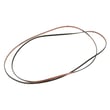
| Drum not turning, motor runs | Belt or idler system | Dryer drum belt WE03X29897 |
| Squealing, scraping, rough drum movement | Drum support/glide or felt seal | Dryer drum glide bearing, upper WE03X37320 |
| Clothes take longer to dry | Airflow restriction or sensor/thermistor issue | Check venting first; then controls/sensors |
Why it matters
A dryer that runs hot or runs long to dry loads wears out faster and can damage multiple systems at once (drum support, motor, and heat components). Following the venting and care guidance in the GFD45GSSM0WW owner’s manual helps you get the full expected service life.
Last updated: January 2026
Is GE GFD45GSSM0WW stackable?
Yes. The GE dryer model GFD45GSSM0WW is designed to be stacked on a compatible front-load washer when you use the correct GE stacking kit (GEFLSTACK) and follow the required clearances and installation steps in the GFD45GSSM0WW installation guide.
What you need to stack it correctly
To stack this dryer safely and keep it stable, we recommend:
- Use the GEFLSTACK complete stack kit (made for stacking the dryer over the washer)
- Install the dryer on top and the washer on the bottom
- Follow the minimum clearances (commonly 0 in. sides, 1 in. rear, 1 in. top)
- Use the kit’s brackets, screws, and rubber pads exactly as directed
- Have a qualified installer perform the work if you are not experienced with appliance installation
Quick checklist before you start
These are the most common issues that prevent a successful stack:
- Washer and dryer are not the correct compatible pair
- Floor is not level (stacked units amplify vibration)
- Missing kit hardware (brackets, pads, screws)
- Not enough space for venting and service access
- Dryer is laid down or handled incorrectly during prep
Stacking kit and what it includes
| Item | What it does | Why it matters |
|---|---|---|
| Left and right brackets | Locks dryer to washer | Prevents shifting and tip risk |
| Rubber pads | Reduces vibration and movement | Helps noise control and stability |
| Screws (multiple sizes) | Secures brackets and pads | Keeps the stack rigid |
Why it matters
Stacking saves floor space, but it also increases vibration sensitivity and makes venting and service access more important. Using the correct kit and clearances helps prevent noise, movement, and premature wear on parts like the drum belt and idler pulley.
Last updated: January 2026