Owner’s manual
 Error Codes


Are all washers 27 inches wide?
No. Many full-size washers are about 27 inches wide, but not all models are. For the LG WT7200CV, the cabinet width is 27 inches, so it fits the most common “standard” laundry opening while still needing proper side and rear clearance (see the WT7200CV owner's manual).
Typical washer widths (what to expect)
Most washers fall into a few common width ranges:
- Compact washers: about 24 inches wide
- Most full-size top-load and front-load washers: about 27 inches wide
- Extra-large or specialty models: can be 28 to 30+ inches wide
- Stackable laundry centers: vary by brand and configuration
LG WT7200CV dimensions (model-specific)
Here are the published dimensions for LG WT7200CV:
| Measurement | Size |
|---|---|
| Width | 27 in. |
| Depth | 28 3/8 in. |
| Height (lid closed) | 44 1/2 in. |
| Height (lid open) | 57 1/4 in. |
Clearance and install space tips
Even when the washer itself is 27 inches wide, we plan space for hoses, airflow, and vibration control.
- Leave at least 1 inch clearance on each side
- Leave at least 4 inches behind the washer
- Plan overhead clearance if you have cabinets or shelving (lid-open height matters)
- Install on a solid, level floor to reduce noise and out-of-balance movement
- Confirm your drain standpipe or laundry tub height is within the recommended range in the manual
Why it matters
Width alone does not guarantee a good fit. Depth, lid-open height, and required clearances affect whether the washer will install correctly and run without vibration, hose kinks, or airflow restrictions.
Last updated: February 2026
How to solve the problem in LG washing machine?
For the LG WT7200CV washer, we solve most “won’t start” and error-code problems by checking the basics first (power, water supply, lid fully closed), then using the built-in troubleshooting and Smart Diagnosis steps in the WT7200CV owner's manual. If the issue points to a lid lock failure, replacing the lid lock and switch assembly is the fix.
Quick checks that fix many problems
- Press POWER to wake the control panel if it timed out.
- Confirm the washer is plugged into a working, grounded 120V outlet.
- Turn both hot and cold faucets fully on.
- Close the lid completely; remove any item caught under the lid.
- Press START/PAUSE after selecting a cycle.
- Reset a tripped breaker or replace a blown fuse (use a dedicated circuit when possible).
If the washer drains slowly or won’t drain
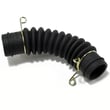
A kinked, pinched, or clogged drain hose can cause slow or no draining; also confirm the standpipe height is not above the washer’s maximum drain height.
| Symptom | Most common cause | What we do first |
|---|---|---|
| Won’t drain / drains slowly | Drain hose kinked or clogged | Straighten hose; clear blockage |
| Won’t start with lid closed | Lid lock not engaging | Inspect lid strike and lock; test lock |
| Stops and shows an error | Load or mechanical issue | Redistribute load; check for obstructions |
When a part is likely needed
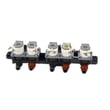
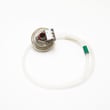
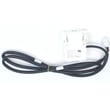
If the washer won’t run because it can’t confirm the lid is locked (or the lock is intermittent), the repair typically involves the washer lid lock and switch assembly EBF61674802. If the tub won’t fill correctly or overfills, a failed pressure switch can be involved; for this model that is commonly the LG washer water-level pressure switch 6501EA1001R.
Use Smart Diagnosis for faster pinpointing
Smart Diagnosis can transmit diagnostic tones to help identify the failure faster. We follow the manual’s steps (phone near the POWER button, then press and hold TEMP until the beeps, then keep the phone in place until the tones finish).
Why it matters
Solving the simple items first (lid closure, water supply, power) prevents unnecessary parts replacement. When the symptom matches a specific system (lid lock, draining, filling), targeting that system reduces repeat breakdowns and downtime.
Last updated: February 2026
How do I clean the filter on my LG direct drive washing machine?
On the LG WT7200CV washer, the “filter” most owners mean is the water inlet filter screens where the fill hoses connect; cleaning them helps fix slow filling and some inlet (IE) errors. We recommend following the steps in the WT7200CV owner's manual and reinstalling the screens after cleaning.
What you’ll need
- A towel or shallow pan (for drips)
- A small bowl
- White vinegar (or a lime scale remover)
- A soft brush (old toothbrush)
- A bucket (to flush hoses)
Steps to clean the water inlet filters (hose screens)
- Unplug the washer.
- Turn OFF both water faucets completely.
- Unscrew the hot and cold fill hoses from the back of the washer.
- Carefully pull the small filter screens out of the inlet ports.
- Soak the screens in white vinegar (or lime scale remover) as directed on the product label.
- Gently brush off debris; do not deform the screens.
- Rinse thoroughly and press the screens back into place.
- Flush each hose into a bucket with the faucet wide open for a few seconds.
- Reconnect hoses, turn water ON, and check for leaks.
Important cautions (to prevent leaks and damage)
- Do not run the washer with the inlet filters removed.
- Do not overtighten hose connections; tighten firmly, then recheck for seepage.
- If you use hard water, clean the inlet screens more often.
Which “filter” are you trying to clean?
| Filter location | What it affects | Common symptoms |
|---|---|---|
| Water inlet filter screens (at hose connections) | Filling performance | Slow fill, IE message, weak flow |
| Drain pump filter (not typical on many top-load designs) | Draining performance | Standing water, long drain, drain errors |
Why it matters
Clogged inlet screens restrict water flow, which can lengthen cycle times, reduce wash performance, and trigger fill-related errors. Keeping the screens clean also helps protect the water inlet valve.
Last updated: February 2026
Can an LG washer wash a king size comforter?
Yes; the LG WT7200CV washer can wash a king size comforter as long as it fits easily in the tub and can move freely during the wash. For best results, wash the comforter by itself and use the Bedding cycle (see the WT7200CV owner's manual).
How to load a king comforter correctly
- Wash the comforter individually (do not add towels, jeans, or small items).
- Place the comforter as far down in the tub as possible.
- Do not pack the tub tight; the lid should close easily.
- Keep the load balanced; avoid washing a single small item with it.
- If it does not fit easily, do not force it; choose a larger-capacity washer or a laundromat machine.
Best cycle and settings to use
LG’s guidance for bulky items points to the Bedding cycle for comforters and similar items.
| Item | Recommended cycle | Key tip |
|---|---|---|
| Comforter / blanket | Bedding | Wash alone; allow room to tumble |
| Pillows / pet bedding | Bedding | Similar absorbency; separate load |
| Waterproof items (mattress covers, plastic mats) | Waterproof | Keep within the cycle’s weight guidance |
What to watch for (and why it matters)
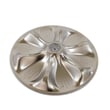
Bulky loads that are too large or packed too tightly can’t circulate properly; that leads to poor cleaning, out-of-balance spinning, and potential damage to fabrics or the washer. Leaving space for movement is what lets the washplate and spin system do their job.
If you get a UE or uE balance error
A comforter is one of the most common causes of out-of-balance conditions in a top-load washer. Use the Bedding cycle, load it low in the tub, and wash it alone; then reference our LG top load washer ue and ue error codes guide for quick fixes.
Last updated: February 2026