Owner’s manual


What size is a Kenmore Model 11064712200 dryer?
The Kenmore electric dryer model 11064712200 is a 29-inch wide dryer. For planning space, allow room to fully open the door and leave clearance behind the cabinet for the exhaust vent elbow; the exact clearance depends on your vent setup (see the owner's manual).
Key dimensions and clearances to plan for
From the installation instructions for this 29-inch platform, we use these as the practical sizing checkpoints:
- Width: 29 in (this is the dryer’s nominal cabinet width)
- Behind-dryer clearance: most installs need at least 5 1/2 in behind the dryer for the exhaust vent with an elbow
- Side clearance (recommended): 1 in on each side to reduce noise transfer and make service easier
- Door swing space: the location must be large enough to fully open the dryer door
Quick fit guide (what to measure)
Measure your laundry space before moving the dryer in:
- Wall-to-wall opening width (and any trim that narrows it)
- Depth from the back wall to the front edge of the space (include baseboards)
- Space behind the dryer for the vent connection and elbow
- Door swing clearance in front of the dryer
- Closet ventilation openings if installing in a closet
Typical space planning numbers (helpful rule of thumb)
We use these common planning ranges for 29-inch Kenmore and Whirlpool-built electric dryers when you need a quick estimate (confirm your exact depth and height in the owner's manual):
| Measurement | Typical range for this style of dryer | What affects it most |
|---|---|---|
| Width | 29 in | Fixed cabinet width |
| Depth | ~27 to 30 in | Vent elbow, door style, handle |
| Height | ~36 to 43 in | Control console style, leveling legs |
Why it matters
Correct sizing prevents crushed vents (poor airflow and long dry times), makes the door usable, and leaves enough room for safe electrical and exhaust connections.
Last updated: February 2026
What are common problems with Kenmore dryers?
Common problems on Kenmore electric dryers like model 11064712200 include no heat (often a tripped breaker or airflow restriction), long dry times from a clogged lint screen or vent, and “won’t run” symptoms caused by power, door, or control issues. Our owner's manual troubleshooting tables cover these symptoms and the quickest checks.
Most common symptoms and what usually causes them
- Not drying satisfactorily: lint screen clogged; restricted exhaust airflow; crushed or kinked vent
- Runs but no heat: one of the two house fuses or breakers is open (dryer tumbles but does not heat)
- Will not run: power cord not firmly plugged in; breaker tripped; door not fully closed; START not pressed; cycle not selected
- Lint on clothes: lint screen clogged; load too large; overdrying; paper/tissue left in pockets
- Overheating or stopping mid-cycle: restricted venting that causes high temperatures and trips safety devices
Quick checks we recommend first (fast, no parts)
- Clean the lint screen before every load.
- Run the dryer 5 to 10 minutes, then check airflow at the outside exhaust hood.
- Confirm both dryer breakers (or fuses) are on; many electric dryers use a 2-pole supply.
- Make sure the door closes firmly and the cycle is selected, then press START.
- Check that the vent is not crushed behind the dryer and that the hood flap opens freely.
When a part is the likely fix
If basic airflow and power checks are good, these parts commonly solve the underlying failure:
| Symptom | Common part involved | Example part for this model |
|---|---|---|
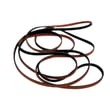
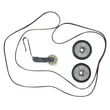
| Drum not turning | Worn/broken belt | Dryer drum belt 341241 |
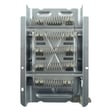
| No heat (after power/vent checks) | Failed heating circuit component | Dryer element 279838 |
| Won’t start when door closes | Door switch not closing electrically | Dryer door switch WP3406107 |
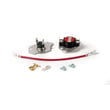
| Overheats, then shuts down | Safety fuse opens from heat/airflow issues | Dryer thermal cut-off fuse kit 279816 |
Why it matters
Most “dryer problems” trace back to airflow and power. Restricted venting increases dry time, wastes energy, and can overheat the heater housing, which can open a thermal cut-off and leave you with a dryer that runs but does not heat.
Last updated: February 2026
What is the life expectancy of a Kenmore dryer?
Most Kenmore electric dryers, including model 11064712200, last 10 to 13 years with normal household use. With consistent care (especially lint and vent cleaning), it’s common to get 15 years of service, and some units run longer with timely part replacement.
What affects dryer lifespan the most
A dryer’s life is usually determined by heat stress, airflow restriction, and wear items (belt, rollers, idler, and thermostats). We recommend focusing on these high-impact habits:
- Clean the lint screen before every load
- Keep the exhaust venting clear and properly routed (restricted airflow overheats parts)
- Avoid overloading; heavy loads strain the drum belt and support rollers
- Use the right cycle and heat setting for the fabric
- Address new noises or long dry times early (they often signal a wearable part)
Typical lifespan by what you’re seeing
| What you notice | What it usually means | What to do next |
|---|---|---|
| Longer dry times | Vent restriction or heating issue | Clean venting; check heating circuit parts |
| Squealing or thumping | Drum support wear or belt wear | Inspect drum support system; consider a rebuild kit |
| Drum not turning | Belt or motor drive issue | Check belt first, then motor/pulley |
| Overheating or no heat | Thermostat, thermal cut-off, or element issue | Inspect airflow and test heat components |
Parts that commonly extend the life of this dryer
Replacing normal-wear parts on time often adds years of reliable use:
- Dryer drum belt 341241 (drum won’t tumble, slipping, or belt break)
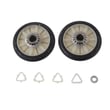
- Dryer repair kit 4392065 (common wear items that cause noise and poor tumbling)
- Dryer thermal cut-off fuse kit 279816 (dryer overheats or stops heating after overheating event)
- Dryer high-limit thermostat WP3977767 (overheating protection issues)
- Dryer element 279838 (no heat or weak heat after airflow is confirmed)
Why it matters
A dryer that runs with poor airflow or worn drum support parts works hotter and harder than it should. That shortens the life of the heating element, thermostats, motor, and wiring, and it also increases drying time and energy use. For model-specific care and operating guidance, follow the owner's manual.
Last updated: February 2026