


What kind of oil do you use in a Craftsman tiller?
For the Craftsman 917299640 rear-tine tiller, the exact engine oil type and fill capacity depend on the specific engine installed on your unit, so we identify it by checking the engine’s oil fill cap/dipstick markings and any engine labeling. In most cases, SAE 30 works well in warm weather, while 10W-30 is a better choice for cooler temperatures.
Use these practical checks to match oil to conditions and avoid hard starting or excess wear:
- Warm weather use (about 40°F and up): SAE 30 is commonly recommended
- Cooler weather or big temperature swings: 10W-30 is commonly used
- If you see oil consumption (level drops quickly): switch back to SAE 30 in warm weather
- Always use 4-cycle engine oil: do not use 2-cycle mix oil
- Check the engine label: some engines specify a preferred viscosity range
- Park the tiller on level ground and let the engine cool.
- Remove the oil fill cap/dipstick, wipe it clean, then reinsert to read the level.
- Add oil slowly, rechecking often; stop at the “FULL” mark.
- Reinstall the cap/dipstick securely and wipe any spills.
| Mistake | What it can cause | What we recommend |
|---|---|---|
| Overfilling | Smoking, leaks, fouled plug | Fill to the dipstick “FULL” mark only |
| Underfilling | Rapid engine wear | Recheck level before each use |
| Wrong viscosity for season | Hard starting or poor lubrication | SAE 30 (warm), 10W-30 (cool) |
Correct oil viscosity and proper fill level protect the crankshaft, piston, and bearings, and they help your Craftsman tiller start easier and run cooler during long tilling sessions.
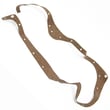
If you notice oil leaking around the engine case after service, inspect sealing surfaces and replace a damaged gasket 532431022 when applicable.
Last updated: January 2026
Where is the model number on a Craftsman rear tine tiller?
On the Craftsman rear-tine tiller model 917299640, the model number is typically printed on a product ID label attached to the tiller frame. Most often, we see it on or near the tine shield (tine guard) or on the engine area near the fuel tank; some versions place it toward the front of the unit.
Look for a rectangular sticker or metal tag; wipe off dirt and oil so the numbers are readable.
- Tine shield or tine guard area (rear of the unit near the tines)
- Frame rail near the transmission/gear case
- Engine mounting area near the fuel tank
- Front frame or handle support area
- Under the belt/drive cover area (if accessible without disassembly)
The label can include multiple identifiers. For parts lookup, the model number is the key.
| Label item | What it’s used for | Example format |
|---|---|---|
| Model number | Finds correct diagrams and parts | 917299640 |
| Serial number | Identifies production run | Varies |
| Engine model/type/code | Used for engine-specific parts | Varies |
We use the exact model number to match the correct Craftsman parts diagrams and compatible replacement parts for your rear-tine tiller with counter rotating tines. Even small model-number differences can change belts, chains, and hardware.
If the tag is damaged, you can still narrow things down by comparing key assemblies and hardware sizes.
- Clean the area with a rag and mild degreaser, then re-check under good light
- Check multiple locations; some units have more than one tag
- Compare your drive components to parts listings, such as the v-belt 532132672
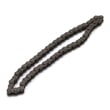
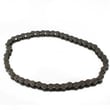
- If you’re servicing the tine drive, compare chain style and length to the tiller chain, #25-50 532102134
Last updated: January 2026
Are rear tine tillers better?
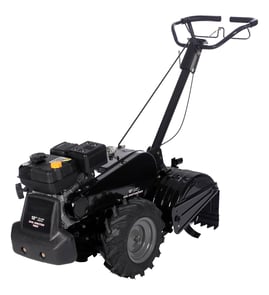
Rear-tine tillers are usually the better choice when you need to break new ground, work rocky or root-filled soil, or till larger garden plots. For the Craftsman 917299640 rear-tine tiller with counter rotating tines, the rear-tine design helps it dig in more steadily and reduces “bouncing” compared with many front-tine models.
Rear-tine models tend to perform best when traction and consistent tine engagement matter most.
- New gardens or compacted soil that needs deeper initial tilling
- Rocky soil or areas with small roots where lighter tillers can skip
- Larger areas where stability and control reduce fatigue
- Mixing in compost or amendments more evenly across a wider pass
- Users who want forward drive assistance instead of “pulling” the machine
| Feature | Rear-tine tiller (like 917299640) | Front-tine tiller |
|---|---|---|
| Best for | New ground, tougher soil | Existing beds, lighter soil |
| Stability | Higher | Lower |
| Effort | Lower operator strain | More physical control needed |
| Maneuverability | Lower | Higher |
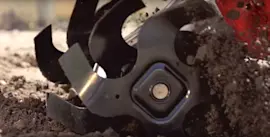
Your Craftsman 917299640 uses counter rotating tines, which generally bite into the soil more aggressively than standard forward-rotating tines.
- Improves digging action in hard ground
- Helps pull the machine into the soil (less skimming)
- Can bring more rocks to the surface (normal for aggressive tilling)
Choosing the right tiller type saves time and wear on key drive components like belts, chains, and the gear case. If you notice slipping, poor tine drive, or jerky movement, inspecting the drive system parts (for example, the v-belt 532132672 or tiller chain, #25-50 532102134) can help restore performance.
Last updated: January 2026
What are the common problems with lawn tillers?
Common problems we see on the Craftsman 917299640 rear-tine tiller include hard starting or stalling (fuel or ignition issues), tines or wheels not driving (belt, chain, or gearcase problems), and poor tilling performance (depth setting or worn drive components). Most issues trace back to fuel quality, spark, or drivetrain wear.
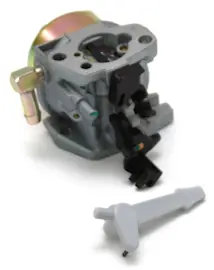
- Engine will not start / starts then dies: stale fuel, clogged fuel filter, dirty carburetor, fouled spark plug
- Engine runs rough / lacks power: restricted fuel flow, dirty air filter, incorrect choke use, old gasoline
- Tines do not turn: worn or loose drive belt, broken chain, damaged gearcase, linkage out of adjustment
- Wheels do not drive / slips under load: belt or idler wear, drivetrain binding, internal gear wear
- Excess vibration or noise: loose hardware, worn bearings, damaged chain or gearcase components
For the Craftsman 917299640, drivetrain complaints commonly involve the belt/chain/gearcase area. If you are diagnosing “tines not turning” or “no drive,” these model-compatible parts are good starting points to inspect:
- Fuel: Drain old gas; refill with fresh gasoline. Check for water or debris in the tank.
- Spark: Inspect the spark plug condition and gap; replace if fouled.
- Drive engagement: Confirm the control bar and shift linkage move freely and fully engage.
- Belt/chain condition: Look for glazing, cracking, slack, or broken links.
- Gearcase leaks/noise: Oil seepage or grinding can point to internal wear.
| Symptom | What to check first | What it often leads to |
|---|---|---|
| Won’t start | Fresh fuel, spark plug | Fuel system cleaning or ignition tune-up |
| Starts then stalls | Fuel flow, choke, carburetor | Fuel restriction or carburetor service |
| Tines won’t turn | Belt tension, chain condition | Belt/chain replacement or gearcase inspection |
| Poor till depth | Depth stake setting, soil conditions | Adjustment or worn drive components |
Catching fuel and drivetrain issues early helps prevent bigger repairs, like gearcase damage, and keeps your counter-rotating tines digging consistently without excessive slipping or vibration.
Last updated: January 2026
What are the parts of a tiller?
A Craftsman rear-tine tiller like model 917299640 is built from a drive system, a tine/gearcase system, and operator controls, plus the hardware that holds everything together. Exact configurations vary by model, but the core assemblies and wear parts are consistent across rear-tine tillers.
- Tines and tine shaft: the rotating blades that break up soil
- Gear case/transmission: transfers power to the tines
- Drive system: belts, chains, and pulleys that move power from the engine
- Wheels and depth stake: control traction and tilling depth
- Controls and linkages: shift arm, lock lever, control bar, cables
- Seals and bearings: support shafts and help keep dirt and oil where they belong
These are common “wear” or service items we see on this model:
- V-belt 532132672 for power transfer in the drive system
- Tiller chain, #25-50 532102134 for drivetrain motion between sprockets
- Gear case 532407383 when internal gearing or housing is damaged
- Depth stake 532102156 to set and maintain tilling depth
- Oil seal 532155236 to help prevent gearcase oil leaks
| Part type | What it does | Common symptom when worn |
|---|---|---|
| Belt (V-belt) | Transfers engine power to drive components | Slipping, weak tine/wheel drive |
| Chain | Transfers rotation through drivetrain | Clicking, binding, no drive |
| Gear case | Houses gears and lubricant | Grinding, oil leaks, no tine drive |
| Depth stake | Sets tilling depth | Tiller dives or rides up |
| Seals/bearings | Support shafts, reduce leaks/friction | Leaks, wobble, noise |
Knowing the major assemblies helps you troubleshoot faster. For example, “tines won’t turn” often points to a belt/chain issue, while “oil leaking near the tines” often points to a seal or gearcase problem.
Last updated: January 2026