 Error Codes


How do I know if my Kenmore dryer thermal fuse is blown?
On Kenmore Elite dryer model 110C67032601, a blown thermal fuse commonly shows up as a dryer that will not start or runs but won’t heat. The sure way to know is a continuity test with a multimeter on the thermal fuse after disconnecting power.
Quick symptoms to look for
- Dryer won’t start (no motor run)
- Dryer tumbles but produces no heat (some configurations)
- Cycle stops early or seems “dead” after overheating
- You recently had poor airflow (clogged vent, heavy lint buildup)
How we test the thermal fuse (simple continuity check)
- Unplug the dryer (or switch off the breaker).
- Access the fuse (typically on the blower housing or exhaust duct area).
- Remove at least one wire from the fuse terminal.
- Set your multimeter to continuity or ohms.
- Touch probes to the fuse terminals.
Results:
- Good fuse: continuity (beep) or near 0 ohms
- Blown fuse: no beep or OL/infinite resistance
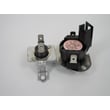
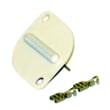
If it’s blown, replace the fuse with the correct part for this model, such as the dryer thermal fuse WP3390719.
Why the fuse blew (and what to fix so it doesn’t happen again)
A thermal fuse is a one-time safety device; it usually opens because the dryer overheated.
Common causes to correct:
- Crushed, kinked, or excessively long vent hose
- Lint blockage in the vent pipe or outside hood
- Lint buildup inside the blower housing
- Restricted airflow from overloaded loads or blocked lint screen area
Overheating checklist
| What to check | What “good” looks like | What to do if not good |
|---|---|---|
| Lint screen | Clean, no film | Wash screen with mild soap and water, dry fully |
| Vent airflow outside | Strong, steady flow | Clear vent and hood, shorten vent run |
| Duct behind dryer | Not crushed | Replace with rigid/semi-rigid ducting |
| Interior lint | Minimal | Clean blower housing and cabinet lint safely |
Why it matters
Running a dryer with restricted airflow can repeatedly overheat components, leading to nuisance shutdowns and additional part failures (for example, thermostats or the heating circuit).
Last updated: February 2026
Is Kenmore Elite high end?
Yes. Kenmore Elite is Kenmore’s higher-end line; it’s positioned above standard Kenmore models and is known for upgraded features, stronger performance, and a more premium fit and finish. For your Kenmore Elite dryer model 110C67032601, that typically means more advanced drying options and better overall build quality.
What “high end” means for Kenmore Elite dryers
Kenmore Elite dryers commonly focus on convenience, fabric care, and efficiency improvements compared to basic models.
Typical high-end traits include:
- More precise temperature control to help prevent overdrying
- Sensor-dry cycles that end the cycle when clothes are dry
- Quieter operation and sturdier drum support components
- More cycle and option choices (delicates, bulky items, timed dry)
- Better lint handling and airflow design (when venting is clean and unrestricted)
How to judge “high end” on your specific dryer
We recommend using a few practical checks that reflect real-world value.
| What to check | What you want to see | Why it matters |
|---|---|---|
| Drying consistency | Loads finish evenly without scorching | Better fabric care and fewer re-dries |
| Cycle control | Sensor cycles stop close to “just dry” | Saves energy and reduces wear |
| Noise and vibration | Minimal thumping/squealing | Indicates healthy rollers, belt, and idler |
| Repairability | Common wear parts are available | Extends dryer life at lower cost |
Parts that affect “premium” performance over time
Even a high-end dryer can feel “low end” if wear parts are failing. If you’re hearing squeals, thumps, or the drum feels rough, these model-compatible parts are common fixes:
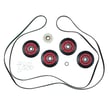
- Dryer repair kit 4392067 (typical refresh for multiple wear items)
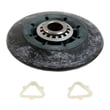
- Support WPW10314173 (drum support roller)
- Dryer drum belt WP8547157 (slipping, squealing, or no-tumble issues)
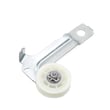
- Dryer idler assembly WPW10547292 (belt tension and noise control)
Why it matters
“High end” is most noticeable when the dryer protects fabrics, dries evenly, and runs quietly. Keeping airflow clear and replacing worn drum-support parts helps your Kenmore Elite 110C67032601 continue performing like a premium dryer.
Last updated: February 2026
What are the codes for Kenmore Elite dryer?
Kenmore Elite dryers (including model 110C67032601) use display codes to point you to a specific failure area such as power supply, the electronic control, the user interface, or temperature sensing. The most common codes you’ll see include PF, F:01, F:02, and several heater or thermistor-related F codes.
Common Kenmore Elite dryer codes and what they mean
Here are the codes customers most often ask about:
- PF: Power failure (the cycle was interrupted by a loss of power)
- F:01: Main electronic control board failure
- F:02: Keypad or user interface failure
- F:20: Heater relay failure
- F:22 / F:23: Outlet thermistor failure
- F:24 / F:25: Inlet thermistor failure
If you’re seeing a thermistor-related code, the temperature sensor is a common place to start on this model, such as the dryer thermistor WP8577274.
Quick checks we recommend before replacing parts
These steps solve a lot of “mystery” codes and prevent repeat failures:
- Reset the dryer by unplugging it for 2 minutes, then restore power.
- Confirm the outlet has steady power (PF often follows a loose plug or tripped breaker).
- Clean the lint screen and check airflow; restricted venting can trigger overheating and sensor errors.
- If the dryer runs but won’t heat, check for a blown thermal fuse such as the dryer thermal fuse WP3390719.
- If you replace a fuse, correct the airflow problem first (blocked vent, crushed duct, lint buildup).
Code-to-symptom cheat sheet
| Code group | What you usually notice | What we check first |
|---|---|---|
| PF | Cycle stopped, display shows PF | Power supply, breaker, cord connection |
| F:01 / F:02 | Buttons unresponsive, erratic behavior | Control board connections, keypad response |
| F:20 | No heat or heat cuts out | Heater circuit, relay, wiring |
| F:22 to F:25 | Long dry times, temp issues, code returns | Thermistor, airflow, lint buildup |
Why it matters
An error code is the dryer’s way of narrowing the problem to a system (power, controls, heating, or temperature sensing). Using the code plus symptoms helps you avoid replacing the wrong part and reduces the chance of repeat failures.
Last updated: February 2026
What year is my Kenmore dryer model?
For Kenmore Elite dryer model 110C67032601, the exact manufacture year comes from the serial number, not the model number alone. We use the serial number format (often Whirlpool-built for 110-prefix models) to decode the production date and determine the year your dryer was made.
Where to find the serial number
Check the model and serial tag in one of these common locations:
- Inside the dryer door opening on the cabinet frame
- On the back panel of the dryer cabinet
- Along the side of the door opening (left or right)
- Occasionally behind the lower access panel (if equipped)
How to decode the year (what to look for)
Most Kenmore models that start with 110 use a serial format where letters and numbers indicate the plant and the production date. Once you have the serial number, match it to a Kenmore 110-series decoding chart to identify:
- Manufacturing plant code (letter)
- Week of the year (often two digits)
- Year code (often a letter or digit, depending on the series)
If your dryer is running but you are planning age-related maintenance, a common wear item set is the drum support rollers and idler components; our dryer repair kit 4392067 is often used when a dryer starts squealing, thumping, or rumbling.
Quick age clues (helpful when the tag is hard to read)
These clues do not replace the serial number date, but they help narrow the era:
| Clue | What it usually suggests |
|---|---|
| 110-prefix Kenmore Elite | Whirlpool-built platform, common across many years |
| Increasing dry times + very hot cabinet | Vent restriction or overheating protection trips |
| Squeal or thump while tumbling | Worn rollers, idler, or belt |
Why it matters
Knowing the manufacture year helps us pick the right parts and troubleshooting path for your Kenmore dryer, especially for heat issues (thermal fuse, thermistor, heating element) and drum drive wear (belt, rollers, idler).
Last updated: February 2026
Where is the model number on a Kenmore Elite dryer?
On the Kenmore Elite dryer model 110C67032601, the model number is typically printed on a rating label inside the door opening; check the cabinet frame around the door (top, sides, or bottom edge) and the inner door area for a sticker or metal plate.
Most common places to check
- Open the dryer door and inspect the front cabinet frame (often the top or side rail)
- Look along the door opening lip where the door closes
- Check the inner door panel (back side of the door)
- If you do not see it immediately, use a flashlight and look for a white sticker or silver plate
What the label looks like (and what to copy)
The label usually includes several identifiers. For parts lookup, we recommend copying these exactly:
- Model number (for example: 110C67032601)
- Serial number (helps confirm production run)
- Type or electrical rating (may list volts/amps)
| Label item | Why it matters for parts |
|---|---|
| Model number | Ensures diagrams and parts match your exact dryer |
| Serial number | Helps confirm version changes within the same model |
| Electrical rating | Useful when diagnosing heating or power issues |
Why it matters
Kenmore Elite dryers can look similar across multiple model numbers. Using the exact model number prevents ordering the wrong dryer parts, especially for common replacements like a dryer drum belt WP8547157 or a dryer thermal fuse WP3390719.
Last updated: February 2026








