Installation guide
 Owner’s manual
 Error Codes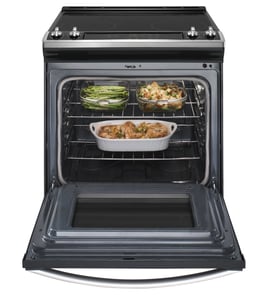
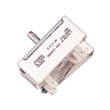



How big is the Kenmore 79095393902?
The Kenmore 79095393902 is a 30-inch class freestanding electric range. For exact height, width, and depth (including the handle and rear clearance), we recommend using the dimensions listed in the 79095393902 owner's manual.
Typical size you can plan around
Most 30-inch freestanding electric ranges are built to fit a standard range cutout and fall in these common ranges:
- Width: about 29 7/8 in. to 30 in.
- Height: about 46 in. to 47 in. to the top of the backguard (or about 36 in. to the cooktop)
- Depth: about 25 in. to 28 in. (depth increases when you include the door and handle)
How to measure your range correctly
Use a tape measure and capture these points so the range fits your space and aligns with countertops:
- Measure width at the widest point of the cabinet opening
- Measure height from floor to countertop and to any overhead cabinet
- Measure depth from the back wall to the front of the door handle
- Check rear clearance for the power cord and anti-tip bracket area
- Confirm the range sits level (leveling legs can change final height)
Quick reference table
| Measurement | What to include | Why it matters |
|---|---|---|
| Width | Body side-to-side | Fit in the cutout |
| Height | Floor to cooktop and to backguard | Counter alignment, backsplash clearance |
| Depth | Back of range to front of handle | Walkway clearance, door swing |
Why it matters
Accurate dimensions prevent installation problems like a range that will not slide fully back, a door that hits nearby cabinetry, or a cooktop that sits above or below the countertop.
Last updated: February 2026
How do you reset a Kenmore electric stove?
To reset your Kenmore electric range model 79095393902, turn the range OFF, then shut off power at the breaker (or unplug it) for about 1 minute. Restore power and reset the clock; this clears many control glitches after a power interruption. See the 79095393902 owner's manual for control and clock steps.
Quick reset steps (safe and effective)
- Turn all surface element knobs to OFF.
- If the oven is running, press Cancel/Off on the control panel.
- Turn OFF the range circuit breaker (or unplug the power cord).
- Wait 60 seconds.
- Turn the breaker ON (or plug back in).
- Set the clock and reselect your cooking mode.
If the oven is locked after self-clean
A “reset” will not immediately unlock the door if the range is still hot from a self-clean cycle. Let the oven cool for about 1 hour; when the LOCK light goes out, the door can be opened. Do not force the door.
| Symptom after reset | Most likely cause | What to do next |
|---|---|---|
| Display is blank | No power to range | Check breaker, cord, and outlet; confirm other kitchen loads work |
| Oven heats but clock is wrong | Power was interrupted | Reset clock per the 79095393902 owner's manual |
| Door won’t open after clean | Normal cool-down lock | Wait for cool-down; then open when LOCK light goes out |
| Still acting erratic | Control or sensor issue | Check for error codes and test common parts |
Parts that commonly relate to “won’t heat” or odd temperature behavior
If the range powers up but baking is inconsistent after a reset, these model-compatible parts are common checks:
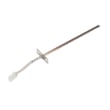
- Oven temperature sensor 316490000 (helps the control regulate oven temperature)
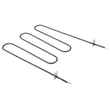
- Bake element 316413800 (primary heat source for baking)
- Broil element 316203301 (top element; can affect preheat and some cooking modes)
Why it matters
Resetting restores the electronic control to a known state after a power glitch. It also helps you separate a one-time control hiccup from a true failure in a heating circuit, sensor, or element.
Last updated: February 2026
Where is the model number on my Kenmore electric stove?
On Kenmore electric range model 79095393902, the model and serial number are on the serial plate on the right side of the oven front frame, inside the storage or warmer drawer compartment. Pull the bottom drawer out and look at the lower right front frame to read the label; see the illustration in the 79095393902 owner's manual.
Where to look first (fastest method)
- Turn the range off and let it cool.
- Pull the storage drawer or warmer drawer fully open.
- Look at the lower right side of the front frame (the frame around the oven opening).
- Find the serial plate and copy the model and serial numbers exactly.
- Use the full model number for parts lookup and diagrams.
If you do not see the label there
The installation information for this model also notes an alternate location.
- Check the lower right front frame again with a flashlight.
- Look under the cooktop (some versions place the serial plate there).
- If the label is damaged, take a clear photo and zoom in to read the digits.
Quick location guide
| Spot to check | What you will see | Best tool |
|---|---|---|
| Storage or warmer drawer compartment, right side of oven front frame | Serial plate with model and serial | Flashlight |
| Under the cooktop (alternate) | Serial plate or rating label | Flashlight |
Why it matters
We use the exact model number to match the correct Kenmore parts and diagrams for your range. That prevents ordering a similar-looking part that will not fit.
Last updated: February 2026
Why is my Kenmore electric oven not getting hot?
If your Kenmore electric range model 79095393902 oven is not getting hot, the most common causes are a failed bake element, a bad oven temperature sensor, or a control-related fault. Start with a quick visual check, then test the heating circuit components listed in the 79095393902 owner's manual.
Quick checks first (fastest wins)
- Confirm the range has power and the display is on (a tripped breaker can leave the oven weak or dead).
- Make sure you are using BAKE (not DELAY, WARM, or SELF CLEAN).
- If the control is beeping and showing an F code, clear it and retry a bake cycle (faults can stop heating).
- Avoid lining the oven bottom with foil; it disrupts heat distribution and can cause poor baking results.
- Verify the oven door closes fully; heat loss can look like a heating failure.
Parts that most often cause “no heat”
1) Bake element (most common)
If the bake element is cracked, blistered, or has a visible break, replace it. Even without visible damage, it can fail electrically.
- Recommended part to check/replace: frigidaire range bake element 316413800
2) Oven temperature sensor
A sensor that reads the wrong temperature can prevent the control from driving the elements correctly.
- Recommended part to check/replace: frigidaire range oven temperature sensor 316490000
3) Broil element (if broil also fails)
If both bake and broil do not heat, the issue is often power supply, wiring, or the control.
- Recommended part to check/replace: frigidaire range broil element 316203301
What the symptoms usually mean
| Symptom | Most likely cause | What to do next |
|---|---|---|
| Bake does not heat, broil works | Bake element or wiring | Inspect and test bake element, then connections |
| Bake works, temperature is way off | Temperature sensor | Test sensor resistance, replace if out of range |
| Neither bake nor broil heats | Power supply, wiring, control fault | Check breaker, terminal block, then look for F codes |
| Oven heats sometimes, then stops | Loose connection or control fault | Check harness/terminals, note any error codes |
Why it matters
An oven that will not reach temperature usually has an open heating circuit (element or connection) or a sensor/control issue. Fixing the root cause restores proper preheat times, stable baking temperatures, and safer operation.
Last updated: February 2026