
Can you leave paint in Wagner sprayer between coats?
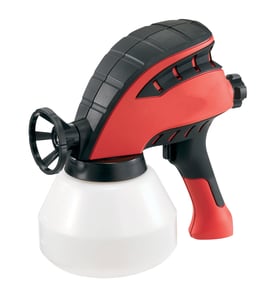
Yes, for short breaks between coats you can leave paint in your Wagner 220 power sprayer; keep the material from drying in the nozzle and fluid path. Plan on a quick “keep-wet” routine for pauses under about 1 to 2 hours, and a full cleanup if you are stopping for the day.
Best practice between coats (short pause)
Use these steps to prevent clogs and spitting when you start spraying again:
- Engage the trigger lock (if equipped) and set the sprayer down upright.
- Wipe paint off the tip/nozzle area with a damp rag.
- Cover the tip/nozzle with a damp paper towel to keep paint from skinning over.
- If your sprayer has a pickup tube, keep it submerged in paint so it does not suck air.
- Before resuming, spray a short test pattern onto cardboard to confirm an even fan.
When you should NOT leave paint in the sprayer
If any of these apply, do a full flush and cleaning instead of letting paint sit:
| Situation | What to do | Why |
|---|---|---|
| Break longer than 2 hours | Flush immediately | Paint starts to thicken and plug the nozzle |
| Overnight or next day | Full clean and dry | Dried paint can harden in passages and seals |
| Hot, dry, or windy conditions | Shorten your “safe pause” | Paint skins over faster at the tip |
| You are switching colors or coatings | Full flush | Prevents contamination and poor finish |
Quick “flush” option if you are near the 1 to 2 hour mark
If you are close to the end of your working time window, a fast flush helps:
- Run the correct cleaning fluid for your coating (water for many latex paints; mineral spirits for many oil-based coatings).
- Spray into a waste bucket until the spray looks consistent.
- Wipe the nozzle and any filters/screens you can access.
Why it matters
Paint drying inside the Wagner 220 is the main cause of clogs, sputtering, and uneven spray patterns. Keeping the nozzle wet between coats protects the sprayer’s fluid path and saves time on troubleshooting.
For replacement parts and diagrams for your Wagner 220, check the parts list for this model or search by model number on Sears PartsDirect.
Last updated: February 2026
Why is my Wagner paint sprayer not spraying paint?
For the Wagner 220 power sprayer, a “won’t spray” problem is almost always caused by a clogged tip or pickup path, an air leak on the suction side, or paint that is too thick to prime; a full cleaning and a quick prime check usually restores spray.
Quick checks (fastest fixes first)
- Confirm the sprayer is actually primed; run the unit until you get a steady flow (no sputtering) before trying to spray.
- Clean the spray tip/nozzle; dried paint in the orifice stops flow immediately.
- Check the pickup tube and inlet screen/filter for blockage; flush with the correct solvent for your coating.
- Inspect the suction tube connection for air leaks; a loose fitting can prevent the pump from drawing paint.
- Thin and strain paint as needed; heavy or unstrained paint commonly plugs the tip and internal passages.
Step-by-step: clear a clog safely
- Unplug the sprayer.
- Relieve pressure (trigger the gun into a waste container if applicable).
- Remove the tip/nozzle and soak it; use a soft brush or wooden toothpick (avoid metal that can damage the orifice).
- Flush the pickup tube and inlet area until flow is clear.
- Reassemble, prime, then test spray on cardboard.
What the symptom usually means
| Symptom | Most likely cause | What to do |
|---|---|---|
| Motor runs, no paint output | Tip/nozzle clog or inlet screen clogged | Clean tip and inlet screen; flush pickup tube |
| Paint spits, surges, or pulses | Air leak on suction side or low paint level | Tighten fittings, check tube, keep pickup submerged |
| Sprays water/solvent but not paint | Paint too thick or not strained | Thin to a workable viscosity; strain before filling |
| Weak spray pattern | Partial clog or worn tip/nozzle | Deep clean; replace worn wear items if available |
Why it matters
Running a Wagner sprayer while it is starved for paint (air leak, clogged inlet, or thick coating) can overheat the pump and quickly turn a simple cleaning job into a bigger repair.
Parts and help for this model
We list Wagner 220 replacement parts by model so you can match the correct seals, filters, tubes, or spray components; if you do not see what you need, search by model number on Sears PartsDirect. For model identification tips, use how to find your appliance model number (and what it means for parts).
Last updated: February 2026
What is petroleum jelly used for on Wagner paint sprayer?
On a Wagner 220 power sprayer, petroleum jelly is used as a light lubricant on rubber sealing surfaces to keep the spray tip/nozzle from sticking and to help prevent O-rings and seals from twisting or tearing during removal and installation.
What it does (and where it helps most)
A very thin film reduces friction where parts slide together, especially after cleaning when seals can be dry.
- Helps the nozzle or spray tip release more easily
- Helps O-rings seat smoothly instead of rolling or pinching
- Helps prevent small air or fluid leaks caused by a dry, distorted seal
- Helps protect seals during reassembly after paint cleanup
Where to apply petroleum jelly
Apply only to surfaces that touch and move against each other:
- The nozzle or tip O-ring (if your sprayer uses one)
- The nozzle seal surface where the tip seats
- A locking collar or bayonet-style connection surface if it binds after cleaning
How to apply it safely
- Turn the sprayer off and make sure pressure is relieved (if your setup pressurizes the line).
- Remove the nozzle/tip and clean off paint residue.
- Use a cotton swab to apply a thin film to the seal or O-ring.
- Reinstall the nozzle/tip; twist once to spread the lubricant.
- Wipe off any visible excess.
What to avoid
| Avoid | Why it matters |
|---|---|
| Putting petroleum jelly into the nozzle opening or fluid passages | It can trap debris and affect spray pattern |
| Over-applying | Excess attracts dust and dried paint |
| Using it instead of cleaning | Dried paint still causes sticking and leaks |
Why it matters
Most nozzle sticking problems come from dried paint and dry seals. Light lubrication reduces drag so seals stay in shape, which helps maintain consistent spray and reduces the chance of leaks.
If you need replacement seals or other Wagner 220 parts, check the model parts list first; you can also search by model number on Sears PartsDirect.
Last updated: February 2026