Installation guide
 Owner’s manual



How long should a Whirlpool Cabrio washer last?
A Whirlpool Cabrio-style top-load washer like the Whirlpool WTW7300DW1 typically lasts 10 to 14 years with normal household use. Consistent care (HE detergent, monthly cleaning, and keeping the lid open between loads) helps you reach the high end of that range; see the WTW7300DW1 owner's manual.
Most washer life comes down to load size, detergent habits, and how well the tub and drive system are protected from stress.
- Overloading increases strain on the drive and suspension.
- Too much detergent leaves residue that can cause odor and buildup.
- All-cold washing can allow soils and detergent to accumulate faster.
- Poor ventilation (lid always closed) traps moisture and promotes odor.
- Worn hoses can leak and create secondary damage.
The WTW7300DW1 manual calls out several habits that directly support long service life:
- Use High Efficiency (HE) detergent and never exceed the recommended amount.
- Run the washer’s Clean Washer routine monthly or every 30 cycles.
- Use warm or hot water sometimes to help control residue buildup.
- Leave the lid open after a cycle to dry the interior.
- Inspect inlet hoses regularly and replace them every 5 years (this model does not include inlet hoses).
| Usage pattern | Expected lifespan | What to do |
|---|---|---|
| Light use (few loads/week) | 12 to 14 years | Keep up monthly cleaning and ventilation |
| Average family use | 10 to 12 years | Avoid overloading; use correct HE dosing |
| Heavy use (many loads/week) | 8 to 10 years | Reduce load size; stay strict on cleaning |
Washer failures are often caused by preventable stress and buildup. Good habits reduce odor-causing residue, help the washer clean better, and lower wear on key systems like the suspension and drive.
If you’re planning ahead for repairs, you can order common wear items for WTW7300DW1 from the parts list for this model, or search by model number on Sears PartsDirect.
Last updated: February 2026
What is the most common problem with whirlpool washers?
For Whirlpool washers like model WTW7300DW1, the most common issues we see are draining/spinning problems, out-of-balance vibration, and water leaks. Many of these trace back to installation and loading (leveling, hose connections, and load distribution) before a part actually fails; use the owner's manual troubleshooting steps first.
- Washer won’t drain or won’t spin: drain restriction, pump issue, or a lid lock problem.
- Vibration, rocking, or “walking”: washer not level, feet not locked, or an unbalanced load.
- Water leaks: loose fill hoses, missing/shifted hose washers, drain hose not secured, or washer not level.
- Not enough water or poor cleaning: normal HE low-water operation, overloading, or adding extra water.
- Clicking, humming, gurgling, whirring noises: often normal sounds; sometimes coins or small items in the drain path.
- Confirm the washer is level and all feet are firmly on the floor.
- Redistribute the load in loose heaps around the washplate; avoid washing single heavy items.
- Check fill hoses: tighten connections and confirm all flat washers are seated.
- Verify the drain hose setup: secured to the standpipe or laundry tub; no tape over the drain opening.
- Use HE detergent only and measure correctly; too many suds can cause performance issues.
| Symptom | Common part to check | Example part on this model page |
|---|---|---|
| Won’t start or stops mid-cycle | Lid lock | Washer lid lock assembly W10810403 |
| Won’t drain / water left in tub | Drain pump | Washer drain pump W10876600 |
| Shaking or banging in spin | Suspension | Damper assembly, tub suspension (set of 4-includes suspension bushings and suspension balls) W11130359 |
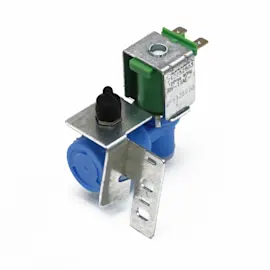
| Slow fill / fill problems | Water valve | Washer water valve W11220230 |
Most “common problems” are really setup or use issues. A level washer, correct hose connections, and balanced loads prevent leaks, reduce vibration, and help the drive system and drain pump last longer.
For parts ordering, use the parts list for WTW7300DW1 on this page, or search by model number on Sears PartsDirect.
Last updated: February 2026
Is the WTW7300DW1 a top load or front load?
The Whirlpool WTW7300DW1 is a top load washer (it uses a lid and a washplate-style wash system). You will see top-load specific operation and maintenance steps, including “Cleaning Your Top Loading Washer,” in the WTW7300DW1 owner's manual.
Use these quick checks to confirm you are looking at the right washer type:
- Lid on top that opens upward (not a front door)
- No rubber door boot/gasket around a front opening
- Washplate/impeller at the bottom instead of a tall center agitator on many cycles
- Control panel on the top console (typical for this Whirlpool platform)
Top load and front load washers use different cleaning actions, water levels, and service parts. For example, top load models like WTW7300DW1 commonly use components such as a washplate, lid lock, and suspension system to manage load movement and spinning.
| What it affects | Common symptom | Example part for WTW7300DW1 |
|---|---|---|
| Lid locking | Won’t start or won’t spin with lid open/unsafe | Washer lid lock assembly W10810403 |
| Draining | Water left in tub, won’t drain | Washer drain pump (model-specific options vary) |
| Spinning/balance | Excess vibration or off-balance | Suspension/damper kit (model-specific options vary) |
Because this is a top load washer, loading and water level behavior can look different than older designs. For best cleaning:
- Load items in loose heaps evenly around the washplate
- Use HE detergent only and measure carefully
- Avoid adding extra water; it can reduce wash action
- Run the washer’s monthly cleaning routine as described in the manual
Last updated: February 2026