Owner’s manual



Can you get parts for a Kenmore dryer?
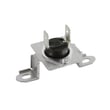
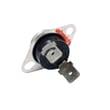
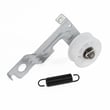
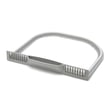
Yes. We can help you get replacement parts for your Kenmore Elite dryer model 79661553610, including common wear items (belts, rollers, lint screen parts) and heating and control components. Use the model’s parts list and diagrams in the 79661553610 owner's manual to match the right part to your exact configuration.
Parts you can commonly replace on this model
These are some of the most frequently ordered parts for Kenmore Elite 79661553610 dryers:
- Drum drive parts such as the lg dryer drum belt 4400EL2001F
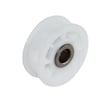
- Drum support and turning parts such as the dryer drum support roller 4581EL2002H
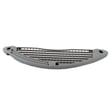
- Airflow and lint capture parts such as the dryer lint screen by lg 5231EL1001C
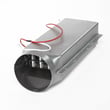
- Heat and temperature control parts such as the lg dryer heating element 5301EL1001H
- Sensors used for automatic cycles such as the dryer moisture sensor 6500EL3001A
How to make sure you order the correct part
We recommend matching by model number first, then confirming the part location in the diagrams.
- Confirm the full model number on the identification plate inside the dryer door
- Compare the part name and reference location in the exploded-view diagram
- Replace related wear parts together when you have the dryer opened (belt, idler pulley, rollers)
- If you are troubleshooting a symptom (no heat, long dry times), check venting and lint buildup first
- Keep your purchase date and serial number handy for service and parts records
Quick guide: symptom to likely part area
| Symptom | Most likely area to check | Example part on this model |
|---|---|---|
| Drum not turning | Belt, idler pulley, motor, rollers | Lg Dryer Drum Belt 4400EL2001F |
| No heat or weak heat | Heating circuit, thermostats, airflow | Lg Dryer Heating Element 5301EL1001H |
| Long dry times | Venting, lint screen, blower wheel | Dryer Lint Screen By Lg 5231EL1001C |
| Clothes overdry or underdry | Moisture sensing system | Dryer Moisture Sensor 6500EL3001A |
Why it matters
Using the correct Kenmore Elite 79661553610 part helps the dryer run safely and efficiently, prevents repeat breakdowns, and reduces issues like long dry times caused by airflow restrictions.
Last updated: February 2026
How do I know if my Kenmore dryer thermal fuse is blown?
On Kenmore Elite dryer model 79661553610, a blown thermal fuse usually shows up as a dryer that will not start at all, or a dryer that runs but will not heat (depending on how the fuse is wired in your version). The fastest way to know for sure is a continuity test with a multimeter after unplugging the dryer; see the 79661553610 owner's manual for access and safety guidance.
Common symptoms that point to a blown thermal fuse
- Dryer will not turn on even though the outlet has power
- Motor hums briefly, then stops (some setups)
- Dryer tumbles but produces no heat (some setups)
- Problem started after long dry times or restricted venting
- CHECK VENT light blinking or drying performance getting worse over time
Quick checks before you test the fuse
A thermal fuse often opens because the dryer overheated from poor airflow. Before replacing parts, we recommend checking these items first:
- Clean the lint screen and confirm it is seated correctly
- Inspect the exhaust duct for lint buildup, crushing, or long runs
- Make sure the outside damper opens freely
- If the dryer runs but does not heat, check the home breaker or fuses (some electric dryers can run without heat when a breaker trips)
- If the CHECK VENT indicator stays active after clearing restrictions, run several cycles to allow the dryer to reset its vent status
How to confirm a blown thermal fuse (basic method)
- Unplug the dryer (and shut off gas if you have a gas model).
- Access the thermal fuse area as shown in the 79661553610 owner's manual.
- Remove at least one wire from the fuse terminal.
- Measure continuity across the fuse.
| Meter result | What it means | What to do next |
|---|---|---|
| Continuity (closed circuit) | Fuse is good | Keep troubleshooting airflow, thermostats, or controls |
| No continuity (open circuit) | Fuse is blown | Replace the fuse and correct the overheating cause |
Why it matters
Replacing a thermal fuse without fixing the airflow problem often leads to repeat failures. Restricted venting also causes long dry times and can trigger vent warnings, so correcting the exhaust system protects the heater, thermostats, and wiring.
If you are also chasing a “no heat” complaint on this model, the heating circuit can involve components such as the dryer high-limit thermostat 6931EL3003D and the lg dryer heating element 5301EL1001H, but we recommend confirming airflow and power supply first.
Last updated: February 2026
How do I reset my Kenmore Elite dryer?
To reset your Kenmore Elite dryer model 79661553610, turn the dryer OFF, wait about 1 minute, then turn it back ON and start a new cycle. If the controls are locked and you see “CL”, turn off Control Lock by holding Drum Light for 5 seconds (per the 79661553610 owner's manual).
Quick reset steps (most common)
- Press POWER to turn the dryer OFF.
- Wait 60 seconds.
- Press POWER to turn the dryer ON.
- Select a cycle with the cycle selector knob.
- Press START/PAUSE to begin.
If the panel won’t respond: check Control Lock
When Control Lock is on, the dryer disables all controls except POWER, and “CL” alternates on the display.
- Press POWER to wake the dryer.
- Press and hold DRUM LIGHT for 5 seconds to toggle Control Lock OFF.
- Re-select your cycle and press START/PAUSE.
What “reset” fixes (and what it doesn’t)
| Symptom | Reset helps? | What to do next |
|---|---|---|
| Dryer won’t start after a pause | Yes | Press START/PAUSE; if stopped over 4 minutes, reselect cycle |
| Display shows “CL” | No (needs unlock) | Hold DRUM LIGHT 5 seconds |
| Dryer runs but won’t heat | Sometimes | Run a heat test and check airflow/venting |
| Dryer shuts off mid-cycle | Sometimes | Check door closure, airflow, and overheating protection |
Why it matters
A simple power reset clears a canceled cycle and restores normal control logic, but a locked control panel or overheating from restricted airflow can look like a “failed” dryer even when the machine is protecting itself.
Last updated: February 2026
Is it worth repairing an old Kenmore dryer?
Yes, repairing an older Kenmore Elite dryer like model 79661553610 is usually worth it when the dryer is under about 10 to 13 years old and the problem is a common wear item (belt, roller, idler, thermostat). If the repair involves major assemblies (drum, motor, control board), replacement often makes more sense.
Quick decision checklist
- If the dryer heats and tumbles but is noisy, squeals, or slips, repair is typically a good value.
- If the dryer won’t start and you suspect a control or motor issue, compare repair cost to replacement.
- If you see scorching smells or repeated overheating, fix airflow and safety controls before continued use.
- If the drum is damaged or the cabinet is badly rusted, replacement is usually the better long-term choice.
- If you plan to keep the dryer 3+ more years, repairing a wear part is typically cost-effective.
Common repairs that are usually worth it (and why)
These are normal wear items and are often the best return on repair cost:
- Drum belt: restores tumbling when the motor runs but the drum does not
- Drum support roller(s): fixes thumping, rumbling, or squealing
- Idler pulley: fixes squealing and helps keep proper belt tension
- High-limit thermostat: helps prevent overheating shutdowns
Helpful model-specific references:
- Use the 79661553610 owner's manual for safety guidance and basic troubleshooting.
- If the drum won’t turn, the lg dryer drum belt 4400EL2001F is a common wear part for this model family.
Cost comparison guide
| Repair type | Typical symptom | Usually worth it? |
|---|---|---|
| Wear part (belt, roller, idler) | No tumble, squeal, rumble | Yes |
| Heat/airflow related (thermostat, vent cleaning) | No heat, overheating, long dry times | Yes |
| Major assembly (motor, drum, control board) | Dead unit, grinding, erratic operation | Sometimes |
Why it matters
A dryer that’s overheating or running with worn drum support parts can cause repeated shutdowns, poor drying performance, and extra strain on the motor and belt. Fixing the root cause early often prevents a bigger repair later.
Last updated: February 2026
What are the codes for Kenmore Elite dryer?
For Kenmore Elite dryer model 79661553610, the display can show error codes that point to a specific failure area such as power supply, temperature sensing, gas supply, or the electronic control. Use the code to guide quick checks first, then follow the service steps in the 79661553610 owner's manual.
Common Kenmore Elite dryer codes and what they mean
Here are codes you may see on Kenmore Elite dryers, including the 796 series:
- PF: Power failure during a cycle
- PS (electric models): Power cord wired incorrectly (neutral and L2 issue)
- nP: Power cord connection problem
- gAS (gas models): Gas supply is off or gas service issue
- CL: Control lock is on (buttons disabled)
- tE1 to tE7: Temperature sensor (thermistor) failure
- F:01: Main electronic control board problem
- F:02: Keypad or user interface problem
- F:20: Heater relay problem
- F:22 / F:23: Outlet thermistor problem
- F:24 / F:25: Inlet thermistor problem
What to do first (safe, quick checks)
Before replacing parts, we recommend these basics:
- Reset power: Unplug the dryer (or switch off the breaker) for 1 minute, then restore power.
- Check the breaker/fuse: A tripped breaker can cause PF and no-start symptoms.
- Confirm Control lock: If CL shows, press and hold DRUM LIGHT for 3 seconds to toggle it.
- Verify venting and airflow: Poor airflow can contribute to overheating and temperature-related faults.
- For gas models: Confirm the house gas shutoff and dryer shutoff valves are fully open.
Parts that commonly relate to heat and sensor codes
If you are troubleshooting heat, airflow, or temperature-sensing codes, these model-matched parts are often involved:
| Symptom or code family | Common suspect part | Model-matched example |
|---|---|---|
| tE1 to tE7, F:22 to F:25 | Temperature sensing | Dryer thermistor AGM30045804 |
| Overheating, shuts off | Safety thermostat | Dryer high-limit thermostat 6931EL3003D |
| No heat (electric) | Heater circuit | Lg dryer heating element 5301EL1001H |
Why it matters
Using the exact code helps us narrow the problem to the power supply, control lock setting, gas supply, or a specific heating and sensor circuit. That saves time and prevents replacing the wrong Kenmore Elite dryer parts.
Last updated: February 2026
What size is a Kenmore 70 series dryer?
A “Kenmore 70 series” dryer size varies by the exact model, but Kenmore full-size 27-inch dryers are commonly about 27 in. wide and around 45 in. tall. For your Kenmore Elite 79661553610, the cabinet is 27 in. (W) x 28.9 in. (D) x 45 in. (H).
Kenmore Elite 79661553610 dimensions (from the manual)
Here are the key measurements we use for fit, delivery, and closet clearances; see the 79661553610 owner's manual for the full diagram and clearance notes.
- Width: 27 in. (68.6 cm)
- Depth (door closed): 28.9 in. (73.4 cm)
- Height: 45 in. (114.1 cm)
- Depth (door open): 50 1/4 in. (127.5 cm)
- Front clearance to open door: at least 21 in. (53.3 cm)
| Measurement | Door closed | Door open |
|---|---|---|
| Depth | 28.9 in. | 50 1/4 in. |
How to measure your dryer correctly
If you are comparing a “70 series” unit to the 79661553610, measure the cabinet (not the knobs or handle) and include door swing space.
- Measure width at the widest cabinet point (side to side)
- Measure height from floor to the top of the cabinet
- Measure depth from the back panel to the front edge (door closed)
- Add space for the door to open and for venting behind the dryer
- For closets, confirm the door and vent openings meet minimum airflow needs
Why it matters
Dryer “size” affects more than capacity; it determines whether the dryer fits through doorways, has enough room to open the door, and can vent properly. Tight installs can also increase drying time if the exhaust duct run gets longer than necessary.
Last updated: February 2026
Where is the model number on a Kenmore Elite dryer?
On Kenmore Elite dryer model 79661553610, the model number is printed on the identification plate inside the dryer door (on the cabinet frame area). Open the door and look along the door opening for the label that lists both the model and serial number; see the 79661553610 owner's manual.
Where to look first (fastest checks)
- Open the dryer door and inspect the door opening (cabinet frame) on the front of the dryer
- Look for an identification plate or sticker with MODEL and SERIAL fields
- Wipe dust off the label so the full number is readable
- Write the number down exactly as shown (all digits)
Other common label locations (if the door label is missing)
If the inside-door label is damaged or unreadable, many dryers also have a secondary label in one of these spots:
- Rear panel near the top edge
- Inside the control console area (behind the control panel)
- Side panel near the front edge
Why the model number matters
We use the full model number to match the correct Kenmore parts and diagrams for your exact dryer configuration (options can vary by series and color code). It also helps when ordering common wear items like a lg dryer drum belt 4400EL2001F or troubleshooting heat and airflow issues.
Quick reference table
| What you need | Where it’s found | What it’s used for |
|---|---|---|
| Model number | Identification plate inside the dryer door | Correct parts lookup and diagrams |
| Serial number | Same identification plate | Production details and service history |
Last updated: February 2026