Error Codes


How to hard reset a Kenmore Elite washer?
For the Kenmore washer model 11092281100, a “hard reset” is a power reset: we fully remove power for a few minutes, then restore power and restart a cycle. This clears many temporary control glitches, but it will not fix a mechanical failure such as a drain pump or lid switch problem.
Hard reset steps (power reset)
- Press Pause/Cancel once to stop the cycle.
- Unplug the washer (or switch the breaker OFF).
- Wait 2 to 5 minutes.
- Plug back in (or switch the breaker ON).
- Select a Drain/Spin or Rinse/Spin cycle and press Start.
If it still will not run, check these common causes
A reset helps when the control is confused; if the washer still will not start, drain, or spin, we focus on the most common “no-go” parts and conditions.
- Lid not locking/closing: a failed lid switch can stop agitation and spin (see switch 285671).
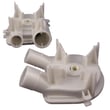
- Will not drain: a jammed or failed drain pump can prevent spin (see water pump WP3363394).
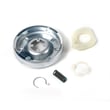
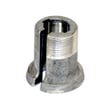
- Motor runs but washer will not agitate/spin: a worn motor coupling can slip (see coupling 285753A).
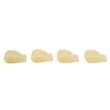
- Agitator not moving clothes well: worn agitator dogs can cause weak agitation (see agitator dog 80040).
- Out-of-balance banging: weak suspension can cause repeated stops (see washer suspension spring WP63907).
Quick symptom-to-part guide
| What you notice | What it usually points to | Example part for 11092281100 |
|---|---|---|
| Hums, no drain | Drain pump jammed/failed | Water pump |
| Fills, no spin | Lid switch issue | Switch |
| Motor runs, no movement | Motor coupling stripped | Coupling |
| Agitator “ratchets” | Agitator dogs worn | Agitator dog |
Why it matters
A hard reset is a safe first step because it can restore normal operation after a power flicker or interrupted cycle. If you need to reset repeatedly, the washer usually has an underlying issue (drain, lid switch, drive, or suspension) that a reset cannot correct.
Last updated: February 2026
What parts fail in a washing machine?
On the Kenmore washer model 11092281100, the parts that fail most often are the ones that handle agitation, spinning, draining, and filling. In real-world repairs, we most commonly see wear in the drive system (coupler, clutch), drain components (pump), and safety/controls (lid switch, timer).
Most common failed parts (and what you’ll notice)
- Drain pump: washer won’t drain, drains slowly, or leaves water in the tub (often a clog or worn impeller); see water pump WP3363394.
- Motor coupler: washer fills and drains but won’t agitate or spin, or you hear the motor running with no movement; see coupling 285753A.
- Clutch: weak or no spin, burning smell, or clothes come out very wet; see clutch 285785.
- Lid switch: won’t spin or drain because the washer “thinks” the lid is open; see switch 285671.
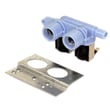
- Water inlet valve: won’t fill, fills slowly, or keeps filling when off; see washer valve 285805.
- Agitator wear items: poor wash action or agitator “slips”; see agitator dog 80040 and agitator cam 285748.
Quick symptom-to-part cheat sheet
| Symptom | Most likely area | Common related part(s) for 11092281100 |
|---|---|---|
| Won’t drain | Drain system | Water pump, drain hose, clogs |
| Won’t spin | Safety/drive | Lid switch, clutch, motor coupler |
| Won’t agitate | Drive/agitator | Motor coupler, agitator dogs/cam |
| Won’t fill | Water supply | Inlet valve, supply hoses/screens |
| Loud noise/vibration | Suspension/drive | Clutch, suspension springs, drive block |
What we recommend checking first (fast, no parts guessing)
- Confirm the load is balanced and not overloaded; re-run spin.
- Check for standing water; if present, inspect for a pump or hose clog.
- Listen during wash: motor running but no movement points to a coupler.
- If it won’t spin, test whether the lid switch clicks and actuates.
- If fill is slow, clean inlet screens at the valve and verify strong water pressure.
Why it matters
These parts are “high-wear” because they handle torque, water flow, and safety interlocks every cycle. Catching the right symptom early prevents secondary damage (for example, a slipping clutch can overheat and stress the drive system).
Last updated: February 2026
Is it worth repairing a Kenmore washing machine?
Yes, repairing a Kenmore washer is worth it when the fix restores reliable washing and spinning for less than replacing the machine; for Kenmore model 11092281100, many common failures are inexpensive, long-lasting repairs (especially drive and agitation issues).
Quick way we decide: repair vs replace
Use these checkpoints to make a clear call:
- Repair it if the washer fills, drains, and the tub is solid (no major rust-through or severe leaks).
- Repair it if the problem is a common wear item (agitator, coupling, pump, clutch, lid switch).
- Repair it if the repair cost is well under the price of a comparable new washer.
- Replace it if the outer tub is cracked, the cabinet is badly rusted, or multiple major systems are failing.
- Replace it if you need a major rebuild and you still have chronic vibration, leaks, or electrical issues afterward.
Common repairs that are usually worth it on 11092281100
These are frequent, high-success fixes on Kenmore top-load designs like this model:
| Symptom | Likely area | Example part for this model | Typical outcome |
|---|---|---|---|
| Won’t agitate well, “slips” during wash | Agitator wear | Agitator dog 80040 | Restores normal agitation in many cases |
| Won’t spin or agitates but won’t spin | Drive coupling or clutch | Coupling 285753A | Often a durable fix |
| Won’t drain or drains slowly | Drain pump | Water pump WP3363394 | Restores draining and spin enable |
| Stops mid-cycle or won’t run | Lid/door safety circuit | Switch 285671 | Restores operation if switch is failing |
Why it matters
A targeted repair keeps a proven Kenmore washer running, avoids the learning curve of a new machine, and often solves the root cause with a single part replacement (for example, a worn coupling or pump).
Tips to avoid repeat failures after the repair
- Don’t overload; heavy loads accelerate clutch and coupling wear.
- Level the washer and keep all feet firmly on the floor.
- Use the right detergent amount to reduce residue and drag.
- Check pockets and small items to protect the pump.
- If the washer won’t spin, confirm it drains fully before replacing drive parts.
Last updated: February 2026
What is the average lifespan of a Kenmore washer?
A Kenmore washer typically lasts 10 to 15 years with normal household use. For Kenmore model 11092281100, routine care (proper loading, correct detergent, and addressing small leaks or noises early) helps you reach the longer end of that range.
What affects washer lifespan the most
- Overloading (stresses the drive system, clutch, and suspension)
- Out-of-balance loads (wears suspension and can damage the basket support)
- Water quality (sediment can shorten inlet valve life)
- Drain restrictions (overworks the pump and can cause slow-drain issues)
- Delayed repairs (a small noise can turn into a major gearcase or tub problem)
Common wear items that can shorten life
If performance drops, these parts are frequent culprits on many Kenmore top-load washers:
| Symptom | Often involved part | What you notice |
|---|---|---|
| Won’t agitate well | Agitator dog 80040 | Agitator moves weakly or “slips” |
| Won’t spin or makes grinding noise | Coupling 285753A | Motor runs but tub does not move correctly |
| Won’t drain | Water pump WP3363394 | Standing water after cycle |
| Won’t fill or fills slowly | Washer valve 285805 | Long fill times, hot/cold issues |
Maintenance habits that extend life
- Keep loads evenly distributed and avoid packing the tub tight
- Use the right amount of detergent to reduce residue buildup
- Check hoses and connections periodically for small leaks
- If draining slows, inspect the drain path before the pump is damaged
- Stop using the washer if you hear loud banging, burning smell, or repeated slipping
Why it matters
Most major washer failures start as minor symptoms (slow drain, weak agitation, intermittent spin). Catching those early protects high-cost assemblies like the drive system, basket, and outer tub, and helps your Kenmore washer reach its full 10 to 15 year service life.
Last updated: February 2026
How to identify a Kenmore washer model?
Your Kenmore washer model number is printed on the appliance’s model and serial tag; for Kenmore washers it often starts with 110 (like 11092281100). Once you match that full number exactly, we can help you choose the correct replacement parts and diagrams for your washer.
Where to look on the washer
Check these common locations first (the tag is usually a sticker or metal plate):
- Top-load washer: under the lid, around the tub opening
- Front-load washer: inside the door opening, along the door frame
- Any style: on the back panel near the power cord, or behind/under the control console
- Sometimes: inside the cabinet (visible after removing the control console or top)
What the model number looks like (and what to write down)
For Kenmore, the model number is typically 10 to 12 characters and may include periods or letters depending on the series.
| What to capture | Example | Why it matters |
|---|---|---|
| Full model number | 11092281100 | Ensures parts fit your exact washer configuration |
| Serial number | (varies) | Helps date the unit and confirm production run |
| Prefix (first 3 digits) | 110 | Identifies the manufacturing source used for parts lookup |
Tips to avoid ordering the wrong part
Use these quick checks before you shop:
- Copy the model number exactly as shown, including any extra digits
- Do not use the control panel name (series names are not the model number)
- If the tag is worn, take a clear photo and zoom in to confirm characters
- Match the model number to the parts list before buying common wear items like a coupling or pump
Why it matters
Kenmore washers can look similar across multiple series, but internal components (drive system, water valve style, timer, clutch) can differ by model. Using the exact model number helps us point you to the right diagrams and compatible parts, such as the coupling 285753A or water pump WP3363394.
Last updated: February 2026
What is the capacity of a Kenmore Model 11092281100 washer?
Kenmore washer model 11092281100 is a traditional top-load, direct-drive style washer; units in this design family are typically about 3.2 to 3.5 cu. ft. (medium to large loads). For the exact capacity of your specific unit, use the model and serial tag on the cabinet and match it to the correct spec listing for 11092281100.
What “capacity” means in everyday loading
Capacity is the tub volume; it helps you load correctly so the agitator can roll clothes and the spin stays balanced.
- Load items loosely; do not pack or compress laundry.
- Keep the load below the top row of holes in the basket (if visible).
- Mix large and small items to help balance (towels plus smaller pieces).
- For bulky items (comforters, jackets), wash fewer pieces per load.
- If the washer thumps or walks, pause and redistribute, then restart.
Typical capacity ranges (for comparison)
| Washer type | Typical tub capacity | Best for |
|---|---|---|
| Traditional direct-drive top-load (like many Kenmore 110 models) | 3.2 to 3.5 cu. ft. | Mixed loads, towels, jeans |
| High-capacity top-load | 4.0 to 5.5+ cu. ft. | Bulky items, fewer loads |
| Compact top-load | 1.5 to 2.5 cu. ft. | Small spaces, light loads |
Why parts can hint at the platform (not the exact capacity)
The parts used on 11092281100 confirm the direct-drive style, which is commonly associated with the mid-size capacity range above.
- Coupling 285753A connects the drive motor to the gearcase on direct-drive washers.
- Agitator dog 80040 helps the upper agitator “ratchet” to move clothes through the wash.
- Water pump WP3363394 moves water out during drain and spin.
Why it matters
Loading to the right capacity improves cleaning, reduces out-of-balance spin, and helps prevent extra wear on the clutch, coupling, suspension, and drive components.
Last updated: February 2026