Installation guide
 Owner’s manual


How to fix rubber seal on KitchenAid dishwasher?
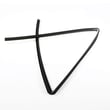
On KitchenAid dishwasher model KUDS50FVSS3, fixing the rubber door seal usually means reseating the gasket fully into its channel and then keeping the door closed so the seal “sets” evenly. If the seal is torn, hardened, or won’t stay seated, replace it.
Quick fix: reseat the door seal
- Turn off power at the breaker for safety.
- Open the door and inspect the full perimeter of the gasket for twists, gaps, or debris.
- Clean the channel and gasket with warm water and mild dish soap; wipe dry.
- Starting at the top center, press the gasket firmly into the channel a few inches at a time.
- Work evenly down both sides; avoid stretching the rubber.
- Close and latch the door for several hours (overnight is ideal) to help the gasket conform.
When replacement is the right move
Replace the seal if you see any of these:
- Cracks, splits, or missing sections
- Flattened areas that no longer spring back
- Persistent leaks at the same corner after reseating
- The gasket repeatedly pops out of the channel
A correct-fit replacement for this model is the dishwasher door seal W11196317.
Leak check: seal issue or something else?
Many “seal leaks” are actually caused by loading, oversudsing, or the dishwasher not sitting level.
| Symptom | Most common cause | What to do first |
|---|---|---|
| Drips at one lower corner | Door not closing square, unit not level | Check leveling and door alignment |
| Water at center bottom | Suds/too much detergent, rinse aid spill | Reduce detergent; wipe dispenser area |
| Water near sides mid-cycle | Spray deflection from tall items | Re-load so items don’t block spray arms |
| Seal looks fine but still leaks | Door not centered in opening | Verify mounting and centering |
For model-specific diagrams and door gasket placement guidance, use the KUDS50FVSS3 owner’s manual.
Why it matters
A properly seated door gasket prevents leaks that can damage flooring and cabinets, and it helps the dishwasher maintain correct wash pressure for better cleaning.
Last updated: February 2026
What is the average lifespan of a KitchenAid dishwasher?
Most KitchenAid dishwashers, including the KitchenAid KUDS50FVSS3, typically last 10 to 14 years with normal household use. Consistent maintenance (especially cleaning and addressing drain or heating issues early) is what most often determines whether you land closer to 10 years or closer to 14.
What affects dishwasher lifespan the most
- Water quality: hard water speeds up mineral buildup and can reduce cleaning and drying performance.
- Maintenance habits: keeping the tub, spray areas, and filters clean reduces strain on the wash system.
- Loading and detergent use: overloading and excess detergent can lead to poor wash results and residue.
- Drain performance: slow draining makes the pump work harder and can leave standing water.
- Cycle choices: longer, energy-saving cycles are normal on many models and can be easier on components over time.
Quick maintenance checklist (high impact)
Use the care and operating guidance in the KUDS50FVSS3 owner’s manual and focus on these basics:
- Use rinse aid for better drying and to help control hard-water deposits.
- Run hot water at the sink before starting a cycle (helps heating and wash performance).
- Keep the door sealing surfaces clean and inspect the door seal for damage.
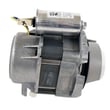
- If you notice poor draining, check the drain path and consider inspecting the dishwasher drain pump WPW10348269.
- If the dishwasher will not power on, check the home breaker and then test the fuse W10258275 if your model uses one in the circuit.
Common “end-of-life” symptoms and likely areas
| Symptom | What it often points to | Example part for KUDS50FVSS3 |
|---|---|---|
| Standing water after cycle | Drain restriction or weak drain pump | Drain pump, drain hose |
| Poor wash or grinding noise | Wash motor or sump issue | Sump and motor assembly |
| No power or dead controls | Electrical supply, fuse, control | Fuse, electronic control board |
| Leaks at the door | Worn seal or alignment | Door seal |
Why it matters
A dishwasher that is maintained and draining correctly runs with less stress on the motor, pump, and controls. That is the difference between replacing a single part (like a drain pump or fuse) and replacing the entire dishwasher.
Last updated: February 2026
What is the most common problem with a KitchenAid dishwasher?
The most common KitchenAid dishwasher problems (including model KUDS50FVSS3) are poor cleaning, draining issues (standing water), and leaks. In most homes, these trace back to loading that blocks spray action, a restricted drain path, or worn seals; our KUDS50FVSS3 owner's manual troubleshooting section helps narrow it down fast.
Most common issues and what they look like
- Dirty dishes after a cycle: spray arms blocked, filter area dirty, or items loaded so water cannot reach surfaces.
- Standing water in the tub: drain hose restriction, air gap/disposer blockage, or a weak drain pump.
- Leaks at the door: door seal not sealing, debris on the gasket, or door not latching squarely.
- Won’t start or stops mid-cycle: door not fully latched, START/RESUME needs to be pressed, or a tripped house breaker/fuse.
- Detergent left in the dispenser: dispenser door blocked by a large item, or water not circulating strongly.
Quick checks we recommend first (5 to 10 minutes)
- Confirm the door is closed and latched; if the START/RESUME light is blinking, press START/RESUME.
- Make sure a cycle is selected and the dishwasher has power (check the home breaker/fuse).
- Re-load so nothing interferes with spray arms; avoid nesting and heavy overlap.
- If you have the PROSCRUB wash area, load heavily soiled items facing the rear jets and select the PROSCRUB option.
- Look for obvious drain restrictions (kinked hose, clogged disposer inlet, blocked air gap if equipped).
Parts that commonly solve the “standing water” and “leak” complaints
| Symptom | Most likely area | Example part for KUDS50FVSS3 |
|---|---|---|
| Standing water | Drain system | Dishwasher drain pump WPW10348269 |
| Door leak | Door sealing surface | Dishwasher door seal W11196317 |
| Won’t run (no power) | Electrical protection | Fuse W10258275 |
Why it matters
These problems usually get worse over time: restricted wash or drain flow can leave residue on dishes and strain the pump and motor, and small door leaks can damage flooring and cabinets.
Last updated: February 2026
What are the commonly replaced parts in a dishwasher?
In a KitchenAid KUDS50FVSS3 undercounter dishwasher, the most commonly replaced parts are the components that control filling, washing, draining, sealing, and door movement. When you see leaks, poor cleaning, or no-drain symptoms, these are the first items we inspect using the troubleshooting steps in the KUDS50FVSS3 owner's manual.
Commonly replaced parts (and what they affect)
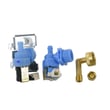
- Water inlet valve: won’t fill, fills slowly, stops mid-cycle (example: dishwasher water inlet valve W10648041)
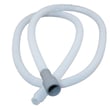
- Drain system parts: standing water, slow drain, drain noise (examples: dishwasher drain pump WPW10348269, dishwasher drain hose 8269144A)
- Wash motor and sump: weak spray, gritty residue, poor cleaning (example: dishwasher sump and motor assembly WPW10780877)
- Door sealing parts: water leaking at the bottom or sides of the door (example: dishwasher door seal W11196317)
- Door balance hardware: door drops open or will not stay open (example: dishwasher door balance link 8194001)
- Controls and electrical protection: dead unit, intermittent power, no response (examples: dishwasher electronic control board WPW10285179, fuse W10258275)
Quick symptom-to-part guide
| Symptom | Most likely area | Example part for KUDS50FVSS3 |
|---|---|---|
| Won’t drain or has standing water | Drain pump, drain hose, disposer connection | WPW10348269, 8269144A |
| Won’t fill or fills slowly | Water inlet valve, supply line | W10648041 |
| Leaks at the door | Door seal | W11196317 |
| Door falls open or slams shut | Balance link, hinge tension | 8194001 |
| Poor cleaning | Sump and motor, spray path, filter | WPW10780877 |
Why it matters
Replacing the correct part restores wash pressure, proper draining, and leak protection. It also prevents secondary problems like water under the dishwasher from a worn door seal or backups caused by a restricted drain path.
Installation and maintenance tips that prevent repeat failures
- Keep the drain hose routed without kinks or pinches during installation
- If connected to a food waste disposer, remove the disposer inlet knockout plug so the dishwasher can drain
- Use rinse aid and fresh detergent; hard water buildup reduces cleaning performance
- Clean the filter and check spray paths regularly to maintain strong wash action
- If the door does not stay in position, adjust spring tension evenly on both sides per the KUDS50FVSS3 installation guide
Last updated: February 2026