Owner’s manual
 Error Codes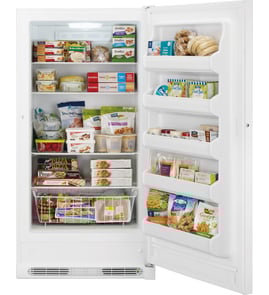






What are the disadvantages of an upright freezer?
Upright freezers like the Whirlpool EV250NXTQ00 are convenient to organize, but the main tradeoffs are less usable space for bulky items, higher energy use than many chest freezers, and more risk of freezer burn if the door is opened often. For model-specific features and care tips, use the EV250NXTQ00 owner's manual.
- Less room for bulky items: shelves and door bins can limit tall or wide packages.
- More temperature swings: frequent door openings can warm the cabinet faster than a chest freezer.
- Higher energy use (often): uprights typically lose more cold air when opened.
- More frost management: depending on the design, frost can build up and reduce efficiency.
- More parts that can affect performance: door sealing and defrost components matter more for consistent temps.
| Feature | Upright freezer | Chest freezer |
|---|---|---|
| Storage for bulky items | Fair | Excellent |
| Organization | Excellent | Fair |
| Cold air loss when opened | Higher | Lower |
| Typical energy efficiency | Lower | Higher |
| Floor space | Smaller footprint | Larger footprint |
If the “disadvantage” you are seeing is poor freezing, frost, or warm temps, these checks usually help:
- Confirm the door closes fully and the gasket seals all the way around.
- Keep vents and shelves from being blocked by packages.
- Set the control colder and allow 24 hours to stabilize.
- Clean dust from the condenser area (better airflow improves efficiency).
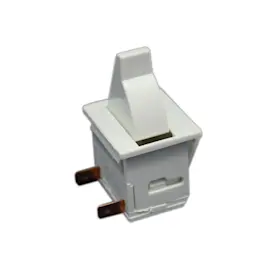
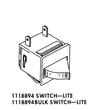
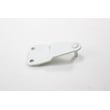
- If the interior light stays on with the door shut, test the door switch; the switch W11384469 can affect operation on some designs.
These tradeoffs affect food quality, energy cost, and how often you troubleshoot issues like frost buildup or temperature swings. A good door seal, correct loading, and basic maintenance reduce most upright-freezer downsides.
Last updated: January 2026
How do I reset my Whirlpool upright freezer?
To reset your Whirlpool upright freezer model EV250NXTQ00, we recommend doing a power reset: turn the temperature control to the OFF/0 position (if equipped), unplug the freezer for a few minutes, then plug it back in and restore your settings. For control locations and exact steps, use the EV250NXTQ00 owner's manual.
- Move the temperature control to OFF or 0 (some models use a dial inside the cabinet).
- Unplug the freezer from the wall outlet.
- Wait 5 minutes (this lets the control and compressor protection reset).
- Plug the freezer back in.
- Set the control back to your normal setting and close the door.
The freezer may not start cooling instantly. Here is what is normal:
| What you notice | What it usually means | What to do |
|---|---|---|
| Compressor starts after a short delay | Normal compressor protection delay | Wait 5 to 10 minutes |
| Temperature takes time to recover | Normal after power interruption | Allow 12 to 24 hours to stabilize |
| Clicking or humming | Normal start/stop sounds | Monitor for steady cooling |
These checks solve most “reset didn’t work” situations:
- Confirm the outlet has power (try a lamp or small appliance).
- Make sure the control is not still set to OFF/0.
- Check that the door closes and seals fully; warm air leaks can mimic a cooling failure.
- If the interior light does not respond to the door, test the door switch; a failed switch can cause odd symptoms on some units (see switch W11384469).
- If you suspect a defrost issue (heavy frost buildup, weak airflow), a defrost timer can be involved; match by model before ordering.
A reset clears minor control glitches and restarts the compressor safely. It is also the fastest first step before replacing parts like a thermostat, defrost components, or the compressor.
Last updated: January 2026
Why is my Whirlpool upright freezer not freezing?
If your Whirlpool upright freezer model EV250NXTQ00 runs but will not freeze, the most common causes are a warm temperature control setting, poor airflow from overpacking, a door that is not sealing, or a defrost system problem that lets frost block the evaporator. Use the checks below to pinpoint the failure.
- Confirm the control is set colder; then allow 24 hours for temperature to stabilize.
- Make sure the door closes fully and the cabinet is level; a tilted cabinet can keep the door from sealing.
- Look for heavy frost on the back interior panel; that often points to a defrost issue.
- Verify vents are not blocked by food packages; leave space for air circulation.
- Clean dust from the condenser area and ensure good room airflow around the freezer.
| Symptom you notice | Most likely area | What it usually means |
|---|---|---|
| Compressor runs a lot, still warm | Door seal or airflow | Warm air leaking in or cold air not circulating |
| Thick frost on back wall | Defrost system | Frost buildup is choking airflow across the evaporator |
| Clicking, then stops cooling | Compressor start circuit or compressor | Hard-start condition or failing compressor |
| Runs quietly, no cooling | Temperature control circuit | Thermostat or control not sending power correctly |
- If the freezer is stuck in defrost or not defrosting on schedule, the defrost timer is a common suspect; consider the defrost timer wp3-81329.
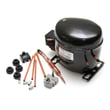
- If the compressor is not running properly and other checks pass, the sealed system may be involved; the model uses a compressor W10309995.
- If the unit is not responding correctly to temperature changes, the thermostat circuit should be tested with a meter; follow the wiring diagram in the EV250NXTQ00 owner’s manual.
A freezer that is not freezing can be caused by simple issues (settings, airflow, door sealing), but ongoing warm temperatures can also indicate a defrost failure or compressor problem that worsens over time and can lead to food loss.
Last updated: January 2026