 Owner’s manual




How many sq ft for 2.5 ton AC?
A 2.5-ton central air conditioner typically cools about 1,200 to 1,500 sq. ft. in average conditions. For an Icp N4A330AKC200 split-system (R410A), the right size still depends on your home’s heat load, not just square footage; use the N4A330AKC200 owner’s manual as a starting point for setup and maintenance.
Use this as a planning estimate, then confirm with a load calculation.
- Mild climates, good insulation: ~1,400 to 1,800 sq. ft.
- Average conditions: ~1,200 to 1,500 sq. ft.
- Hot climates, lots of sun, older insulation: ~1,000 to 1,300 sq. ft.
- High ceilings or many large windows: expect the lower end of the range
- High humidity areas: often need more capacity for comfort
| Home conditions | Typical 2.5-ton coverage | What you may notice if mis-sized |
|---|---|---|
| Well insulated, shaded | 1,400 to 1,800 sq. ft. | Oversized: short cycling, clammy air |
| Average insulation | 1,200 to 1,500 sq. ft. | Balanced run times, steady temps |
| Poor insulation, high sun load | 1,000 to 1,300 sq. ft. | Undersized: runs constantly, can’t keep up |
Two homes with the same square footage can need very different tonnage. The biggest drivers are:
- Insulation and air sealing
- Window size, type, and sun exposure
- Ceiling height and open floor plans
- Duct condition (leaks, poor airflow)
- Local design temperature and humidity
Correct sizing protects comfort and equipment life. An oversized unit tends to short-cycle and leaves humidity behind; an undersized unit runs long hours and struggles on the hottest days.
Before assuming the unit is the wrong size, we recommend these basics from the manual:
- Verify thermostat is set to COOL and below room temperature
- Check and replace or clean the return air filter monthly
- Check breakers and fuses
- Clear debris from the outdoor coil and confirm the fan area is unobstructed
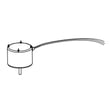
If you’re troubleshooting airflow or outdoor fan performance, the central air conditioner condenser fan blade 1174760 is one of the model-specific parts commonly involved.
Last updated: January 2026
How do I tell if my AC condenser is bad?
If your Icp N4A330AKC200 outdoor condenser is failing, you’ll usually notice weak cooling, frequent cycling, or the outdoor unit struggling to run. Before assuming the condenser coil is “bad,” we recommend checking thermostat settings, the return air filter, breakers, and outdoor coil and fan airflow as outlined in the N4A330AKC200 owner’s manual.
Turn OFF power to both the indoor and outdoor units before inspecting anything; there may be more than one disconnect.
- Confirm the thermostat is set to COOL and set below room temperature.
- Check the return air filter; a dirty filter is a common cause of poor cooling and can contribute to compressor problems.
- Check circuit breakers and fuses; reset or replace as needed.
- Inspect the outdoor coil and fins for grass clippings, leaves, lint, or dirt; gently clean with a soft bristle brush.
- Make sure branches or debris are not blocking the outdoor fan.
These symptoms point more strongly to an outdoor-unit issue (fan, capacitor, contactor, coil, or compressor):
- Outdoor fan is not spinning, or spins slowly and the unit shuts off.
- Loud buzzing or chattering from the electrical compartment when cooling is called.
- Unit runs but cooling is still poor after filter and coil cleaning.
- Repeated short-cycling (starts and stops frequently) even with a clean coil and good airflow.
| Symptom | Common suspect | Example part for N4A330AKC200 |
|---|---|---|
| Fan not spinning, overheats | Run capacitor | Capacitor 1172148 |
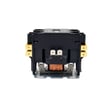
| Clicking but won’t stay running | Contactor | Central air conditioner contactor 1172472 |
| Fan wobbles, airflow weak | Fan blade | Central air conditioner condenser fan blade 1174760 |
A restricted outdoor coil or a failing fan/capacitor makes the system run hotter and less efficient; that can drive up energy use and can lead to compressor damage over time.
Last updated: January 2026
How much does it cost to replace a condenser in an AC unit?
Replacing the outdoor condenser unit for an Icp split-system air conditioner like model N4A330AKC200 typically costs $2,500 to $5,000 installed, with common real-world totals ranging from about $1,200 to $7,000+ depending on unit size, efficiency, and local labor rates.
- Condenser size (tons/BTU capacity): larger systems cost more.
- Efficiency level (SEER/SEER2): higher efficiency equipment usually costs more.
- Refrigerant and line-set work: R410A systems may need additional labor if the line set is contaminated or undersized.
- Electrical and pad changes: disconnect, whip, breaker, or pad upgrades add cost.
- Access and permitting: tight clearances, rooftop installs, and permits can increase labor.
| Option | Typical cost range | When it makes sense |
|---|---|---|
| Replace a failed part (fan blade, capacitor, contactor) | $150 to $900+ | Unit cools poorly, won’t start, or fan won’t run but the system is otherwise in good shape |
| Replace the outdoor condenser unit | $2,500 to $5,000 installed | Compressor or coil failure, severe corrosion, or repeated major repairs |
| Replace full system (outdoor + indoor coil/air handler) | $5,000 to $12,000+ | Mismatched components, major efficiency upgrade, or multiple aging components |
The N4A330AKC200 manual recommends a few quick checks that often prevent unnecessary replacement:
- Confirm the thermostat is set to COOL and below room temperature.
- Replace or clean the return air filter (dirty filters are a common cause of poor cooling and compressor problems).
- Check breakers/fuses and reset/replace as needed.
- Inspect the outdoor unit for blocked coils/fins and debris around the fan.
For the model-specific maintenance and troubleshooting steps, use the N4A330AKC200 owner’s manual.
If the outdoor unit is not running or is noisy, these parts are frequent fixes:
- Central air conditioner contactor 1172472
- Capacitor 1172148
- Central air conditioner condenser fan blade 1174760
A condenser replacement is a major HVAC expense; doing the basic electrical and airflow checks first can reveal a simpler issue (like a capacitor or contactor) and restore cooling without replacing the entire outdoor unit.
Last updated: January 2026