Installation guide
 Owner’s manual

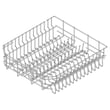
What are the commonly replaced parts in a dishwasher?
On KitchenAid dishwasher model KDTM384ESS0, the most commonly replaced parts are the wash and drain components (valves, pumps, hoses), door sealing and latching parts, and rack hardware that wears from daily loading. Regular filter cleaning and correct installation practices help prevent repeat failures; see the KDTM384ESS0 owner’s manual for care steps.
Commonly replaced parts (and what they affect)
- Water fill problems: dishwasher water inlet valve W11175771 (no fill, slow fill)
- No heat or poor drying: heating element (long dry times, cool water)
- Won’t drain: drain hose, drain path clogs, pump issues
- Door won’t latch or leaks: latch, lower door seal, door balance parts
- Rack won’t roll or adjust: rollers, adjusters, slide rails, clips
Model-specific examples for KDTM384ESS0
These are common wear items we see replaced on this model:
| Symptom | Likely part area | Example part for this model |
|---|---|---|
| Dishwasher won’t fill | Fill system | Dishwasher water inlet valve W11175771 |
| Lower rack derails or drags | Rack rollers | Dishwasher Dishrack roller assembly, lower (WPW10195417) |
| Door won’t stay closed | Latch | Dishwasher door latch (WPW10653840) |
| Leaks at the bottom of the door | Door sealing | Dishwasher door seal, lower (W10909089) |
| Not draining or draining slowly | Drain path | Dishwasher drain hose (8269144A) |
Quick checks that prevent “parts swapping”
- Clean and reinstall the filters correctly; the upper filter must lock in place (it should not spin freely).
- Confirm the drain hose is routed correctly (high loop under the counter or air gap when required).
- Make sure the drain connection ties in above the drain trap.
- Avoid blocking the detergent dispenser with tall items in the rack.
- Use the installation requirements for electrical and hose routing in the KDTM384ESS0 installation guide.
Why it matters
Dishwashers often show the same symptoms for different causes (for example, “not drying” can be heat-related, filter-related, or loading-related). Starting with filter care and correct drain routing reduces clogs, standing water, odors, and repeat leaks.
Last updated: February 2026
What is the most common problem with KitchenAid dishwashers?
The most common issues we see with KitchenAid dishwashers like model KDTM384ESS0 are cleaning problems (food left on dishes), draining problems (water left in the tub), and “won’t start” complaints caused by the door not latching or the Start/Resume sequence not being completed. For model-specific operating checks, use the KDTM384ESS0 owner's manual.
Most common symptoms and what usually causes them
- Not cleaning well: clogged filter area, blocked spray arms, or loading that blocks water flow (especially around the rear wash system and spray arms).
- Not draining: restriction in the drain path (air gap or garbage disposal inlet), kinked drain hose, or a drain pump issue.
- Won’t start or stops right away: door not fully closed and latched, Start/Resume light blinking, or the door not being closed before the countdown ends.
- Not drying: heat option not selected, rinse aid empty, or heater circuit problem.
- Leaks: door seal wear, loose hose connections, or a tub-to-pump seal issue.
Quick checks we recommend first (KDTM384ESS0)
These steps solve a large share of “common problems” without replacing parts:
- Close the door firmly until it latches; if the Start/Resume light is blinking, close the door and press START/RESUME.
- If the control counts down and beeps, close the door before the countdown ends so the cycle can begin.
- Confirm large dishes are not interfering with the wash system at the back of the tub.
- Run hot water at the sink before starting to improve wash performance.
- Clean the dishwasher and remove debris that can restrict water flow.
Parts that commonly fix the underlying issue
If the symptom matches, these are frequent repair items for this platform:
| Symptom | Common part to inspect/replace | What it affects |
|---|---|---|
| Door won’t latch, won’t start | Dishwasher door latch WPW10653840 | Confirms the door is closed so the cycle can run |
| Not filling or fills slowly | Dishwasher water inlet valve W11175771 | Water supply into the dishwasher |
| Not drying, poor heat | Element assembly W10703867 | Water heating and drying performance |
| Leaking at the bottom of the door | Dishwasher door seal, lower W10909089 | Seals the door to prevent drips |
Why it matters
Most “KitchenAid dishwasher problems” are really water flow, heat, or door-latch confirmation issues. When the door is not latched or water cannot circulate and heat correctly, you get the most common complaints: dirty dishes, standing water, and cycles that will not start.
Last updated: February 2026
Can I replace dishwasher parts myself?
Yes. For KitchenAid dishwasher model KDTM384ESS0, we can replace many common parts ourselves if we shut off power and water first and follow the step-by-step procedures in the KDTM384ESS0 installation guide. For electrical or leak-related repairs, we use extra caution and test operation after reassembly.
Good DIY repairs vs. better left to a pro
Many mechanical rack and door items are straightforward; electrical and water-supply components take more skill.
- Good DIY: rack rollers, rack adjusters, door latch alignment checks
- Intermediate: door balance and spring tension adjustments, drain hose routing
- Advanced: control board diagnostics, inlet valve replacement, motor or sump repairs
- Stop and call service: tripping breaker, burning smell, active leaking you cannot locate quickly
Safety steps we follow first
The installation instructions emphasize safe electrical connection and basic “does not operate” checks.
- Turn off the dishwasher circuit at the breaker (or unplug if corded)
- Shut off the water supply valve
- Protect the pump area when working with the door open so screws do not fall into the sump
- Avoid pinching or kinking the water line, drain hose, or power cord when sliding the unit
- Plug only into a grounded 3-prong outlet (no adapter or extension cord)
Common parts we can replace on this model
If the symptom matches, these model-listed parts are typical DIY wins:
| Symptom | Likely part | Example part for KDTM384ESS0 |
|---|---|---|
| Lower rack won’t roll smoothly | Rack roller/wheel | Dishwasher dishrack roller assembly, lower WPW10195417 |
| Upper rack won’t stay level | Rack adjuster | Dishwasher dishrack adjuster WPW10546503 |
| Door won’t latch or starts then stops | Door latch | Dishwasher door latch WPW10653840 |
Why it matters
DIY replacement can restore cleaning and reliability quickly, but dishwashers combine water, electricity, and tight cabinet clearances. Following the correct attachment, leveling, and post-repair test steps helps prevent leaks, door issues, and repeat failures.
Last updated: February 2026
What's the average lifespan of a KitchenAid dishwasher?
A KitchenAid dishwasher typically lasts 10 to 14 years. For your KitchenAid KDTM384ESS0, lifespan depends most on how often you run it, water quality, and routine care; longer, energy-saving cycles (often 2 to 3 hours) are normal and help reduce wear from repeated starts.
What affects lifespan the most
- Water quality: hard water speeds up mineral buildup and can reduce cleaning and drying performance
- Maintenance habits: regular cleaning helps prevent drain and wash issues
- Loading and detergent use: overloading and excess detergent can cause poor wash results and residue
- Door use: slamming or forcing the door can stress the latch and hinges
- Cycle selection: frequent heavy cycles add heat and run time, increasing overall wear
Quick care checklist (best return for the effort)
- Clean the filter and sump area on a regular schedule
- Use rinse aid consistently for better drying and to reduce hard-water deposits
- Run hot water at the sink before starting a cycle so the dishwasher fills with hotter water
- Keep spray arms clear of labels, seeds, and debris
- Fix small leaks quickly to prevent corrosion and electrical damage
Typical lifespan expectations (what “normal” looks like)
| Item | Typical range | What you’ll notice as it ages |
|---|---|---|
| Overall dishwasher service life | 10 to 14 years | more frequent cleaning issues, longer dry times, occasional leaks |
| Cycle length on newer efficient models | 2 to 3 hours (can exceed 3.5 with options) | longer runs are normal, not a failure |
Why it matters
Planning around a 10 to 14 year lifespan helps you decide when a repair makes sense. If the dishwasher is cleaning well and not leaking, routine maintenance and correct use often extend service life and reduce the chance of costly failures.
For model-specific operating and care details, follow the maintenance and cycle guidance in the KDTM384ESS0 owner’s manual.
Last updated: February 2026