Owner’s manual
 Error Codes



What is the most common problem with Whirlpool washers?
The most common Whirlpool washer problems are water-related issues (not filling or not draining) and door lock problems. On the Whirlpool WFW9400SU00, these often show up as error codes like F20 (inlet), F21 (drain), or F22 (door lock) in the troubleshooting section of the WFW9400SU00 owner's manual.
- Won’t fill or fills slowly: water faucets not fully open, clogged inlet screens, kinked or frozen inlet hoses (often triggers F20).
- Won’t drain or won’t spin: kinked/frozen/clogged drain hose, drain height too high (over 96 inches), or a drain pump problem (often triggers F21).
- Door won’t lock or cycle won’t start: door not fully latched, load blocking the door, or a door lock issue (often triggers F22).
- Excess suds: non-HE detergent or too much detergent; the washer may pause to clear suds.
- Vibration/noise: washer not level, feet not set correctly, or an unbalanced bulky item.
- Cancel and reset: press PAUSE/CANCEL twice, then restart the cycle.
- Verify water supply: confirm both hot and cold faucets are fully open; straighten hoses.
- Check hose routing: make sure the drain hose is not kinked and the standpipe height is within spec.
- Reduce suds: use only HE detergent and reduce the dose.
- Confirm the door closes cleanly: no laundry caught between the door and the boot.
| Symptom | Common cause | What to do next |
|---|---|---|
| F20 / no fill | Supply issue or clogged inlet screens | Open faucets, clean screens, unkink hoses |
| F21 / won’t drain | Drain restriction or pump issue | Check drain hose, then inspect the pump 280187 |
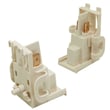
| F22 / won’t start | Door not latching or lock failure | Reclose door, reduce load, inspect the washer door lock WP8183270 |
Fill, drain, and door-lock problems stop the cycle by design to prevent leaks, overflow, or unsafe operation. Fixing the root cause also helps prevent repeat errors and reduces wear on the motor control and pump system.
Last updated: January 2026
What is the capacity of the Whirlpool WFW9400SU00?
The Whirlpool WFW9400SU00 washer has a 3.8 cu. ft. capacity, which is a common size for a full-size front-load washer. For cycle-by-cycle loading guidance and best practices (HE detergent, load size, and options), use the WFW9400SU00 owner's manual.
A 3.8 cu. ft. drum is designed to handle typical household laundry efficiently without overfilling.
- Wash full outfits and mixed loads without packing the drum tight
- Leave space at the top of the drum so items can tumble freely
- Use HE (High Efficiency) detergent only (front-load requirement)
- For bulky items, wash fewer pieces at a time to keep balance during spin
- If you see frequent off-balance behavior, reduce load size and redistribute items
These are practical, real-world examples for a 3.8 cu. ft. front-load washer.
| Load type | Typical fit in 3.8 cu. ft. | Best practice |
|---|---|---|
| Everyday mixed laundry | Medium to large | Do not compress items |
| Towels | Medium | Avoid washing only 1 large towel |
| Bulky items (comforter/blanket) | 1 item (varies by thickness) | Use bulky cycle; keep drum underfilled |
Correct loading helps the WFW9400SU00 clean better, rinse better, and spin out more water. It also reduces vibration, helps protect the door boot and suspension, and can prevent drain and spin complaints.
Capacity is rarely the root cause; these are more common:
- Too much detergent (especially non-HE) causing oversudsing
- Overloading or tightly packed loads
- Drain restrictions that slow water removal
- Door seal issues that allow leaks or odors
For fault symptoms and display codes, use Whirlpool duet alpha front load washer error codes.
Last updated: January 2026
What is the lifespan of a Whirlpool washer?
A Whirlpool washer typically lasts about 10 to 14 years with normal household use. For your Whirlpool WFW9400SU00 front-load washer, regular maintenance (especially keeping water leaks and buildup under control) is what most directly extends service life; see the WFW9400SU00 owner's manual for the care schedule.
Most washers reach the end of their useful life due to wear on moving parts, moisture-related issues, or repeated overloads. The biggest factors are:
- Load size and frequency (daily heavy loads shorten life)
- Detergent choice (use HE detergent in this high-efficiency washer)
- Drain and spin stress (clogs, coins, and small items strain the drain system)
- Water quality (hard water increases scale and residue)
- Ventilation and door habits (front-loaders last longer when kept dry between cycles)
These habits reduce odor, leaks, and premature part wear:
- Use the correct amount of HE detergent; too much causes residue and extra rinsing
- Leave the door slightly open after loads so the door boot can dry
- Clean the dispenser drawer periodically (the manual describes removal and cleaning)
- Inspect inlet hoses regularly and replace inlet hoses every 5 years
- Check pockets and use mesh bags for small items to protect the pump and hoses
| Symptom | What it often points to | Example part on this model |
|---|---|---|
| Won’t drain, drains slowly | Drain pump or restriction | Pump 280187 |
| Leaks at the door | Door boot wear or tear | Washer door boot WP8182119 |
| Door won’t lock or unlock | Door lock assembly | Washer door lock WP8183270 |
| Loud banging or excessive vibration | Suspension or balance issues | Washer suspension spring set |
Knowing the typical lifespan helps you decide whether to repair or replace. If your WFW9400SU00 is within the 10 to 14 year range and the issue is isolated (like a pump or door boot), a targeted repair often restores reliable performance.
Last updated: January 2026