 Installation guide
 Owner’s manual



How to do a hard reset on a GE dishwasher?
For a GE dishwasher model PDT715SMN0ES, the most reliable “hard reset” is a power reset: turn the dishwasher’s power OFF at the breaker (or unplug it) for about 1 to 5 minutes, then restore power and start a new cycle using the normal Start sequence in the PDT715SMN0ES owner’s manual.
- Turn OFF the dishwasher circuit breaker (or unplug the dishwasher if accessible).
- Wait 1 to 5 minutes.
- Turn power back ON.
- Press Start and close the door within 4 seconds to begin a cycle.
- If you need to stop the current cycle first, press and hold Start for 3 seconds, then close the door so it can drain.
On PDT715SMN0ES, the Start pad controls starting, pausing, resuming, and canceling:
- Start a cycle: Press Start, then close the door within 4 seconds.
- Pause: Open the door slowly; the cycle pauses.
- Resume: Press Start, then close the door within 4 seconds.
- Cancel/Reset (drain): Press and hold Start for 3 seconds, then close the door.
| Action | What you do | What the dishwasher does |
|---|---|---|
| Hard reset | Cut power 1 to 5 minutes | Reboots the control |
| Cancel/Reset | Hold Start 3 seconds, close door | Drains and ends the cycle |
| Resume | Press Start, close door in 4 seconds | Continues the cycle |
A power reset clears a “stuck” control state after a power glitch or interrupted cycle. A Cancel/Reset drains water and ends the current cycle, but it does not always reboot the control the way a breaker reset does.
- Confirm the breaker is fully reset and any wall switch feeding the dishwasher is ON.
- Make sure the door is closing and latching firmly.
- Try the proper Start sequence (Start, then close within 4 seconds).
- Check for a control lock setting in the PDT715SMN0ES owner’s manual.
- If an error code is showing, use GE electronic dishwasher error codes to match the code to likely causes.
Last updated: January 2026
How old is my GE Nautilus dishwasher?
Your GE dishwasher’s age is determined from the serial number, not the model name “Nautilus.” For GE model PDT715SMN0ES, we use the serial number on the tub wall just inside the door to decode the manufacturing date; the PDT715SMN0ES owner's manual shows where to find that label.
Open the door and look for the rating label on the tub wall just inside the door.
- Write down the model number (should read PDT715SMN0ES)
- Write down the serial number exactly as shown
- Take a clear photo of the label for reference
- If the label is hard to read, use a flashlight and wipe the area with a dry cloth
GE serial numbers typically include a date code (often the first one or two characters) that maps to a specific month and year. Once you have the serial number, match the date code to GE’s date-code chart to determine the build month and year.
| What you have | What it tells you | What to do next |
|---|---|---|
| Model number (PDT715SMN0ES) | Which parts and manuals fit | Use it for parts lookup and documentation |
| Serial number | Approximate manufacture date | Decode the date code to get month and year |
Knowing the manufacture date helps us narrow down the correct GE dishwasher parts (like a control board, door latch, or pump) and can explain changes in features or wiring across production runs.
If you’re troubleshooting and want to use the dishwasher’s diagnostics, use GE electronic dishwasher error codes.
Last updated: January 2026
How do you force a GE dishwasher to drain?
On GE model PDT715SMN0ES, we force a drain by canceling the cycle: press and hold Start for 3 seconds. The dishwasher should begin draining right away; if water remains, the issue is usually a drain-path blockage or a kinked drain hose.
- Press and hold Start for 3 seconds to cancel; the unit starts a drain.
- Wait about 2 minutes for the drain portion to run.
- Open the door and confirm the tub water level dropped.
- If it did not drain, check the disposer inlet plug (if connected to a disposer).
- Check the air gap (if installed) and the drain hose routing for kinks.
Most “won’t drain” complaints come from the drain connection, hose routing, or a restriction.
- Disposer drain plug: If the dishwasher drain hose connects to a garbage disposer, make sure the drain plug is removed.
- Drain hose routing: Keep the factory high drain loop in place and make sure the hose is not kinked or crushed behind the unit.
- Drain height and length: Drain connection height should not exceed 72 inches above the bottom of the dishwasher; total drain hose length should not exceed 12 feet.
- Pump or internal restriction: If the hose and connection are clear but it still will not drain, the drain pump or sump area may be restricted.
| What you see | Likely cause | What to do next |
|---|---|---|
| Hums but water stays | Kinked hose or blockage | Inspect hose routing, air gap, disposer inlet |
| Drains slowly | Partial restriction | Clear restriction; verify high loop routing |
| No drain sound at all | Drain pump not running | Check for error codes; consider drain pump diagnosis |
If you confirm the drain path is clear and the dishwasher still will not pump out, these model-matched parts are often involved:
Standing water can cause odors, poor cleaning, and repeated cycle cancellations. Correct drain hose routing and a clear disposer connection prevent most drain problems and help the wash system perform normally.
For model-specific operating details and drain guidance, use the PDT715SMN0ES installation guide and the PDT715SMN0ES owner’s manual.
Last updated: January 2026
What is the most common problem with a GE dishwasher?
The most common problems we see on a GE dishwasher like model PDT715SMN0ES are not draining, not starting, and not cleaning well. These issues usually trace back to a clogged drain path, a door that is not fully latched, or poor water circulation from a spray arm or pump.
- Water left in the bottom: drain restriction, drain hose issue, or a weak drain pump
- Won’t start or stops quickly: door not fully latched, control issue, or a safety condition
- Dishes still dirty: spray arm blockage, low water circulation, or loading that blocks wash action
- Suds in the tub: wrong detergent (hand soap) or rinse aid spill (can prevent proper washing)
- Odor: food debris buildup; cleaning and maintenance typically fixes it
- Confirm the door closes firmly and the latch engages; see the PDT715SMN0ES owner’s manual.
- Use only automatic dishwasher detergent (hand dish soap causes heavy suds and poor wash performance).
- Re-load so tall items do not block the detergent cup or spray pattern.
- If it is not draining, check the sink/disposal connection and look for kinks in the drain line.
- Run a cleaning cycle routine; see how to clean and maintain your dishwasher.
If the basic checks do not fix it, these model-matched parts are common next steps:
| Problem | Common suspect part | What it affects |
|---|---|---|
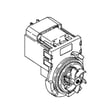
| Not draining | Dishwasher drain pump WD19X25461 | Pushes water out through the drain hose |
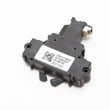
| Won’t start | GE dishwasher door latch lock WD21X10490 | Confirms the door is closed so the cycle can run |
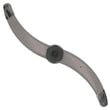
| Poor cleaning | Dishwasher spray arm, lower WD22X33499 | Wash coverage and water pressure at the lower rack |
Drain, start, and wash-performance problems can look similar from the outside, but the fix is different. Starting with loading and detergent rules from the manual prevents repeat issues and helps you avoid replacing parts that are still good.
For display codes or beeping patterns, use GE electronic dishwasher error codes to match the symptom to the right troubleshooting path.
Last updated: January 2026





