Owner’s manual
 View engine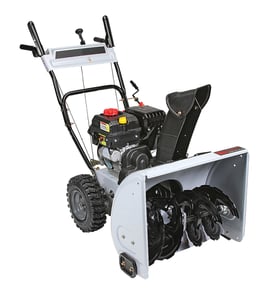




Can I use 5W30 instead of SAE 30 in my snowblower?
Yes. For the Craftsman 24788690 snow thrower, we recommend SAE 5W-30 engine oil; the operator’s manual lists Engine Oil Type: SAE 5W-30 and an oil capacity of 20 ounces, so 5W-30 is the correct choice for this model. See the 24788690 operator's manual.
What to use in Craftsman 24788690
Use a 4-cycle motor oil that matches the manual’s viscosity and quality guidance.
- Use SAE 5W-30 for this model.
- Use oil with a minimum classification of SF/SG/SH/SJ (as noted in the manual).
- Check the oil level before each use; keep it at the FULL mark on the dipstick.
- Change oil after the first 5 to 8 hours, then about every 50 hours or once per season.
- Do not overfill; overfilling can cause smoking and poor running.
5W-30 vs SAE 30: what’s the difference?
SAE 30 is a single-viscosity oil; 5W-30 is a multi-viscosity oil that flows better when cold.
| Oil type | Cold starting | Warm protection | Best use case |
|---|---|---|---|
| 5W-30 | Better | Good | Snowblower use in cold weather |
| SAE 30 | Worse | Good | Warmer-weather small engines |
How to switch oils safely
If you are changing from SAE 30 to 5W-30, we recommend doing it as a normal oil change.
- Run the engine briefly to warm it (then shut it off).
- Remove the ignition key and disconnect the spark plug wire.
- Drain the old oil completely, reinstall the drain plug, then refill.
- Recheck the dipstick level after a minute; top off only if needed.
Why it matters
Using the correct viscosity helps your Craftsman 24788690 start easier in cold temperatures and keeps internal engine parts protected during snow throwing, especially under heavy load.
Last updated: January 2026
Where is the model number on a Craftsman snowblower?
On the Craftsman snow thrower model 24788690, the model number is printed on a product ID label (sticker or metal tag) attached to the machine. It is commonly found on the rear of the unit near the axle area, between the wheels; confirm the exact label location using the 24788690 operator's manual.
Where to look first (fast checks)
- Rear of the snowblower frame between the wheels
- Back of the auger housing (lower front housing) near the scraper bar area
- Side of the frame near the engine mounting area
- Handle support or dash panel area (near the controls)
- Under the belt cover area (only check with the engine off and cooled)
What the label usually shows
The ID label typically includes both a model number and a serial number. For parts lookup and diagrams, we use the model number.
| Label item | What it’s used for | Example for this unit |
|---|---|---|
| Model number | Identifies the exact snowblower design for parts | 24788690 |
| Serial number | Identifies the production run | Varies by unit |
Tips if the label is hard to read
- Wipe the label with a damp cloth and mild soap; avoid harsh solvents.
- Use a flashlight at an angle to make faint printing easier to see.
- Take a close-up photo and zoom in to read worn characters.
- Write the number down exactly, including dots or dashes if present.
Why it matters
Craftsman snowblowers can look similar across years, but small design changes affect belts, shear pins, and other replacement parts. Using the correct model number helps us match compatible parts and service information the first time.
Last updated: January 2026
How long should a gas snowblower last?
For Craftsman model 24788690, the operator’s manual defines an average useful life of 7 years or about 60 operating hours; after that point, it calls for annual inspection to confirm safety and mechanical systems are still working properly. Many owners get longer service with strong maintenance.
What the manual’s “average useful life” means
In the 24788690 operator’s manual, the 7-year (or 60-hour) statement is a safety and inspection benchmark, not a promise that the snowblower will fail at that time.
What most affects real-world lifespan
- Fuel freshness: use clean, fresh unleaded fuel; avoid storing stale fuel in the tank
- Oil care: keep oil at the FULL mark; change oil on schedule
- Belt condition: inspect for glazing, cracking, or slipping; replace when worn
- Wear items: skid shoes, shave plate, shear pins, spark plug (replace as needed)
- Storage: follow off-season steps to prevent corrosion and fuel-system problems
Quick reference: time vs. hours (how to interpret “7 years or 60 hours”)
| Measure | What it represents | How to use it |
|---|---|---|
| 7 years | Calendar age | Plan annual inspections after year 7 |
| 60 hours | Run time | If you track hours, use this as the same inspection trigger |
When repairs start to make sense
If performance drops due to drive or auger issues, a common maintenance item to check is the auger drive belt. For this model, see the compatible belt 256963 if you’re diagnosing belt wear or slippage.
Why it matters
Using the manual’s 7-year or 60-hour benchmark helps you plan preventive inspections and replace wear parts before a mid-storm breakdown, while still getting the longest practical life from model 24788690.
Last updated: January 2026
Is a 3 stage snow blower better than a 2 stage?
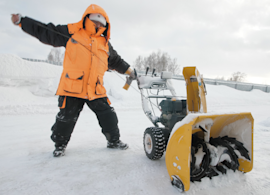
A 3-stage snow blower is better than a 2-stage when you regularly clear deep, heavy, wet, or icy snow and want faster intake with fewer slowdowns. Your Craftsman model 24788690 is a 2-stage 28-inch snow thrower, so this is a feature comparison rather than an upgrade option for this exact machine.
2-stage vs 3-stage: what’s different
A 2-stage design uses an auger to pull snow in and an impeller to throw it. A 3-stage design adds an accelerator (a third, fast-spinning intake component) to feed the impeller faster.
- 2-stage: strong all-around performance for most storms and plow berms
- 3-stage: faster in dense, drifted, or icy snow; typically more cost and more moving parts
- Both: performance depends heavily on ground speed, chute angle, and skid shoe setup
Quick comparison
| Feature | 2-stage (like 24788690) | 3-stage |
|---|---|---|
| Best for typical snowfall | Yes | Sometimes overkill |
| Speed in deep drifts | Good | Better |
| Complexity and upkeep | Lower | Higher |
| Cost | Lower | Higher |
Getting the best performance from your Craftsman 24788690 (2-stage)
Use these setup and maintenance steps to reduce clogging and improve throwing distance.
- Use a slower forward speed in heavy or wet snow
- Keep skid shoes adjusted for pavement vs gravel
- Clear clogs with the clean-out tool (never hands)
- Check shear pins if the auger stops turning after hitting packed snow or debris
- If the auger drive slips, inspect the auger drive belt and replace it if worn
Parts and documentation that help
- Belt replacement and adjustments are covered in the 24788690 operator’s manual.
- If you need the correct replacement belt for this model, use belt 256963.
Why it matters
Choosing the right stage (or optimizing your 2-stage) affects clearing time, clog frequency, and wear on wear items like belts and shear pins.
Last updated: January 2026