Owner’s manual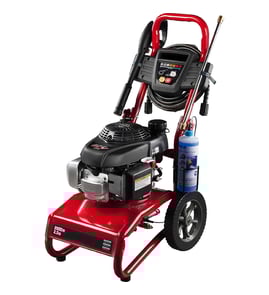



What kind of gas goes in a Craftsman 3000 PSI pressure washer?
For the Craftsman 580754930 gas pressure washer, use clean, fresh unleaded gasoline; 87 octane (87 AKI) is the correct minimum for most small 4-cycle pressure washer engines. Use fresh fuel and the right oil and fuel procedures in the owner's manual to help prevent hard starting and surging.
What to use (and what to avoid)
- Use: fresh, clean unleaded gasoline
- Octane: 87 AKI minimum (regular)
- Avoid: old gas (more than 30 days), contaminated fuel, and fuel mixed with oil (this is a 4-cycle engine)
- Avoid: overfilling the tank; leave room for expansion
- Avoid: storing fuel in the pressure washer between seasons
Quick fuel checklist before you start
- Turn the engine OFF and let it cool.
- Move the pressure washer to a well-ventilated area.
- Check the fuel for a sour smell, dark color, or debris; replace if questionable.
- Fill with fresh unleaded gas; tighten the cap.
- Connect the garden hose and run water through the pump before starting (helps protect the pump).
Fuel guidance at a glance
| Situation | What we recommend | Why |
|---|---|---|
| Normal use | 87 AKI unleaded | Correct for typical small engines |
| Hot weather or heavy load | Fresh 87 AKI (or higher if you already have it) | Helps maintain consistent running |
| Storage longer than 30 days | Drain/replace fuel before next use | Reduces varnish and carburetor clogging |
Why it matters
Fuel quality is one of the biggest factors in starting and performance. Old or contaminated gasoline commonly causes no-start, rough running, and power loss on gas pressure washers.
Related DIY help
If fuel is fresh but the engine still runs poorly, use our troubleshooting steps in pressure washer engine losing power.
Last updated: February 2026
Can I use SAE 30 instead of 10W30 in my pressure washer?
Yes. For the Craftsman pressure washer model 580754930, SAE 30 is an acceptable engine oil in warm weather, but it can make cold starts harder. 10W-30 is easier starting in cooler temperatures, while SAE 30 is a solid choice for consistently warm conditions; follow the temperature guidance in the 580754930 owner's manual.
Quick oil choice guide (SAE 30 vs 10W-30)
Use outdoor temperature as your deciding factor:
- Below 40°F (4°C): avoid SAE 30 because it can cause hard starting
- Normal mixed temps: 10W-30 is typically the most versatile
- Above 80°F (27°C): 10W-30 can lead to higher oil consumption, so check the level more often
- Use a high-quality detergent oil rated SF, SG, SH, SJ, or higher
- Do not use special additives
How to switch oils safely
If you decide to run SAE 30, these steps help prevent low-oil operation:
- Park the pressure washer on a level surface before checking or filling oil
- Check oil with the dipstick and keep the level at the FULL mark
- Add oil slowly to avoid overfilling
- After changing viscosity (10W-30 to SAE 30), recheck the level after the first short run
Oil selection at a glance
| Condition | Better choice | What to watch for |
|---|---|---|
| Cold mornings or seasonal use | 10W-30 | Easier starting when cold |
| Consistently warm weather | SAE 30 | Hard starting if temps drop |
| Hot weather (over 80°F / 27°C) | SAE 30 often preferred | 10W-30 may consume more oil |
Why it matters
Using the right viscosity helps your 580754930 engine lubricate properly at startup and at operating temperature. The wrong choice can cause hard starting in cold weather or increased oil consumption in high heat, which raises the risk of running low on oil.
Last updated: February 2026
How can I tell if my pressure washer pump is bad?
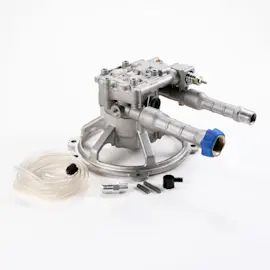
On the Craftsman 580754930 gas pressure washer, a “bad pump” usually shows up as low or no pressure, surging or pulsing spray, water leaking at the pump, or the engine bogging when you squeeze the trigger. Confirm the basics first (water supply, inlet screen, nozzle) before condemning the pump; see the owner's manual.
Quick checks before you blame the pump
- Verify a steady water supply and keep inlet water under 100°F.
- Inspect and clean the pump inlet screen; do not run the unit if the screen is damaged or missing.
- Purge air: turn water on, then hold the trigger until the flow is steady.
- Try a different spray tip/nozzle to rule out a clogged tip.
- Check the high-pressure hose for kinks, cuts, or loose connections.
Symptoms that point to pump wear or internal damage
- Low pressure on every nozzle even with good water supply
- Pulsing/surging that does not improve after purging air
- Grinding/knocking noises from the pump area
- Water leaking from the pump head/manifold area
- Engine loads down hard when the trigger is pulled (often tied to unloader or check valve issues)
What the symptoms usually mean
| Symptom | Most common cause | What to do next |
|---|---|---|
| Low/no pressure | Clogged nozzle, air in system, worn valves/seals | Purge air, swap nozzle, then inspect pump components |
| Pulsing spray | Air leak, inlet restriction, sticking check valves | Check inlet screen and hose, then check valves |
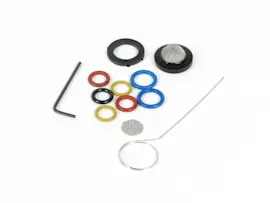
| Leaking at pump | Worn seals/O-rings, cracked manifold | Inspect seals and manifold; replace as needed |
| Bogging when spraying | Unloader valve problem, pump binding | Inspect/replace unloader valve; check pump for binding |
Why it matters
Running with poor water supply, a damaged inlet screen, or air in the system can overheat and damage the pump. Your model also has an automatic cool down system that dumps warm water to help prevent internal pump damage when the trigger is not used for several minutes.
Repair path that matches the most common “bad pump” complaints
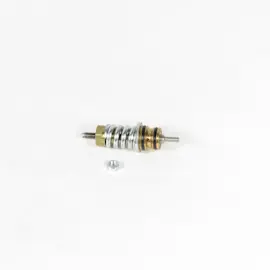
If your checks above do not restore steady pressure, the next most common fix is servicing the unloader valve and check valves. We use this guide for the typical procedure: how to replace a pressure washer unloader valve.
Last updated: February 2026
How many PSI is a Craftsman 190cc pressure washer?
For the Craftsman pressure washer model 580754930 (190 cc), the rated output is 2800 PSI max at 2.1 GPM, and 2400 PSI at 2.3 GPM. Those are the performance ratings you should use when matching spray tips, hoses, and pump service kits; see the owner's manual.
PSI ratings for model 580754930
These are the key specs listed for this exact model:
- Max outlet pressure: 2800 PSI at 2.1 GPM
- Rated pressure/flow point: 2400 PSI at 2.3 GPM
- Engine displacement: 190 cc
- Water supply temperature limit: 100°F max
Why your pressure washer may not “feel” like the rated PSI
Even when the machine is healthy, real-world cleaning power can vary based on setup and conditions.
- Spray tip size and wear (worn tips reduce pressure)
- Nozzle partially clogged with debris
- Garden hose flow restriction (kinked hose, undersized hose, weak spigot)
- Air leaks on the inlet side (loose fittings, damaged O-rings)
- Unloader valve sticking or misadjusted
Quick troubleshooting checklist (low pressure)
Use this sequence before replacing pump parts:
- Confirm full water flow to the pump before starting the engine.
- Clean the inlet screen and check the garden hose for kinks.
- Try a different quick-connect spray tip (a worn tip is a common cause).
- Inspect and lubricate O-rings on the hose, wand, and gun connections.
- If pressure surges or won’t build, service the unloader and check valves.
Common symptoms and likely causes
| What you notice | Most common cause | What to check first |
|---|---|---|
| Low pressure | Worn/clogged spray tip | Swap tips, clean nozzle |
| Pressure pulses | Unloader valve issue | Unloader movement, debris |
| Good pressure then drops | Inlet restriction or air leak | Hose flow, O-rings |
| No pressure, good flow | Check valve problem | Pump check valves |
Repair guidance that matches this issue
- For pressure surging or no pressure build, follow how to replace a pressure washer unloader valve.
- For pressure loss and pump performance issues, follow how to install a pressure washer check valve kit.
Last updated: February 2026
Is it worth repairing a pressure washer?
Repairing a Craftsman gas pressure washer like model 580754930 is worth it when the problem is a wear item or adjustment (leaks at fittings, clogged inlet screen, spray gun issues, routine tune-up). Replacement makes more sense when the engine or pump has major internal damage and the repair cost approaches about half the price of a comparable new unit.
Quick decision checklist
- Repair it if the issue is a hose connection leak, worn O-ring/seat, clogged water inlet screen, dirty air filter, or a basic spark plug service.
- Repair it if the unit has been reliable and only recently developed a single symptom.
- Replace it if the engine has low compression, severe internal noise, or repeated stalling after tune-up.
- Replace it if the pump is cracked or has major internal wear (especially if pressure loss is persistent after basic checks).
- Replace it if you have frequent breakdowns and downtime matters more than repair cost.
What the manual tells us (and why it matters)
The maintenance schedule in the owner's manual emphasizes routine service (oil changes, air cleaner, spark plug, inlet screen checks) because basic maintenance directly improves performance and extends service life. It also notes the pump is factory-lubricated and sealed, so pump “oil service” is not part of normal upkeep.
Safety and repair boundaries
Use these rules before deciding to repair:
- Never repair a high-pressure hose; replace it.
- Relieve trapped pressure at the spray gun before stopping work.
- Before repairs, disconnect the spark plug wire so the engine cannot start unexpectedly.
Typical repair cost vs. value guide
| Issue type | Common examples | Usually worth repairing? |
|---|---|---|
| Low-cost maintenance | Spark plug, air filter, inlet screen cleaning | Yes |
| Minor water leaks | O-rings/seats, loose fittings, spray gun leaks | Yes |
| Control/valve issues | Unloader valve sticking, check valve problems | Often |
| Major component failure | Pump housing damage, severe engine problems | Often no |
DIY help that matches common “worth it” repairs
If your symptoms point to a specific system, these guides help you estimate effort before you buy parts:
- Solving pressure washer problems
- Pressure washer engine losing power
- How to replace a pressure washer unloader valve
Why it matters
A pressure washer can hold dangerous trapped pressure even with the engine off, and high-pressure spray can cause serious injury. If the repair involves high-pressure components (hose, gun, pump head), the safest and most cost-effective choice is often replacing the suspect part rather than attempting a patch.
Last updated: February 2026