Owner’s manual
 Error Codes


Are GE side-by-side refrigerators good?
GE side-by-side refrigerators, including GE model PZS23KSEDFSS, are a good everyday choice because they deliver steady cooling, easy access to fresh and frozen foods, and convenient in-door water and ice. Long-term performance comes from simple upkeep like filter changes and keeping interior vents clear; see the PZS23KSEDFSS owner's manual.
What “good” looks like in real use
We judge side-by-sides on temperature stability, storage flexibility, and dispenser reliability.
- Consistent fresh food and freezer temperatures when vents are not blocked
- Adjustable shelves and bins for better organization
- In-door water and ice for convenience
- Replaceable wear parts (filters, valves, sensors, fan motors)
Common tradeoffs and how we prevent them
These are normal side-by-side pain points and the fixes that work.
- Ice maker noise or slower cycles: keep the freezer set consistently and limit door openings
- Slow water flow or off taste: replace the filter on schedule and flush the dispenser after changes
- Uneven cooling: avoid packing food tightly against air returns and vents
- Issues after moving the unit: pull straight out and push straight back to protect lines and cords
Quick maintenance guide
| Task | Typical timing | Why it helps |
|---|---|---|
| Replace water filter | Every 6 months | Better taste, flow, and ice quality |
| Keep vents clear | Weekly check | More even cooling |
| Clean spills and interior | Monthly | Odor control and hygiene |
| Confirm doors seal and close | Monthly | Prevents warm air leaks and frost |
Water filter operation on this model
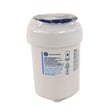
The manual explains that the dispenser and ice maker are designed to run with a filter installed; if a replacement filter is not available, you must use a bypass plug so they can operate. For step-by-step help, use how to replace the water filter in a GE refrigerator and match the correct cartridge, such as the refrigerator water filter MWFP.
Why it matters
A “good” refrigerator is one that stays cold, fits your routine, and avoids nuisance problems. On PZS23KSEDFSS, routine filtration and airflow habits prevent many common dispenser and temperature complaints.
Last updated: January 2026
How big is a GE Profile refrigerator?
GE Profile refrigerator size depends on the exact model and style. For your GE PZS23KSEDFSS side-by-side refrigerator, the most accurate overall dimensions and required clearances are listed in the PZS23KSEDFSS owner's manual.
Typical sizes you can expect (quick reference)
Most GE Profile refrigerators fall into these common ranges, depending on configuration:
- Side-by-side: about 32 to 36 inches wide, 65 to 71 inches tall
- Standard-depth: about 33 to 36 inches deep without handles (deeper with handles)
- Counter-depth: about 28 to 32 inches deep without handles (shallower “built-in” look)
How to measure your refrigerator correctly
Use a tape measure and capture these three numbers:
- Width: cabinet edge to cabinet edge (then note handle depth separately)
- Height: floor to top of hinge cover (if present)
- Depth: back of cabinet to front of doors (and a second measurement to the front of handles)
Clearance checklist (so it fits and vents correctly)
We recommend planning for:
- Space behind the unit for the power cord and water line
- Door swing clearance so bins and drawers can open fully
- Airflow clearance so the condenser and compressor can reject heat
Why it matters
Correct dimensions and clearances help prevent poor cooling, noisy operation, and door alignment issues. They also make sure the water line and ice maker hookup can be routed without kinks or leaks.
| Measurement to record | What it affects | Common mistake |
|---|---|---|
| Width | Cabinet opening fit | Forgetting trim or side clearance |
| Height | Overhead cabinet clearance | Not measuring to hinge cover |
| Depth (no handles vs with handles) | Walkway clearance | Measuring only the cabinet |
Last updated: January 2026
What is the most common problem with a GE refrigerator?
The most common GE refrigerator problem is a cooling complaint (fresh food too warm, freezer too warm, or both). On the GE PZS23KSEDFSS, the most frequent root causes are airflow restrictions from frost buildup, dirty condenser coils, or a failed cooling component such as a fan motor, defrost part, sensor, or control.
Quick checks we recommend first
- Confirm the doors fully close and nothing is holding them open.
- Give the refrigerator a full 24 hours to stabilize after a temperature change or power outage.
- Clean the condenser coils and make sure the unit has good airflow behind it.
- Verify vents inside the compartments are not blocked by food packages.
- If ice is clumping or the ice maker is acting up, empty and clean the bin; old ice can cause odor/taste and clumping.
Common causes and the parts that often fix them
| Symptom | Most likely system | What typically fixes it |
|---|---|---|
| Fresh food warm, freezer OK | Airflow in fresh food section | Check for frost blocking airflow; test evaporator fan |
| Freezer warm, weak cooling overall | Heat removal or sealed system support | Clean coils; check condenser airflow; check controls |
| Frost buildup, warming over time | Defrost system | Defrost heater, defrost thermostat, sensor |
| Temps swing or read wrong | Temperature sensing/control | Sensor or control board |
If you suspect a specific failure, these model-matched parts are common solutions:
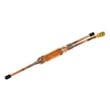
- Refrigerator evaporator fan motor WR60X10307 (airflow through the evaporator)
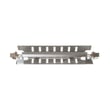
- Refrigerator defrost heater WR51X10055 (melts frost off the evaporator)
- Refrigerator defrost bi-metal thermostat WR50X10065 (protects and controls defrost heating)
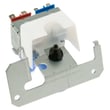
- GE profile refrigerator temperature sensor WR55X10025 (feeds temperature data to the control)
- Refrigerator electronic control board WR55X10775 (manages cooling and defrost timing)
Why it matters
Cooling problems can spoil food quickly and can also trigger secondary issues like slow ice production, small or hollow cubes (often tied to a clogged filter), and longer run times. Addressing airflow, coil cleanliness, and defrost performance early prevents repeat warm-ups.
Helpful model-specific guidance
Use the troubleshooting and “possible causes” tables in the PZS23KSEDFSS owner’s manual to match your exact symptom (cooling, ice maker, buzzing, hollow cubes) to the right next step before replacing parts.
Last updated: January 2026