Installation guide
 Owner’s manual
 Error Codes


What is the average lifespan of a KitchenAid dishwasher?
Most KitchenAid dishwashers, including the KitchenAid KUDS30IVBL3 undercounter dishwasher, typically last 10 to 14 years with normal household use. Consistent cleaning, correct loading, and addressing small issues early (like draining or heating problems) are what most often determine whether you land on the low or high end.
A dishwasher’s life is mostly driven by how hard its wash system works and how well water moves through it.
- Water quality: hard water speeds up mineral buildup on internal parts
- Usage frequency: multiple loads per day shortens overall life
- Detergent and rinse aid habits: rinse aid helps drying and helps control hard-water deposits
- Installation quality: proper drain, water supply, and electrical setup reduces stress on components
- Maintenance: keeping the sump area and spray paths clear prevents pump strain
KitchenAid notes that energy-efficient dishwashers often run longer cycles (commonly 2 to 3 hours, and some option selections can push cycles longer). Longer cycles are normal and not a sign the dishwasher is failing. See the KUDS30IVBL3 installation guide for operating checks and “does not operate” basics.
| Lifespan range | What it usually means | What to do |
|---|---|---|
| 0 to 5 years | Early failure is often electrical, installation, or a single component issue | Check power, door latch, water supply; inspect wiring and connections |
| 6 to 10 years | Wear items start showing up (drain, wash, seals) | Clean and inspect; replace failing parts promptly |
| 10 to 14 years | Typical end-of-life window | Compare repair cost vs. replacement |
- Standing water or repeated drain problems
- Poor cleaning even after cleaning filters and spray arms
- Leaks around the door or under the unit
- Intermittent power, dead control, or blown fuse symptoms
- Unusual grinding or loud pump noises
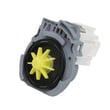
Knowing the expected lifespan helps you decide when a repair is worth it. For example, if draining issues are the main problem, replacing a common wear part like the dishwasher drain pump WPW10348269 can be a practical fix compared with replacing the entire dishwasher.
Last updated: January 2026
What is the most common problem with a KitchenAid dishwasher?
For KitchenAid dishwasher model KUDS30IVBL3, the most common problems we see are poor cleaning (often from loading issues or blocked wash action) and not running or stopping mid-cycle (often related to the door not latching, power supply, or a paused START/RESUME condition). Use the KUDS30IVBL3 owner's manual troubleshooting section to narrow it down quickly.
- Dishes come out dirty: spray arms blocked by tall items, overloaded racks, or wash jets not reaching surfaces
- Dishwasher does not start: door not fully closed and latched, cycle not selected, or no power to the unit
- Stops and START/RESUME light blinks: normal pauses during the cycle; needs START/RESUME pressed and door closed promptly
- Won’t drain: drain path restriction, drain hose routing issue, or a failing drain pump
- Leaks: door seal wear, loose hose connections, or a misaligned door
- Press START/RESUME if the light is blinking; then close the door firmly.
- Confirm a cycle is selected and the door is latched.
- Verify the dishwasher has power (check the home breaker or fuse).
- Re-load so nothing blocks the spray arms or the rear wash area.
- If the unit is in a seasonal location, plan proper winter care to prevent water damage.
| Symptom | Part to consider | What it affects |
|---|---|---|
| Won’t drain / water left in tub | Dishwasher drain pump WPW10348269 | Pumps water out during drain |
| Dead or intermittent power | Fuse W10258275 | Protects the dishwasher’s electrical circuit |
| Not filling or fills slowly | Dishwasher water inlet valve W10648041 | Controls water entering the dishwasher |
| Leaking at the door | Dishwasher door seal W11196317 | Seals the tub to the door |
Most “common problems” are actually quick-correct issues (door not latched, START/RESUME blinking, loading blocking spray). Fixing those first prevents unnecessary part replacement and gets your KUDS30IVBL3 back to normal operation faster.
Last updated: January 2026
How do I find the model number on my KUDS30IVBL3?
On the KitchenAid KUDS30IVBL3 undercounter dishwasher, the model number is printed on a label inside the tub near the door opening. Open the door and look along the right-hand or left-hand side of the dishwasher interior near the door.
- Open the dishwasher door fully
- Look just inside the tub opening near the door
- Check the right-hand interior side first
- Then check the left-hand interior side
- Find the label that lists both the model and serial number
| Label item | What it’s used for |
|---|---|
| Model number (example: KUDS30IVBL3) | Matching the correct parts and diagrams |
| Serial number | Identifying production details for service history |
Using the exact model number from the label prevents ordering the wrong KitchenAid parts (like a control panel, drain pump, or door seal) because small model variations can use different components.
- Copy the model number exactly as printed (letters and numbers)
- Use the full model number when searching diagrams and parts lists
- Keep a photo of the label for future reference
For a visual reference and more identification details, use the KUDS30IVBL3 owner’s manual.
Last updated: March 2026