Installation guide
 Owner’s manual
 Error Codes


What is the average lifespan of a KitchenAid dishwasher?
A KitchenAid dishwasher typically lasts 10 years. With normal household use and basic upkeep (cleaning, proper detergent, and good water quality), many run 9 to 14 years before major repairs like a pump, heater, or control become more likely.
Typical lifespan and what affects it
Most lifespan differences come down to how hard the dishwasher works and how well water and heat-related parts are protected.
- Water hardness and scale can shorten the life of the heater and wash system.
- Heavy daily use wears the wash motor, drain pump, and rack components faster.
- Poor draining strains the drain pump and can leave standing water.
- Door leaks can damage wiring and controls over time.
- Skipping rinse aid often leads to more spotting and buildup (especially with hard water).
For model-specific operating and care guidance, follow the installation guide.
What “end of life” usually looks like
These are the most common “it’s aging” symptoms we see on undercounter dishwashers like KitchenAid KUDS30IXBL7:
- Cycles get longer and cleaning results drop
- Water does not heat well, dishes stay wet
- Intermittent draining or humming during drain
- Door starts leaking at the perimeter
- Racks stop rolling smoothly or won’t stay on the rails
Common repairs vs. replacement (quick comparison)
| Symptom | Often worth repairing | Parts that commonly fix it |
|---|---|---|
| Door leaking | Yes | Door seal, lower door seal |
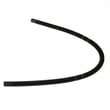
| Not draining | Often | Drain pump, drain hose |
| Poor drying | Often | Heater, rinse aid use and settings |
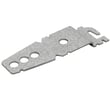
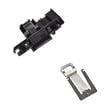
| Racks falling/rolling poorly | Yes | Rack adjusters, wheels, rail stops |
| No power or erratic behavior | Sometimes | Control board, wire harness |
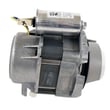
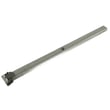
Examples of model-matched parts we commonly use for these issues include the dishwasher drain pump WPW10348269 and the dishwasher heater W10703867.
Why it matters
Knowing the typical lifespan helps you decide whether to maintain, repair, or replace. If your KUDS30IXBL7 is near the 10-year mark, small fixes (seals, drain parts, rack hardware) often restore performance and prevent bigger failures.
Last updated: February 2026
What is the most reliable KitchenAid dishwasher?
KitchenAid reliability is strongest in models that use a stainless steel tub, a proven wash system, and solid door sealing and drying performance. For your KitchenAid KUDS30IXBL7 undercounter dishwasher, long-term reliability mostly comes from correct installation, consistent cleaning, and replacing wear items early (seals, pumps, rack parts). See the KUDS30IXBL7 installation guide for setup checks that prevent door rubs and leaks.
What “most reliable” usually means for KitchenAid dishwashers
When customers ask this, we focus on the parts and design choices that reduce breakdowns and service calls.
- Stainless steel tub and sturdy door structure
- Strong wash circulation and dependable draining
- Good drying results (often tied to rinse aid use)
- Quiet operation (typically improves with better insulation and build)
- Easy-to-maintain racks and rack adjusters
Reliability checklist for KUDS30IXBL7 (what we see most often)
These items have the biggest impact on day-to-day dependability.
- Use rinse aid consistently for better drying and to reduce hard-water buildup (helps prevent performance complaints).
- Expect longer cycles (often 2 to 3 hours); longer run times are normal on energy-efficient designs.
- Confirm the door closes and latches cleanly; if the door rubs, re-centering and leveling prevents wear and leaks.
- Verify water supply is on and the breaker is not tripped before assuming a failure.
- Keep the drain path clear; slow draining strains the drain pump and can leave water in the tub.
Common “reliability parts” that prevent bigger problems
If you are maintaining or repairing KUDS30IXBL7, these are frequent fixes that restore normal operation.
| Symptom | Common cause | Example part on this model page |
|---|---|---|
| Water leaking at the door | Worn or deformed door gasket | Dishwasher door seal W11177741 |
| Not draining or drains slowly | Weak or jammed drain pump | Dishwasher drain pump WPW10348269 |
| Poor drying or water not heating | Heater issue (or rinse aid not used) | Dishwasher heater W10703867 |
Why it matters
A “reliable” dishwasher is usually one that stays sealed, drains completely, and maintains wash temperature. On KUDS30IXBL7, correct leveling and centering plus routine care (especially rinse aid use) prevents many of the most common failures.
Last updated: February 2026
What is the most common problem with KitchenAid dishwashers?
The most common issue we see with KitchenAid dishwashers like model KUDS30IXBL7 is poor cleaning or poor drying, usually caused by restricted water flow (clogged filter or spray arms), low water fill, or a heating problem. Start with basic checks in the owner's manual.
Quick checks that fix most “not cleaning” complaints
- Confirm the water supply valve is fully open.
- Run hot water at the sink until it’s hot before starting the cycle.
- Load so spray arms can spin freely; avoid blocking the lower spray arm with tall pans.
- Use fresh detergent and the correct cycle for soil level.
- Use rinse aid; this model family is designed to rely on rinse aid for good drying.
- Expect longer cycles (often 2 to 3 hours); longer run time is normal on energy-efficient designs.
When it’s likely a part problem (common symptoms)
If the basics look good, these symptoms often point to a specific failure area:
| Symptom | Most likely area | Example part on this model page |
|---|---|---|
| Dishes gritty, food redeposits | Filter or wash system not moving water well | Roper dishwasher filter W10084567 |
| Standing water after cycle | Drain system restriction or failed pump | Dishwasher drain pump WPW10348269 |
| Not filling or fills slowly | Water supply or inlet valve issue | Dishwasher water inlet valve WPW10327249 |
| Poor drying, cool interior | Heater circuit or heating element issue | Dishwasher heater W10703867 |
Why it matters
Cleaning and drying problems are usually water movement and temperature problems. When the dishwasher does not fill to the right level, cannot circulate strongly, or cannot heat effectively, detergent does not activate well and soils stay on dishes.
Safety and operation notes we follow
- Disconnect power before checking wiring or replacing electrical parts.
- If the dishwasher will not start, check the basics first: breaker/fuse, door fully latched, cycle set correctly, and water turned on.
Last updated: February 2026
How old is my KitchenAid oven by serial number?
KitchenAid oven age is determined by the serial number on the oven’s rating plate; the serial format varies by product line, so the correct method is to match your exact serial pattern to the date-code key for your oven. Use the rating plate information and your oven documentation, not the KUDS30IXBL7 dishwasher documents.
Find the serial number on your KitchenAid oven
Check the oven’s rating plate in one of these common locations:
- On the oven frame behind the door (door jamb area)
- Along the lower front frame near the storage/warming drawer (ranges)
- Inside the control panel area (some wall ovens)
- On the side trim area visible when the door is open (varies by design)
How to turn the serial number into an age
Use this process to get an accurate manufacture date from the serial number you have:
- Write down the full model number and serial number exactly as shown
- Identify whether the serial is all numbers, letters plus numbers, and its total length
- Use the date-code key that matches your specific oven series
- Convert any week or day-of-year code to a calendar date
Quick conversion table (when the serial uses day-of-year)
| Code type | What it means | Example conversion |
|---|---|---|
| Day-of-year (001 to 365) | Day within the year | 032 = Feb 1 (non-leap year) |
| 2-digit year | Year of manufacture | 19 = 2019 |
Important note about this model page
This page is for the KitchenAid KUDS30IXBL7 undercounter dishwasher, so the included documents focus on dishwasher installation and do not provide oven serial-number dating. For dishwasher installation details and rating label locations related to installation, use the installation guide.
Why it matters
Knowing the manufacture date helps you confirm parts compatibility and plan repairs; KitchenAid often has design changes by production run, so the serial-based date is the fastest way to narrow the correct parts list.
Last updated: February 2026