Owner’s manual


What is the most common problem with LG dryers?
For the LG DLGX5171W dryer, the most common customer complaint we see is clothes taking too long to dry or not drying well. In most cases, the root cause is restricted airflow (lint buildup or a clogged vent), but worn drum support parts can also cause noise and vibration.
What “most common” usually means on the DLGX5171W
Dryer issues tend to cluster into two buckets: airflow and drum support. Airflow problems show up as long dry times and overheating; drum support problems show up as thumping, squealing, or rumbling.
- Long dry times, weak airflow at the outside vent hood
- Dryer gets very hot, shuts off early, or cycles heat oddly
- Burning smell from lint buildup
- Thumping or rumbling as the drum turns
- Squealing that changes with drum speed
Quick checks we recommend first
These steps solve a large share of “not drying” calls without replacing parts.
- Clean the lint screen every load; wash it with warm water if fabric softener residue is present.
- Check the vent hose for kinks, crushing, or excessive length.
- Verify strong airflow outside while the dryer runs.
- Avoid overloading; heavy loads restrict tumbling and airflow.
For model-specific safety, access, and maintenance guidance, use the DLGX5171W dryer manual.
When it’s likely a part (common culprits)
If airflow is good but symptoms persist, these parts are frequent suspects on LG dryers:
| Symptom | What it often points to | Example part for this model |
|---|---|---|
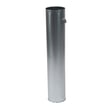
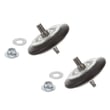
| Thumping/rumbling | Worn drum support roller | Dryer drum support roller 4581EL2002L |
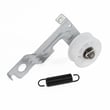
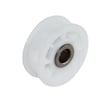
| Squealing | Worn idler pulley | LG dryer idler pulley 4561EL3002A |
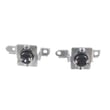
| Runs but heat is inconsistent/overheats | Temperature safety control issue | Dryer high-limit thermostat AGM30045804 |
Why it matters
Restricted venting can dramatically increase dry time, raise operating temperatures, and shorten the life of components like thermostats, rollers, and belts. Fixing airflow first is the fastest, lowest-cost way to restore normal performance.
Helpful DIY reading
Last updated: January 2026
Are LG gas dryers any good?
Yes. LG gas dryers are generally a solid choice, and the LG DLGX5171W is built around the same core strengths customers look for in gas dryers: fast drying, good capacity, and convenient cycle options. Most “not drying” complaints trace back to venting, lint buildup, or a worn heating or airflow component rather than the brand itself.
What we see most often with LG gas dryers
When an LG gas dryer seems “not good,” it is usually one of these fixable issues:
- Restricted exhaust venting (long runs, crushed flex duct, clogged wall cap)
- Lint screen not sealing or not being cleaned thoroughly
- Moisture sensor bars coated with residue (fabric softener sheets can cause this)
- Gas ignition or flame sensing problem (heat starts then stops)
- Normal wear items causing noise or poor airflow (rollers, idler pulley, blower wheel)
Quick checks that improve performance
Use these steps on the DLGX5171W before assuming the dryer is “bad”:
- Clean the lint screen every load; wash it with warm water and a soft brush if it looks “waxy.”
- Confirm strong airflow outside while the dryer runs.
- Try a timed dry cycle to compare results against sensor dry.
- Wipe the moisture sensor bars inside the drum with rubbing alcohol.
- Keep loads similar in fabric weight; mixed loads can confuse sensor dry.
Common “good vs not good” symptoms
| What you notice | Most likely cause | What to check first |
|---|---|---|
| Takes too long to dry | Vent restriction | Duct run, wall cap, lint buildup |
| Clothes damp on sensor dry | Sensor bars coated or mixed load | Clean sensor bars; try timed dry |
| No heat | Ignition/heating circuit issue | Igniter, thermostats, gas supply |
| Thumping/squealing | Drum support wear | Rollers, idler pulley, belt |
Parts that commonly affect drying results
If troubleshooting points to a specific component, these model-compatible parts are commonly involved:
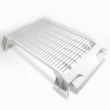
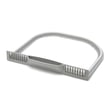
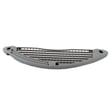
- Dryer lint screen by LG 5231EL1001C (airflow starts here)
- Dryer moisture sensor 6500EL3001A (controls sensor dry shutoff)
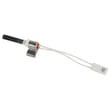
- LG dryer burner igniter 5318EL3001A (lights the gas burner)
For cycle features, maintenance guidance, and operating tips specific to this dryer, use the DLGX5171W manual.
Why it matters
A gas dryer can only dry well if it can move air. Good venting and a clean lint path protect drying performance, reduce overheating shutdowns, and help parts like thermostats and the burner system last longer.
Last updated: January 2026
How to reset LG dryer error code?
For the LG DLGX5171W dryer, we reset most error codes by doing a power reset: turn the dryer off, unplug it (or switch the breaker off) for 3 to 5 minutes, restore power, then try starting a cycle again. If the code returns, the dryer is detecting an ongoing problem, not just a “stuck” display.
Quick reset steps (safe first)
- Press Power to turn the dryer off.
- Unplug the power cord (or turn the circuit breaker off).
- Wait 3 to 5 minutes.
- Restore power.
- Press Power, select a cycle, and press Start/Pause.
If the dryer will not respond after restoring power, check the house breaker and confirm the outlet has power.
If the error comes back: what to check next
Many LG dryer codes are triggered by airflow, heat, or sensor conditions. Start with the items below before assuming a control failure.
- Clean the lint screen and confirm it seats correctly: dryer lint screen by LG 5231EL1001C
- Remove lint buildup around the lint screen opening and grille
- Check the vent path for restrictions (crushed flex vent, clogged wall cap, long run)
- Run a timed dry cycle to see if the code is cycle-specific
- If the dryer overheats or shuts down, inspect heat safety devices (thermostats)
Common “code cause” to “likely fix” map
| What you notice | Most common cause | What we recommend |
|---|---|---|
| Long dry times, “vent” style warnings | Restricted airflow | Clean lint screen, clear venting, confirm strong exhaust airflow |
| No heat or heat cuts out | Heating system safety trip or failed heat component | Check venting first; then test heat components |
| Sensor-related drying issues | Dirty or failed moisture sensing circuit | Clean sensor bars; inspect sensor and wiring |
Parts that often relate to recurring heat or sensor errors
If troubleshooting points to a failed component, these model-compatible parts are commonly involved:
- Dryer high-limit thermostat AGM30045804 (overheat protection)
- Dryer blower thermostat 6931EL3002M (temperature control at blower housing)
- Dryer moisture sensor 6500EL3001A and dryer moisture sensor wire harness 6631EL3003B (auto-dry sensing)
Why it matters
Resetting clears the control’s temporary state, but it does not fix the condition that triggered the code. Addressing airflow and heat control issues helps prevent repeat shutdowns, poor drying performance, and overheating.
For model-specific control panel behavior and code definitions, use the DLGX5171W manual.
Last updated: January 2026
Why is my LG steam dryer not drying?
If your LG DLGX5171W steam dryer runs but clothes stay damp, the most common causes are restricted airflow (lint screen or venting), a heat problem (gas ignition or temperature control), or a moisture-sensing issue on Auto cycles. Start with airflow, then check heat and sensors.
Quick checks (most common fixes)
- Clean and fully seat the lint screen; replace it if torn or warped: dryer lint screen by LG 5231EL1001C.
- Clear lint buildup below the lint screen grille area.
- Inspect the vent path for kinks, crushing, or blockage; confirm the outside hood flap opens strongly.
- Run a Timed Dry test; if Timed Dry works better than Auto, suspect moisture sensing or airflow.
- Reduce load size; overloading slows drying even with normal heat.
If it tumbles but does not heat (gas heat symptoms)
If you do not feel heat within a few minutes, “not drying” usually means “not heating.” Common components to check include:
- LG dryer burner igniter 5318EL3001A (failed igniter prevents burner ignition)
- Dryer radiant sensor 6501EL3001A (can stop ignition if it does not sense flame)
- Dryer high-limit thermostat AGM30045804 (can open and cut heat if overheating occurs)
If it heats but takes too long
- Clean the moisture sensor bars inside the drum with rubbing alcohol (dryer sheet residue can insulate them).
- If Auto cycles end early repeatedly, the sensor can be failing: dryer moisture sensor 6500EL3001A.
- If airflow seems weak even with a clear vent, check the blower wheel: dryer blower wheel 5835EL1002A.
Symptom guide
| What you notice | Most likely cause | Best next step |
|---|---|---|
| No heat at all | Ignition or safety thermostat issue | Check igniter, radiant sensor, high-limit thermostat |
| Heat present but slow drying | Vent restriction or weak airflow | Clean venting; inspect blower wheel |
| Auto ends too soon | Dirty or failing moisture sensor | Clean bars; test/replace sensor |
Why it matters
Drying depends on heat plus strong airflow to move moisture out. Restricted airflow can also trigger safety thermostats to shut heat down, making DLGX5171W drying times much longer.
For cycle and operating guidance specific to this model, use the DLGX5171W dryer manual.
Last updated: January 2026