Owner’s manual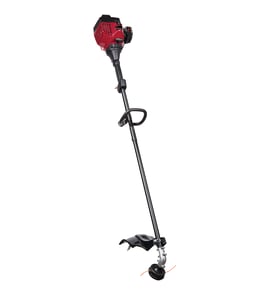



What is the highest rated gas string trimmer?
There is not one single “highest rated” gas string trimmer for everyone; the best choice depends on your yard size, cutting style (straight vs. curved shaft), and comfort features. For your Husqvarna 128CD, we recommend using the specs and safety guidance in the owner's manual to compare models consistently.
How to compare gas string trimmers (what matters most)
When we help customers choose a top-performing gas trimmer, we focus on real-world factors that affect cut quality and ease of use:
- Engine size and power: more power helps in thick weeds but adds weight.
- Shaft type: straight shafts typically reach under shrubs better; curved shafts often feel lighter and more maneuverable.
- Cutting swath: wider swaths trim faster; narrower swaths offer more control.
- Vibration and balance: reduces fatigue during longer jobs.
- Trimmer head and line system: easy line feed and easy reloading save time.
- Guard and safety features: proper guard fit helps control debris.
What “highest rated” usually means in practice
Ratings tend to favor trimmers that start easily, cut cleanly at moderate throttle, and do not burn through line quickly.
The Husqvarna 128CD manual highlights a few performance and safety points that also make good comparison criteria:
- Keep bystanders and pets 50 feet (15 meters) away.
- Use approved eye protection and hearing protection.
- Use non-metallic, flexible cutting attachments (trimmer head with trimmer line).
- Use gasoline mixed with 2-stroke oil at 2% (1:50).
Quick comparison checklist (use this when shopping)
| Feature | Best for | What to look for |
|---|---|---|
| Straight shaft | Reach and edging | Better reach under obstacles |
| Curved shaft | Light trimming | Easier handling for some users |
| Higher cc | Heavy weeds | More torque, more weight |
| Easy-load head | Frequent line changes | Tool-free or quick-load design |
Why it matters
A “top-rated” trimmer that is too heavy, uses the wrong cutting attachment, or is run with the wrong fuel mix will feel unreliable and wear faster. Matching the trimmer to your workload and following the correct operating setup is what delivers the best results.
Last updated: February 2026
What kind of gas does a Husqvarna 128CD take?
The Husqvarna 128CD uses gasoline mixed with 2-stroke oil, not straight gas. Mix unleaded gasoline with quality 2-stroke oil at a 50:1 ratio (2% oil) to protect the engine and help it start and run correctly; see the owner's manual.
Fuel type and mix ratio
Use this setup for normal operation:
- Gasoline: unleaded gasoline (fresh, clean fuel)
- Oil: 2-stroke engine oil
- Mix ratio: 50:1 (gas:oil), which equals 2% oil
- Mixing: mix fuel in an approved fuel container before filling the tank
Quick mix chart (50:1)
| Gasoline amount | 2-stroke oil needed |
|---|---|
| 1 gallon | 2.6 fl oz |
| 2 gallons | 5.1 fl oz |
| 5 gallons | 12.8 fl oz |
Safe fueling basics (important)
Fuel handling matters because spilled fuel and fumes can ignite, and hot engine parts can cause burns.
- Stop the engine and let it cool a few minutes before refueling
- Refuel outdoors or in a well-ventilated area
- Wipe up spills and let remaining fuel evaporate before starting
- Move the trimmer at least 10 feet (3 meters) from the fueling spot before starting
- Check for leaks at the fuel cap and fuel lines
When fuel-related parts may be needed
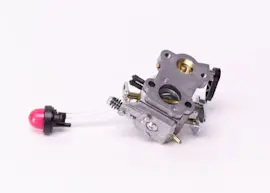
If you smell fuel, see wet spots, or the trimmer runs lean or stalls, inspect the fuel system. Common service items include:
- Fuel line connections and fittings (example: ayp chainsaw fuel line fitting 530023877)
- Fuel isolator (example: fuel isolator 530059780)
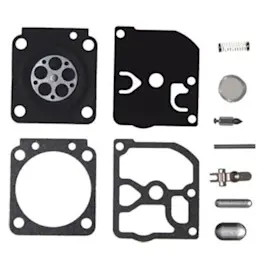
- Carburetor sealing surfaces (example: line trimmer carburetor gasket 545008086)
Why it matters
Running straight gasoline or the wrong mix can quickly damage a 2-stroke engine (poor lubrication), leading to hard starting, overheating, and loss of power.
Last updated: February 2026
Which is better, .080 or .095 trimmer line?
For a Husqvarna 128CD gas line trimmer, .095-inch line is better for thicker weeds and heavier trimming, while .080-inch line is better for lighter grass and longer run time per spool. The best choice is the line diameter your trimmer head is rated for in the owner's manual.
Quick pick guide
- Choose .080 for light edging, thin grass, and less load on the engine
- Choose .095 for dense grass, weeds, and faster cutting in tough spots
- If the trimmer feels sluggish or vibrates more with thicker line, step down in diameter
- Keep line length correct; overly long line increases engine load and line wear
- Use only non-metallic, flexible trimmer line (never wire, rope, or string)
Why diameter matters on the 128CD
The manual explains that longer or heavier line requires more engine power and that the guard cutter trims line to the correct length. If you run a thicker line than the head is designed for, you can get poor acceleration, extra vibration, and faster clutch and trimmer head wear.
Typical performance comparison
| Line diameter | Best for | Tradeoffs |
|---|---|---|
| .080 in | Routine trimming and edging | Less aggressive in heavy weeds |
| .095 in | Heavy trimming and weeds | More engine load, can shorten line life if overfed |
Setup tips that improve results (either size)
- Let the end of the line do the cutting; do not force the head into the grass
- For delicate areas, shorten the line and reduce throttle to limit damage and extend line life
- Wind line tightly and evenly on the spool to reduce harmful vibration
- Stop the engine and disconnect the spark plug lead before servicing the cutting attachment
Why it matters
Matching line diameter to the trimmer head keeps cutting performance high while reducing vibration and wear on the engine, clutch, and guard cutter.
Last updated: February 2026
Why is 128CD a special number?
On a Husqvarna 128CD gas line trimmer, “128CD” is special because it is the model number that identifies the exact trimmer design, parts fit, and operating instructions for your machine. Use it to match the correct Husqvarna parts list and the correct procedures in the 128CD operator's manual.
What “128CD” means for parts and repairs
When we use the model number 128CD, we are matching you to the right diagrams and compatible replacement parts for this specific trimmer.
Common examples on this model include:
- Fuel system items such as a fitting or isolator
- Starting system parts such as the recoil starter components
- Drive shaft assemblies (upper and lower)
- Engine sealing parts such as gaskets
- Safety and control components (stop switch, throttle lock-out)
Quick checks to confirm you are using the right model number
Use these steps before ordering parts or starting a repair:
- Confirm the model number on the trimmer’s ID label is 128CD
- Record the serial number and purchase date for service history
- Match the part name and part ID to the parts list for 128CD
- Use the manual’s safety section before any maintenance
- Stop the engine and let hot components cool before handling
Parts examples you can match by model number
These are examples of parts listed for Husqvarna 128CD; matching by model number helps prevent ordering the wrong item.
| What you are fixing | Example part on this model | What it affects |
|---|---|---|
| Fuel connection issue | Ayp chainsaw fuel line fitting 530023877 | Fuel delivery and leak prevention |
| Hard starting or weak spark | Line trimmer ignition coil 545046701 | Ignition spark strength |
| Starter won’t rewind or slips | Line trimmer recoil starter pawl 503873305 | Starter engagement |
| Heat protection near muffler | Heat shield 530150440 | Reduces heat exposure to nearby parts |
Why it matters
Using the correct model number (128CD) keeps your repair safer and faster because the manual’s safety instructions, fuel mix guidance, and parts compatibility are tied to that exact Husqvarna trimmer design.
Last updated: February 2026