 Installation guide
 Owner’s manual


How long do dryers usually last?
Most electric dryers last 10 to 13 years. For the GE DVLR223EG7WW, lifespan depends most on airflow and routine care; cleaning the lint filter every load and keeping the vent system clear helps the motor, heater, and thermostats run cooler and last longer. See the DVLR223EG7WW owner's manual for the maintenance schedule and safety steps.
| Dryer type | Typical lifespan | What usually ends life first |
|---|---|---|
| Standard electric dryer (like DVLR223EG7WW) | 10 to 13 years | Heating system wear, motor wear, drum support wear |
| Heavy-use household dryer | 8 to 10 years | Faster wear on belt, glides, idler, motor |
| Light-use household dryer | 12 to 15 years | Age-related electrical and mechanical wear |
- Clean the lint filter before every load to keep airflow strong.
- Keep the exhaust duct and outside damper clear; restricted venting makes drying take longer and increases heat stress.
- Avoid overloading; heavy loads strain the drum belt, idler pulley, and motor.
- Use the right cycle and remove clothes promptly to reduce unnecessary run time.
- Have the interior cabinet and exhaust connection cleaned about once a year by a qualified technician (especially if drying times are getting longer).
These are normal wear items on many GE electric dryers; replacing them can extend usable life when the cabinet and drum are still in good shape:
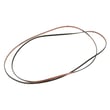
- Dryer drum belt WE03X29897 (drum stops turning or slips)
- Idler pulley WE12X83 (squealing, belt tension problems)
- Drum glides and felt seals (thumping, scraping, poor drum support)
- Heating element and thermostats (no heat, overheating, inconsistent heat)
A dryer that takes too long to dry is often fighting poor airflow or an overloaded drum. That extra run time increases wear on the drive system and can overheat components, shortening the overall lifespan.
Last updated: January 2026
Is it worth it to fix a dryer?
Fixing a GE electric dryer like model DVLR223EG7WW is worth it when the failure is a common wear item (belt, door switch, thermostat) and the dryer is otherwise in good shape; replacement makes more sense when you have repeated breakdowns or a major, high-cost repair.
- If the dryer runs but will not heat, check the home’s two fuses/breakers first (many electric dryers use two).
- If the dryer will not start, confirm it is fully plugged in and the breaker is not tripped.
- If the dryer is noisy or will not tumble, a belt or idler pulley repair is typically a practical fix.
- If airflow is poor (long dry times), correcting venting and cleaning often restores performance.
- If multiple major parts are failing at once, replacement is usually the better value.
| Situation | Usually worth repairing? | Why |
|---|---|---|
| One common failure (belt, switch, thermostat) | Yes | Lower parts cost, straightforward repair |
| Dryer tumbles but does not heat | Often | Frequently power supply, venting, or a heat circuit part |
| Repeated repairs in a short time | No | Total cost and downtime add up |
| Major component needed (drum, motor) | Depends | Higher parts cost; weigh age and overall condition |
- Dryer drum belt WE03X29897 (broken belt, no tumbling)
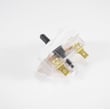
- Dryer door switch WE4M415 (will not start when door is shut)
- Dryer high-limit thermostat WE4M137 (overheating protection, heat issues)
- Mica heater WE11X20397 (electric heat circuit component)
Long dry times and heat problems can point to restricted venting, a power supply issue, or overheating protection opening. We follow the safety guidance in the DVLR223EG7WW owner’s manual; disconnect power at the breaker before any inspection or repair.
- Clean the lint filter before every load.
- Inspect and clean the vent path; use the shortest, uncrushed duct run possible.
- Verify both breakers/fuses for the dryer circuit are working.
- Level the dryer if it shakes or makes noise.
Last updated: January 2026
What brand of dryer has the least problems?
Speed Queen has the least problems overall because its dryers are built with simpler, commercial-style designs that hold up well over time. For mainstream home dryers, Whirlpool, LG, and GE are typically strong choices; for your GE DVLR223EG7WW electric dryer, good venting and routine cleaning are the biggest reliability drivers (more than brand alone). See the DVLR223EG7WW owner's manual for safety and maintenance guidance.
We see fewer “mystery” failures when the dryer design is simple, parts are widely available, and airflow is easy to maintain.
- Speed Queen: durability-first, fewer features, heavy-duty build
- Whirlpool (includes some Maytag/Amana lines): strong parts availability, straightforward repairs
- LG: generally good performance and feature set; keep venting excellent to protect sensors and heating
- GE: solid reliability, especially when airflow and electrical supply are correct
Many “dryer problems” are actually installation, airflow, or power issues. Your manual notes that many electric dryers use two fuses/breakers, and a dryer can tumble but not heat if only one trips.
- Confirm the dryer is fully plugged in and the outlet is correct
- Check/reset both breakers (or replace both fuses) if heat is missing
- Keep venting short, not crushed, and code-compliant
- Clean lint from the lint filter every load; have the exhaust path cleaned at least yearly
- Level the dryer to reduce vibration and wear
| Brand | Typical strengths | Best for |
|---|---|---|
| Speed Queen | Long life, simple controls | “Least problems” priority |
| Whirlpool | Easy to service, common parts | Value and repairability |
| LG | Features, efficiency | Tech-forward households |
| GE | Balanced reliability | Solid everyday use |
Choosing a reliable brand helps, but airflow and electrical supply prevent the most common failures: no-heat complaints, long dry times, overheating, and premature wear on moving parts.
Last updated: January 2026





