Error Codes





Does the KitchenAid dishwasher have a lifetime warranty?
KitchenAid dishwashers such as model KUDP01FLBL1 do not come with a lifetime warranty; coverage is typically limited, and many units include a one-year full warranty for parts and labor for defects in materials or workmanship when properly installed, operated, and maintained.
What warranty coverage usually means
Warranty terms vary by purchase date and product line, but most KitchenAid dishwasher warranties are structured like this:
- Full warranty period (often 1 year): parts and repair labor for covered defects
- Limited coverage after that (varies): may cover specific components only
- Not covered: normal wear, cosmetic issues, installation problems, and misuse
How to confirm the exact warranty for your dishwasher
Use these checks to match the warranty to your specific unit and purchase:
- Find the model number (KUDP01FLBL1) and serial number on the tub frame or door edge
- Locate your proof of purchase (date matters for coverage)
- Compare the warranty document details to your model and purchase date
- If you are troubleshooting a failure, identify the likely failed component first (for example, a leak, no-drain, or no-start symptom)
Common “warranty vs. wear” examples
These examples help set expectations for what is typically considered a defect vs. normal wear.
| Symptom | Often considered | Parts commonly involved |
|---|---|---|
| Won’t drain | Repair issue (cause-dependent) | Dishwasher drain hose 8269144A, pump, drain path |
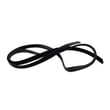
| Leaks at door | Wear or alignment (cause-dependent) | Gasket W11196317, hinges, door seal surfaces |
| No power / dead | Electrical issue (cause-dependent) | Fuse 8193762, wiring, control |
Why it matters
A “lifetime warranty” would cover the product for as long as you own it. With a limited warranty, the purchase date and the specific failed part determine whether a repair is covered, so identifying the failure accurately saves time and avoids buying unnecessary parts.
Last updated: February 2026
How to identify a KitchenAid dishwasher model?
You can identify your KitchenAid dishwasher model by finding the rating label on the inside edge of the door on model KUDP01FLBL1. That label lists the model number and serial number, which we use to match the correct parts and diagrams.
Where to look on a KitchenAid dishwasher
Check these common label locations first:
- Inside the door, along the left side or door frame
- Around the tub opening (near the latch area)
- On the side wall of the tub, visible when the door is open
- On the lower edge of the door (inside)
What to write down (and why)
Capture the information exactly as shown on the tag.
- Model number (example: KUDP01FLBL1)
- Serial number (helps confirm production series)
- Electrical rating (useful for diagnosing power issues)
- Type/style codes (sometimes listed on KitchenAid-built units)
Quick checklist for a clean match
| Item | What it does | Example |
|---|---|---|
| Model number | Matches the correct parts list | KUDP01FLBL1 |
| Serial number | Helps confirm version changes | (varies) |
| Brand | Confirms manufacturer family | KitchenAid |
Why it matters
KitchenAid dishwashers can have multiple versions that look identical but use different parts (like a drain hose, door seal, or pump and motor assembly). Using the exact model number prevents ordering the wrong replacement.
If the label is missing or unreadable
Use these practical options:
- Check your purchase paperwork or installation receipt
- Look for the model number on any service sticker behind the toe panel
- Match key parts already in the unit (for example, a drain hose or door hinge) to narrow the correct diagrams
If you are troubleshooting at the same time, our KitchenAid code resources can help you pinpoint the failure pattern: KitchenAid he dishwasher error codes.
Last updated: February 2026
What is the most common problem with a KitchenAid dishwasher?
For the KitchenAid dishwasher model KUDP01FLBL1, the most common problems we see are not cleaning well, not draining, and leaking. These issues usually trace back to restricted water flow (spray arm or chopper blockage), a drain restriction (hose or pump area), or a worn door seal.
Most common symptoms and what they usually mean
- Dirty dishes or grit left behind: spray arm holes clogged, chopper area blocked, or weak wash circulation
- Standing water in the bottom: drain hose restriction, air gap or disposer connection blockage, or a drain pump issue
- Water leaking at the door: door seal or vent gasket not sealing, or door not closing evenly
- No wash action or loud humming: circulation pump and motor problem
- Intermittent power or dead control: blown fuse or control issue
Quick checks you can do first (no parts needed)
- Clean the spray arm holes and confirm the arms spin freely.
- Check the drain path: look for kinks and clogs where the hose connects to the sink drain or disposer.
- Inspect the door sealing surfaces: wipe the tub lip and check for tears, flattening, or gaps.
- Run hot water at the sink for 30 to 60 seconds before starting a cycle to improve wash performance.
- Confirm loading: tall items should not block the spray arm or detergent dispenser.
Parts that commonly fix these problems on KUDP01FLBL1
| Problem | Common fix | Example part for this model |
|---|---|---|
| Not draining | Replace a restricted or damaged drain hose | Dishwasher drain hose 8269144A |
| Leaking at door | Replace a worn door seal | Gasket W11196317 |
| Poor cleaning, debris | Replace a worn or damaged chopper | Dishwasher chopper assembly W10083957V |
| No power | Replace the dishwasher fuse | Fuse 8193762 |
| No/weak wash circulation | Replace pump and motor assembly | Dishwasher pump and motor assembly W10782773 |
Error codes can speed up the diagnosis
If your KitchenAid dishwasher is flashing lights or showing an error, use the code to narrow the failure to draining, heating, or motor operation. Start with KitchenAid microclean he dishwasher error codes or KitchenAid he dishwasher error codes.
Why it matters
Cleaning, draining, and sealing problems can look similar during a cycle, but they require different fixes. A quick symptom check helps you avoid replacing the wrong part and gets your KUDP01FLBL1 back to normal wash performance faster.
Last updated: February 2026
What's the average lifespan of a KitchenAid dishwasher?
Most KitchenAid dishwashers, including model KUDP01FLBL1, typically last 10 to 14 years with normal household use. Consistent cleaning, correct detergent use, and fixing small problems early (leaks, poor draining, weak washing) are what most often push lifespan toward the high end.
What affects dishwasher lifespan the most
- Water quality: hard water speeds up mineral buildup on spray arms, seals, and the pump.
- How often you run it: multiple loads per day shortens overall service life.
- Cleaning and maintenance: keeping the sump area clean reduces strain on the motor.
- Drain performance: slow draining can lead to odors, standing water, and pump wear.
- Door sealing: leaks can damage components and cabinetry over time.
Maintenance that helps KUDP01FLBL1 last longer
- Clean the interior and run a monthly cleaning cycle; follow steps in how to clean and maintain your dishwasher.
- Keep the bottom of the tub clear of labels, glass, and food debris.
- Confirm the spray arms spin freely and holes are not clogged.
- Use rinse aid if drying is weak and plastics stay wet.
- Address leaks promptly; a worn door seal is a common cause (see gasket W11196317).
Quick symptom-to-part check
| Symptom | Common cause | Example part for KUDP01FLBL1 |
|---|---|---|
| Not draining or standing water | Kinked/clogged drain path | Dishwasher drain hose 8269144A |
| Loud grinding or poor wash | Worn pump/motor or debris damage | Dishwasher pump and motor assembly W10782773 |
| Water leaking at the door | Worn/warped door seal | Gasket W11196317 |
| Dishes not cleaning well | Loading, spray issues, circulation problems | Dishwasher not cleaning dishes video |
Why it matters
A dishwasher that is maintained and draining correctly puts less load on the circulation system and seals. That reduces premature failures in high-wear areas like the pump, motor, and door gasket, which are the repairs that most often decide whether a unit is worth keeping.
Last updated: February 2026
How to get KitchenAid replacement parts?
To get KitchenAid replacement parts for your KitchenAid dishwasher model KUDP01FLBL1, we recommend searching by the full model number first, then matching the exact part name and part ID to what’s installed in your dishwasher to ensure proper fit and function.
Best way to find the right part for KUDP01FLBL1
- Start with the model number KUDP01FLBL1 (this narrows results to compatible parts).
- Identify the failed symptom (leak, no drain, poor cleaning, won’t start) to target the correct section.
- Match the part by part name and part ID, not just a description.
- Compare your original part’s markings (if visible) to the replacement listing.
- If you’re replacing a water-path part, plan to replace any related clamps or seals at the same time.
Common replacement parts customers order for this model
These are examples of parts available for KUDP01FLBL1 that often come up during repairs:
| Problem you’re fixing | Part to check first | What it affects |
|---|---|---|
| Dishwasher won’t drain | Dishwasher drain hose 8269144A | Drain flow to disposer or drain line |
| Leaks at door | Gasket W11196317 | Door sealing and water containment |
| Poor wash or loud pump | Dishwasher pump and motor assembly W10782773 | Wash pressure and circulation |
| Dishes not cleaning well | Dishwasher chopper assembly W10083957V | Food chopping and filter protection |
How to confirm you’re ordering the correct part
- Verify the dishwasher’s model tag reads KUDP01FLBL1.
- Confirm the part location (door, sump, toe panel area, rack) before ordering.
- If the issue is performance-related, check for clogs and buildup first; a cleaning may solve it without parts.
- For electrical symptoms (dead unit, intermittent power), shut off the breaker before inspecting components.
Why it matters
Dishwasher parts can look similar across KitchenAid and Whirlpool-built platforms, but small differences in seals, hose routing, and electrical connectors can cause leaks, noise, or repeat failures if the wrong part is installed.
Last updated: February 2026