Owner’s manual


What is the average lifespan of a Maytag dryer?
A Maytag dryer typically lasts 10 to 15 years. For your Maytag MGD5700TQ0 gas dryer, lifespan depends most on airflow (venting), load size, and routine maintenance; keeping the lint path clean and using the right cycles helps the dryer heat and dry efficiently. See the MGD5700TQ0 owner's manual for cycle and feature guidance.
What affects dryer lifespan the most
- Vent restriction (long runs, crushed duct, clogged hood) makes the dryer run hotter and longer.
- Overloading strains the drum support system, belt, and motor.
- Lint buildup inside the cabinet increases heat stress and wear.
- High heat use on every load accelerates wear on thermostats and gas ignition parts.
- Ignoring early symptoms (squealing, thumping, long dry times) lets small issues become major repairs.
Maintenance that helps you reach 10 to 15 years
- Clean the lint screen every load; wash it occasionally to remove fabric softener residue.
- Check airflow at the outside vent hood; strong, steady airflow matters.
- Keep the exhaust duct short, smooth, and not kinked.
- Do not pack the drum; dry bulky items in smaller loads.
- Use Sensor Dry when possible; your dryer’s moisture-sensing system shuts off when the selected dryness is reached, which reduces over-drying and heat exposure.
Common wear items and what they usually mean
| Symptom | Likely wear area | Typical fix approach |
|---|---|---|
| Squealing or chirping | Belt and idler pulley | Inspect and replace worn drive parts |
| Thumping | Drum support/bearing surfaces | Inspect drum support components |
| Runs but weak airflow | Blower wheel or venting | Clear venting; inspect blower wheel |
| Long dry times | Venting, thermostats, gas ignition | Restore airflow; test heat system |
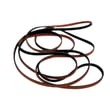
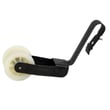
If you’re hearing squealing or the drum is not turning smoothly, the belt 341241 is a common maintenance replacement on this style of dryer.
Why it matters
A dryer that dries in one cycle with good airflow runs fewer minutes per load. That reduces heat stress on components like the operating thermostat, high-limit thermostat, igniter, and motor, which is the simplest way to extend service life.
Last updated: January 2026
How many cubic feet is my Maytag dryer?
The exact drum capacity (cubic feet) for your Maytag MGD5700TQ0 dryer is listed on the model’s specification information in the MGD5700TQ0 owner's manual. Most full-size Maytag gas dryers of this style are typically in the 6.5 to 7.4 cu. ft. range.
How to find the capacity for MGD5700TQ0
We recommend checking these spots first because they are the most reliable for your specific model:
- The specifications section of the MGD5700TQ0 owner's manual
- The model and serial tag (often inside the door opening or on the cabinet opening)
- Any tech sheet stored inside the dryer cabinet (commonly behind the control panel or lower front panel)
Typical dryer capacity ranges (for comparison)
| Dryer type | Typical capacity range |
|---|---|
| Compact dryer | 3.4 to 4.4 cu. ft. |
| Standard full-size dryer | 6.5 to 7.4 cu. ft. |
| Extra-large full-size dryer | 7.5 to 9.0 cu. ft. |
Why it matters
Capacity affects how you load the drum and how well cycles like Sensor Dry perform. Overloading can reduce airflow, increase dry time, and contribute to overheating issues that can trip safety thermostats.
Tips to get the best results for your load size
- Fill the drum loosely; clothes should tumble freely
- Use Sensor Dry for mixed loads and Timed Dry for small or single-item loads
- Clean the lint screen before every load
- Keep the vent path clear to maintain strong airflow
- If dry times are long, use a vent cleaning and airflow check routine from dryer takes a long time to dry
Last updated: January 2026
What is the most common problem with the Maytag dryer?
For the Maytag MGD5700TQ0 dryer, the most common problems we see are no heat (often tied to airflow restrictions and burner-safety components) and no tumble (commonly caused by a worn belt or drum support parts). Start by confirming strong vent airflow and the correct cycle settings in the MGD5700TQ0 owner's manual.
Most common symptoms and what usually causes them
- Dryer runs but won’t heat (gas model): restricted venting, weak gas valve coils, failed igniter, or a bad radiant sensor
- Dryer won’t start: door switch issue, timer/control issue, or a safety device opening due to overheating
- Dryer runs but won’t tumble: broken or slipping drum belt, worn idler pulley, or motor problem
- Long dry times: lint buildup in the vent system, crushed vent hose, clogged lint screen housing
- Noisy operation: worn bearing surfaces, idler pulley wear, blower wheel damage
Quick checks we recommend first (fast, high-impact)
- Check airflow: with the dryer running, verify strong air at the outside vent hood.
- Confirm cycle selection: SENSOR DRY uses moisture sensing and can shut off when the load reaches the selected dryness; use Timed Dry to test consistent heat time (see the MGD5700TQ0 owner's manual).
- Inspect the lint path: clean the lint screen and check for lint buildup at the blower housing area.
- Listen for the motor: if you hear the motor but the drum does not move, suspect the belt or idler.
Common parts that match these “most common” failures
| Symptom | Common suspect part | Example part for MGD5700TQ0 |
|---|---|---|
| No tumble | Drum belt | Belt 341241 |
| No start when door closes | Door switch | Dryer door switch WP3406107 |
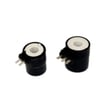
| No heat or heat cuts out | Gas valve coils | Dryer valve coil kit 279834 |
| Poor airflow, rumbling | Blower wheel | Dryer blower wheel WP694089 |
Why it matters
Most repeat dryer failures trace back to poor airflow. Restricted venting makes a gas dryer run hotter than designed, which can shorten the life of thermostats, fuses, and burner components, and it also causes long dry times and nuisance shutdowns.
Last updated: January 2026
Why is my Maytag Bravos XL dryer not drying?
If your Maytag dryer isn’t drying, the most common causes are restricted airflow (lint screen or venting), the load being too wet or too large, or a heat system problem. On the Maytag MGD5700TQ0, we also recommend using Timed Dry to “complete drying” when items are still damp after an automatic cycle. See the MGD5700TQ0 owner's manual for cycle and dryness-setting guidance.
Quick checks that fix most “not drying” complaints
- Clean the lint screen before every load.
- Confirm strong airflow at the outside vent hood while the dryer runs.
- Reduce load size; bulky items need more space for air to move.
- Verify the washer is spinning well; overly wet clothes can overwhelm any dryer.
- Try a higher temperature setting for heavy fabrics (when care labels allow).
Use the right cycle for the symptom (MGD5700TQ0)
Your MGD5700TQ0 uses an IntelliDry Sensor Dry system that senses moisture and shuts off when the selected dryness is reached. If items are still damp at the end, the manual recommends finishing with Timed Dry.
| What you see | Best next step | Why it helps |
|---|---|---|
| Clothes slightly damp at end of Sensor Dry | Run Timed Dry for 10 to 20 minutes | Completes drying without guessing a full cycle |
| Heavy towels/robes still damp | Use a higher heat setting and smaller load | Thick fabrics hold moisture and block airflow |
| Drying takes “forever” | Check venting for restriction and long runs | Poor airflow prevents moisture from leaving the drum |
When it’s likely a heat or airflow failure
If the drum tumbles but clothes stay cool or only get lukewarm, focus on the gas heat system and airflow.
- A clogged vent can overheat the dryer and trip safety devices.
- A failed gas ignition component can prevent consistent heat.
For common gas-heat no-heat symptoms, use gas dryer wont heat troubleshooting video.
Parts that commonly relate to poor drying on this model
These parts are often involved when the dryer tumbles but heat is inconsistent or airflow is weak:
- Dryer valve coil kit 279834 (gas valve coils that can fail when hot)
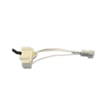
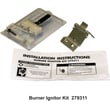
- Igniter 279311 (ignites the gas burner)
- Dryer blower wheel WP694089 (moves air through the drum and vent)
Why it matters
A dryer that can’t move air or make steady heat will leave clothes damp, increase cycle times, and can cause repeated shutdowns on automatic cycles because the load never reaches the expected dryness.
Last updated: January 2026