Installation guide
 Owner’s manual
 Error Codes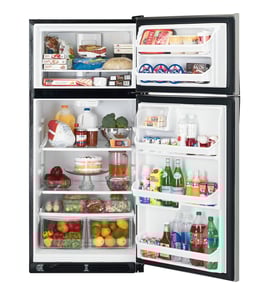



What is the upper part of a fridge called?
On a Kenmore top-mount refrigerator like model 2536088240C, the upper compartment is the freezer. It’s the section designed to keep foods frozen, and it also helps the refrigerator maintain proper cooling by circulating cold air between compartments (as described in the owner's manual).
- Keeps food at freezing temperatures for long-term storage
- Helps cool the fresh food section by sharing cold air flow
- May include door racks, shelves, and an ice bin (if equipped)
- Can make normal operating sounds during cooling and defrost cycles
- Works best when air vents are not blocked by food packages
| Compartment | Location on this model style | Main purpose | Control impact |
|---|---|---|---|
| Freezer | Top | Freezes and stores frozen foods | Freezer control changes freezer temperature only (on models with separate controls) |
| Refrigerator | Bottom | Keeps fresh foods cold (not frozen) | Refrigerator control can affect both compartments on some models |
Knowing the upper section is the freezer helps when you’re adjusting temperatures, organizing food for proper airflow, or troubleshooting cooling issues. For example, blocking freezer vents can reduce circulation and make the refrigerator section run warm.
- Leave space between packages so cold air can circulate
- Avoid overloading the freezer with warm food at one time
- Store hard-to-freeze items (like ice cream) toward the interior, not the door
- Adjust temperatures gradually and allow time for the temperature to stabilize
Last updated: February 2026
Can I run my Kenmore refrigerator without a water filter?
Yes, your Kenmore 2536088240C top-mount refrigerator can run without a water filter if the water system is set up to bypass the filter; water will still flow to the dispenser and ice maker, but it will be unfiltered and can increase mineral buildup in the water circuit over time. Check the owner's manual for the correct bypass method for your exact configuration.
- Water and ice taste and odor can worsen (no filtration)
- Sediment can reach the water valve, tubing, and ice maker
- Flow rate can change (sometimes higher, sometimes lower if a bypass is missing)
- Leaks can occur if the filter head is not sealed correctly
- You may see more scale buildup in hard-water areas
- Confirm whether your model uses a filter cartridge or an inline filter setup.
- If a bypass plug is required, install it before turning water back on.
- Turn the water supply on and inspect all connections for drips.
- Dispense water for a few minutes to purge air from the line.
Even without a filter, the water line setup matters for the 2536088240C. The installation guidance calls for a cold water supply with 30 to 100 psi and recommends 1/4-inch OD copper tubing or a braided water line (plastic tubing is not recommended because it increases leak risk). See the installation guide for the full connection steps and safety notes.
| Setup choice | What you get | Best for |
|---|---|---|
| Filter installed | Better taste, less sediment | Most homes, especially hard water |
| Filter bypassed | Unfiltered water and ice | Temporary use, troubleshooting |
Running unfiltered water can shorten the life of water-system components (valves, tubing, ice maker) and can contribute to clogs or leaks. If you notice reduced ice production, odd taste, or slow dispensing, restoring filtration is a strong next step.
Last updated: February 2026
What causes a Coldspot 2536088240C to stop cooling?
A Kenmore 2536088240C top-mount refrigerator usually stops cooling because the temperature control is set to 0 (OFF), airflow is blocked, the unit is in a defrost cycle, or a cooling-system component (like the evaporator fan or defrost system) is failing. Start with control settings and airflow checks first using the owner's manual.
- Confirm the refrigerator temperature control is not set to 0 (OFF); that setting stops the compressor.
- After any control change, wait 24 hours for temperatures to stabilize.
- If the refrigerator was just plugged in or moved, allow an 8 to 12 hour cool-down period with doors closed before judging cooling.
- Make sure food packages are not blocking cold air vents in either compartment.
- Verify the power cord is fully seated in the outlet; check the house breaker or fuse.
Use these symptoms to narrow the cause:
| What you notice | Most likely cause | What to do next |
|---|---|---|
| Lights work but both sections are warm | Control set to 0 (OFF) or unit in defrost | Set controls to recommended setting; wait 20 minutes if in defrost |
| Freezer cold, refrigerator warm | Airflow problem (blocked vents, fan issue) | Clear vents; check for fan noise; inspect for heavy frost |
| Frost/ice buildup on freezer back wall | Defrost system problem | Check defrost components such as the refrigerator defrost timer 215846602 and refrigerator defrost bi-metal thermostat 5303918202 |
| Loud fan noise or no airflow from vents | Evaporator fan issue | Inspect fan area; replace damaged blade such as the refrigerator evaporator fan blade 5308000010 |
A “no cool” condition can be as simple as an OFF setting, but blocked airflow or a failed defrost component can quickly lead to spoiled food and ice buildup that prevents cold air from reaching the refrigerator section.
If basic settings, power, and airflow are correct, the most common repair paths on top-mount refrigerators are:
- Defrost system service (timer, thermostat)
- Evaporator fan airflow repair
- Sealed system diagnosis (compressor, evaporator, heat exchanger) by a technician
Last updated: February 2026
What is the most expensive part to replace on a refrigerator?
On a Kenmore top-mount refrigerator like model 2536088240C, the most expensive single part to replace is typically the compressor because it is part of the sealed cooling system and the repair usually involves specialized labor. Control-related parts and sealed-system work can also be high-cost.
These repairs tend to be the priciest because they involve sealed-system work, refrigerant handling, or longer labor time:
- Compressor replacement (sealed system component)
- Sealed-system repairs (refrigerant leak diagnosis and repair, evacuate and recharge)
- Evaporator or condenser replacement (sealed system components)
- Electrical/control issues (diagnosis time, wiring, and component replacement)
If your refrigerator is not cooling, keep in mind that insufficient power can damage the compressor, and the manual also advises using a dedicated, properly grounded outlet and avoiding extension cords. For model-specific safety and electrical guidance, use the owner's manual.
Here are examples of higher-priced components listed for model 2536088240C (parts cost only; labor is separate):
| Component type | Example part on this model | Why it can be costly |
|---|---|---|
| Compressor | Refrigerator compressor 5304507765 | Sealed-system repair, specialized labor |
| Evaporator | Refrigerator evaporator 5303918274 | Sealed-system component |
| Condenser | Refrigerator condenser 241861901 | Sealed-system component |
We recommend a quick triage so you do not replace an expensive part unnecessarily:
- Confirm the outlet has steady power; avoid extension cords and adapters
- Make sure the temperature control is not set to “0” (that stops cooling)
- Clean the condenser area periodically (helps efficiency and cooling)
- Listen for normal operating sounds; some fan and refrigerant noises are expected
- If cooling is weak, check for frost buildup that points to a defrost problem (timer, thermostat)
The compressor and other sealed-system parts can cost enough (parts plus labor) that it changes the repair decision. Checking power, settings, airflow, and basic maintenance first helps prevent misdiagnosis and protects the cooling system.
Last updated: February 2026
What is the life expectancy of a Kenmore refrigerator freezer?
Most Kenmore top-mount refrigerator/freezer units like model 2536088240C last 12 to 15 years with normal household use. Keeping airflow clear, cleaning the condenser area, and fixing door-seal leaks quickly helps you reach the upper end of that range.
A refrigerator’s life is mostly driven by compressor run time, heat removal, and how well the doors seal.
- 12 to 15 years is the typical life expectancy for a refrigerator
- Hot kitchens, tight built-ins, and dusty condenser areas shorten life
- Frequent door opening and overpacking reduce cooling efficiency
- A leaking door gasket forces longer run times and can cause frost issues
- Power issues (loose plug, tripped breaker) can create repeated hard starts
Use these steps as your routine care plan; they prevent overheating, poor cooling, and premature part wear.
- Vacuum dust from the condenser area and surrounding vents regularly
- Keep food from blocking interior air vents in the refrigerator and freezer
- Confirm the temperature controls are set correctly (avoid leaving the control at “0”, which stops cooling)
- Check that doors close fully and the cabinet sits level
- Replace failed interior bulbs promptly; wear gloves when changing bulbs
| What you notice | What it usually means | What to do next |
|---|---|---|
| Warm fridge, freezer OK | Airflow or evaporator fan issue | Check vents; listen for fan; inspect for frost buildup |
| Frost buildup, poor cooling | Defrost system or door seal problem | Check gasket seal; review defrost troubleshooting |
| Runs constantly | Dirty condenser, warm room, or gasket leak | Clean condenser area; verify door seal |
A refrigerator that runs longer than necessary uses more electricity and puts extra wear on the sealed system (compressor, evaporator, condenser). Small fixes, especially sealing and airflow, protect the most expensive components.
For model-specific care, safety, and operating guidance, use the 2536088240C documentation: owner's manual.
If you are chasing cooling or airflow symptoms, our DIY steps for fan-related issues are a strong match: how to fix your evaporator cooling fan.
Last updated: February 2026