 Owner’s manual




What is the lifespan of a GE dryer?
A GE dryer like model GFD85ESPN0RS typically lasts 13 years with normal household use. Consistent airflow (clean lint screen and venting), avoiding overloads, and fixing wear items early are the biggest factors that help your dryer reach or exceed that lifespan.
- Vent restriction (long or clogged ducting) makes the dryer run hotter and longer
- Overloading strains the drum support system and drive components
- Skipped cleaning (lint screen, lint buildup in the cabinet, and exhaust duct)
- Frequent high-heat cycles on heavy loads
- Delayed repairs when you hear squealing, thumping, or grinding
We recommend following the routine in the GFD85ESPN0RS owner’s manual and sticking to these habits:
- Clean the lint screen before every load
- Inspect and clean the exhaust duct at least yearly
- Keep loads “loose” in the drum so air can circulate
- Level the dryer to reduce vibration and wear
- Stop using the dryer if you hear persistent rumbling or squealing and inspect wear parts
If your dryer starts getting noisy or takes longer to dry, these parts are often involved:
| Symptom | Likely wear area | Example compatible part for this model |
|---|---|---|
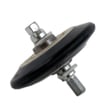
| Thumping/rumbling | Drum support rollers | Dryer drum support roller assembly WE03X10016 |
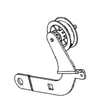
| Squealing, drum not turning | Belt and idler system | Dryer drum belt WE03X29704 |
| Longer dry times, weak airflow | Lint screen and venting | Dryer lint screen WE16X32537 |
A dryer that is forced to run with poor airflow or worn drum support parts can overheat, increase energy use, and wear out major components sooner. Keeping airflow strong and addressing noise early is the simplest way to protect the motor, heater system, and controls.
Last updated: January 2026
What is the most common problem with a GE dryer?
The most common GE dryer problem is clothes taking too long to dry or not drying fully, and on the GE GFD85ESPN0RS that usually traces back to restricted airflow (lint screen, vent duct, or outside hood) or a cycle/setting mismatch. Start with the airflow checks in the GFD85ESPN0RS owner’s manual.
- Clean the lint screen before every load; wash it with warm soapy water if you see a waxy film.
- Confirm the outside vent hood flap opens freely while the dryer runs.
- Check the vent duct behind the dryer for kinks, crushing, or long runs with too many turns.
- Avoid overloading; large, heavy items need smaller loads to dry efficiently.
- If you use sensor cycles, try a higher dryness level (for mixed heavy/light loads).
Restricted airflow is the top cause; it can also trigger a “Check Vent” indicator on many GE dryers.
| Symptom | Most common cause | What to do next |
|---|---|---|
| Long dry times | Vent restriction | Inspect and clean the full vent path to the outside |
| Dryer tumbles but heat seems weak | Airflow restriction or heat system issue | Verify airflow first; then consider heat diagnostics |
| “Check Vent” light | Reduced airflow | Clean lint screen and venting, then re-test |
If airflow is good and dry times are still poor, the issue can be in the heating or temperature-sensing system.
- For electric heat issues, a failed heater can cause no-heat or weak-heat symptoms.
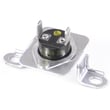
- A thermostat problem can cause overheating, cycling off too soon, or inconsistent heat.
- A moisture sensor issue can end sensor cycles early.
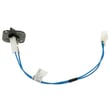
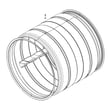
Model-matched parts we commonly see involved include:
Poor airflow does more than slow drying; it increases heat stress on components and can lead to repeated shutdowns, inconsistent cycles, and unnecessary part replacement. Fixing venting and lint buildup is the best first step for performance and reliability.
Last updated: January 2026
How do I find the model number on my GFD85ESPN0RS?
Your GE dryer’s model number is printed on the rating label on the front of the dryer behind the door. Open the door and look along the front opening area for the label; it lists both the model and serial number (for example, GFD85ESPN0RS).
- Open the dryer door fully
- Check the front frame of the dryer (the area the door closes against)
- Look for a sticker or metal tag with “Model” and “Serial”
- Write the numbers down exactly as shown (letters and numbers matter)
- Use that exact model number when ordering GE dryer parts or checking diagrams
| Label item | What it’s used for | Example |
|---|---|---|
| Model number | Matching parts and diagrams | GFD85ESPN0RS |
| Serial number | Identifying production details | Varies |
We use the model number to match your dryer to the correct parts list and documentation. Even small differences in a GE model series can change the correct door switch, control board, or heater assembly.
If you are using the manual to record the information, the GFD85ESPN0RS owner’s manual includes a “Write the model and serial numbers here” section and confirms the label location behind the door.
Last updated: March 2026





