 Owner’s manual


Where is the model number on a Roper washing machine?
On the Roper RAX7245KQ0 washer, the model and serial number label is typically located on the main cabinet, and the RAX7245KQ0 owner's manual shows it as part of the washer’s “Parts and features” identification area. This label is what you will use to match the correct washer parts and service information.
Look for a sticker or metal plate with both model and serial numbers in these spots:
- Under the lid opening on the top rim of the cabinet
- On the back side of the control panel
- On the side of the main cabinet, often near the lower front edge
- Along the rear panel of the cabinet
- Near the tub opening where the lid closes (around the top frame)
- Unplug the washer for safety.
- Lift the lid and inspect the cabinet rim around the opening.
- If you do not see it, check the back of the console and the rear of the cabinet.
- Write down the full model number exactly as shown (for example, RAX7245KQ0) and the serial number.
| What you’ll see | Why it’s there | What to copy |
|---|---|---|
| Model number | Identifies the exact washer design | Full model (RAX7245KQ0) |
| Serial number | Identifies the production unit | Full serial |
| Electrical ratings | Confirms power requirements | Optional |
We use the model number to ensure parts like the drain pump, inlet valve, or lid switch match your exact washer configuration. Using the correct model number helps avoid ordering the wrong replacement part and speeds up troubleshooting.
Last updated: February 2026
What are the common problems with Roper washing machines?
Common problems on a Roper washer like model RAX7245KQ0 are no fill, no agitation, no drain, or no spin; most causes trace to power and cycle-start issues, restricted water supply, a clogged drain path, or worn drive components. We use the checks in the RAX7245KQ0 owner's manual to pinpoint the failure fast.
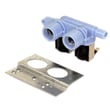
- Won’t fill or rinses poorly: clogged inlet screens, faucets off, kinked inlet hose, or a failing washer inlet valve 285805
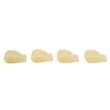
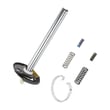
- Won’t agitate: worn agitator dog 80040, stripped agitator parts, or a drive issue
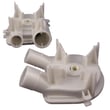
- Won’t drain or spin: clogged drain hose, pump obstruction, or a failing washer drain pump WP3363394
- Stops or seems “stuck” mid-cycle: normal pauses in some cycles (about 2 minutes on certain settings)
- Shakes or bangs in spin: out-of-balance load, weak suspension, or worn drive/brake components
- Confirm the washer is plugged into a grounded 3-prong outlet (no extension cord).
- Make sure the cycle knob is aligned with a cycle; turn slightly to the right and pull to start.
- Verify both hot and cold faucets are fully on.
- Check inlet hoses for kinks and clean any inlet valve screens.
- Inspect the drain hose for clogs and proper standpipe/tub routing.
| Symptom | Most likely area | Common part to inspect |
|---|---|---|
| No fill | Water supply/inlet | Washer inlet valve 285805 |
| No drain | Drain path/pump | Washer drain pump WP3363394 |
| Agitates weakly | Agitator drive | Agitator dog 80040 |
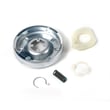
| No spin with motor running | Drive system | Coupling 285753A or clutch 285785 |
Catching a simple issue like a kinked hose, clogged inlet screen, or a normal cycle pause prevents unnecessary part replacement. When a true mechanical failure exists (pump, coupling, clutch, agitator dogs), fixing it early helps avoid secondary damage to the drive system.
Last updated: February 2026
What is a roper washing machine?
A Roper washing machine is a Whirlpool-built home washer sold under the Roper brand. Your Roper RAX7245KQ0 is a traditional automatic washer designed around timed wash cycles, with standard functions like wash, rinse, and drain/spin as outlined in the RAX7245KQ0 owner's manual.
Roper washers like model RAX7245KQ0 are built for straightforward operation and serviceability.
- Uses a cycle timer to control wash actions and time
- Provides separate wash, rinse, and spin portions of the cycle
- Designed for common household loads and everyday fabrics
- Supports typical top-load washer maintenance and repair practices
- Uses factory-specified replacement parts for proper fit and performance
If performance changes over time (no agitation, no drain, weak spin), these are common wear items for this style of Roper washer.
| Symptom | Commonly involved part | Example part for this model |
|---|---|---|
| Agitator not moving properly | Agitator dogs | Agitator dog 80040 |
| Won’t drain or drains slowly | Drain pump | Washer drain pump WP3363394 |
| Won’t fill or fills incorrectly | Water inlet valve | Washer inlet valve 285805 |
| Won’t spin or has poor spin | Clutch or drive components | Clutch 285785 |
Knowing your washer type helps you troubleshoot faster. A timer-driven, traditional washer like the Roper RAX7245KQ0 typically points you toward mechanical wear parts (agitator, pump, clutch, coupling) before more complex electrical issues.
Last updated: February 2026
Why is my Roper washer leaking from the bottom?
A bottom leak on your Roper RAX7245KQ0 washer is usually caused by a loose or damaged drain hose connection, a leaking drain pump, or water deflecting off an unbalanced load and escaping at the tub ring. We start by checking hose tightness, clamps, and leveling per the RAX7245KQ0 owner's manual.
- Tighten both fill hoses at the faucet and at the washer; confirm the rubber hose washers are seated.
- Inspect the drain hose for splits and make sure the clamp is installed correctly.
- Verify the standpipe or laundry tub is not clogged and can handle fast draining.
- Re-level the washer and rebalance the load; off-balance loads can cause splash-out.
- Look for drips during drain or spin; that pattern often points to the drain pump.
| When you see water | Most likely cause | What to inspect |
|---|---|---|
| During fill | Fill hose connection or hose washer | Hose ends, washers, valve area |
| During wash/agitation | Splash-out from off-center load | Load size, leveling, tub centered |
| During drain/spin | Drain system leak | Hose, clamps, pump body |
If you confirm the leak happens while draining or spinning, the drain pump or drain hose is the next place we go.
- Washer drain pump WP3363394: check for cracks, a weeping seam, or leakage at the hose ports.
- Drain hose WPW10358149: check for pinholes, rub-through, or a loose clamp fit.
- Washer tub gasket W10814296: if you see seepage at a tub-to-hose or tub joint area.
Bottom leaks can quickly damage flooring and can also lead to poor draining or weak spinning if water is escaping during the drain portion of the cycle. Catching a loose clamp or failing pump early prevents bigger repairs.
Last updated: February 2026





