Error Codes


How to identify a Kenmore washer model?
Your Kenmore washer model number is printed on the appliance’s model and serial tag. For Kenmore washers, it’s commonly under the lid on top-load models or around the door opening on front-load models; it often starts with 110 (like 11026834692) and is what we use to match the correct washer parts.
Check these common locations first:
- Under the lid, on the rim of the washer opening (top-load)
- On the door opening or door frame area (front-load)
- On the back panel near the power cord entry
- Along the side of the cabinet behind the control panel area
- Inside the cabinet edge near the tub opening (some top-load designs)
Kenmore model numbers are usually 10 to 12 characters and may be all numbers or a mix of letters and numbers. For this washer, the model number is 11026834692.
| What you see on the tag | What it means | Why it matters |
|---|---|---|
| Model number (example: 11026834692) | Identifies the exact washer design | Ensures diagrams and parts match your machine |
| Serial number | Production code and build sequence | Helps confirm production run for some parts |
| Type/voltage info | Electrical rating | Useful when diagnosing motor or timer issues |
Even small design changes can affect fit and function. Using the exact model number helps us match the right Kenmore washer parts such as a lid switch, drain pump, or motor coupling.
- Prevents ordering the wrong version of a part
- Helps match wiring and mounting styles
- Improves troubleshooting accuracy (symptoms often map to specific designs)
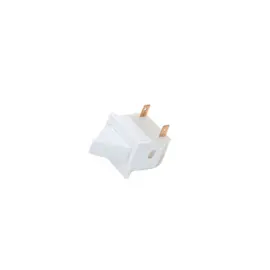
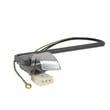
If your washer won’t spin or drain, the correct replacement depends on the exact model tag information. For model 11026834692, common repair parts include the washer lid switch WP3949238 and the washer drain pump WP3363394.
Last updated: February 2026
What is the average lifespan of a Kenmore washer?
A Kenmore washer typically lasts 10 to 15 years with normal household use and basic care. For Kenmore model 11026834692, keeping loads balanced, using the right detergent amount, and fixing small issues early helps you reach the high end of that range.
Most top-load Kenmore washers of this style land in the same general window, but real-world life depends on usage and maintenance.
- Loads per week: more cycles equals more wear on the drive system and pump
- Overloading: strains the clutch, coupling, and gear case
- Water quality: sediment can shorten inlet valve life
- Drain habits: coins, lint, and small items can damage the drain pump
- Vibration: out-of-level setups accelerate suspension and tub wear
If you address these early, you often prevent bigger, more expensive failures.
| Symptom | Common cause | Example part for this model |
|---|---|---|
| Won’t spin or stops mid-cycle | Lid switch not closing reliably | Washer lid switch WP3949238 |
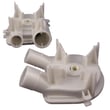
| Won’t drain or drains slowly | Pump jammed or failing | Washer drain pump WP3363394 |
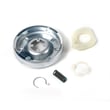
| Agitates poorly or “slips” | Worn drive coupling or clutch | Coupling 285753A |
| Loud grinding or oil leak | Worn transmission/gear case | Gear case 3360629 |
- Keep the washer level and the load evenly distributed
- Use HE detergent only if your detergent label calls for it; avoid oversudsing
- Check pockets to prevent debris from reaching the pump
- Inspect fill hoses periodically and replace if cracked or bulging
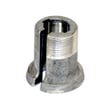
- If agitation gets weak, replace small wear parts early (for example, agitator dog 80040)
A washer that is maintained and repaired early usually fails more gradually (noise, slow drain, weak spin) instead of suddenly. Replacing a lower-cost part like a lid switch, coupling, or drain pump can extend the service life and delay major repairs.
Last updated: February 2026
How do I troubleshoot my 11026834692?
For Kenmore washer model 11026834692, we troubleshoot by matching the symptom (no drain, no spin, no fill, noisy, or leaks) to the most likely system, then checking simple causes first (power, load balance, hoses) before testing common wear parts like the lid switch, drain pump, and drive coupling.
- Won’t start: confirm outlet power, reset breaker, verify the lid closes firmly.
- Won’t drain: check for a kinked drain hose, clogged standpipe, or a blocked pump.
- Won’t spin or weak spin: redistribute load, check lid switch operation, inspect drive components.
- Won’t agitate: look for stripped agitator parts or a failed coupling.
- Loud during spin: suspect clutch, drive block, basket issues, or gear case wear.
- Leaking: inspect fill hoses, tub gasket, center post seal, and drain hose connections.
These parts are frequently involved in the symptoms above:
- Washer lid switch WP3949238 (no start, no spin)
- Washer drain pump WP3363394 (no drain, slow drain, grinding noise)
- Coupling 285753A (motor runs but no agitation or spin)
- Agitator dog 80040 (agitator moves poorly or “slips”)
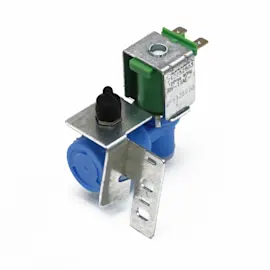
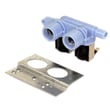
- Inlet valve 285805 (no fill, slow fill, hot or cold water missing)
- Unplug washer.
- Check the drain hose for kinks and proper height at the standpipe.
- Listen for pump noise during drain; a loud hum with no water movement points to a blockage or failed pump.
- Reduce to a small, balanced load.
- If the lid switch doesn’t click or feels loose, test/replace it.
- If the motor runs but the basket doesn’t move, inspect the coupling and clutch.
| Symptom | Check first | Common part involved |
|---|---|---|
| No start | Power, lid fully closed | Lid switch |
| No drain | Hose/standpipe blockage | Drain pump |
| No spin | Load balance, lid switch | Coupling, clutch |
| No fill | House valves, screens | Inlet valve |
Targeting the right system first prevents unnecessary part swaps and helps avoid secondary damage (for example, running a washer with a restricted drain can strain the pump and drive system).
For error-code style troubleshooting on Kenmore washers, we also use the symptom-to-code guidance in Kenmore 110 vmax top load washer error codes to narrow the failure quickly.
Last updated: March 2026